About Leptomeria acida R.Br.
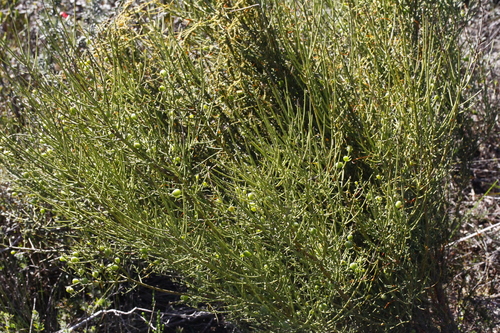
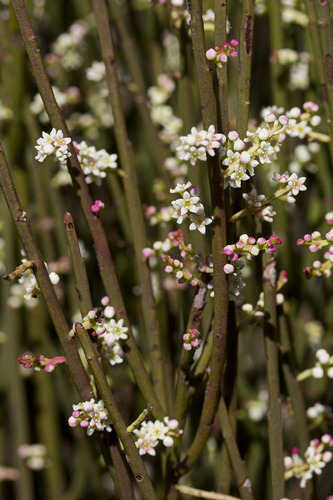
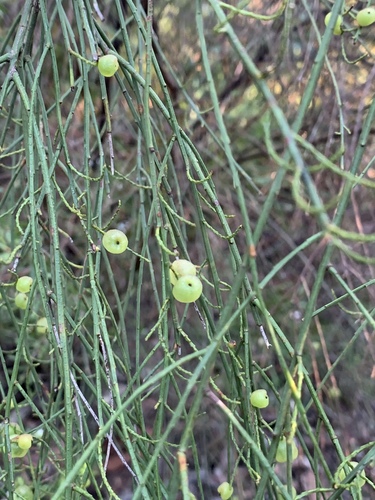
Leptomeria acida, commonly called acid drops or sour currant-bush, is a parasitic shrub that appears almost leafless. It grows on the coast and ranges of eastern Australia, in the habitat of dry eucalyptus woodland, often in sheltered locations. This species is a root parasite. Its branchlets are stiff, angular, and spreading. Red flowers grow in racemes 15 to 20 mm long during summer. The fruit is a drupe that may be green or reddish, and sometimes has purple tinges. Its true leaves are tiny, only 1 to 2 mm long, and are barely noticeable. The fruit of this plant contains vitamin C. Indigenous Australians ate the fruits, and the fruits may be used today to make jelly. The specific epithet acida refers to the fruit’s pleasant acidic taste. This plant was first recorded in Watkin Tench’s logbook, A narrative of the Expedition to Botany Bay, where the author described a green currant-like taste and a grape-like appearance. It was later published in scientific literature in 1810 in Prodromus Florae Novae Hollandiae, written by prolific Scottish botanist Robert Brown.