About Leptogorgia sarmentosa (Esper, 1791)
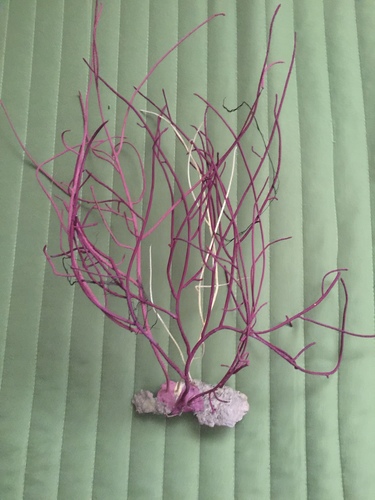
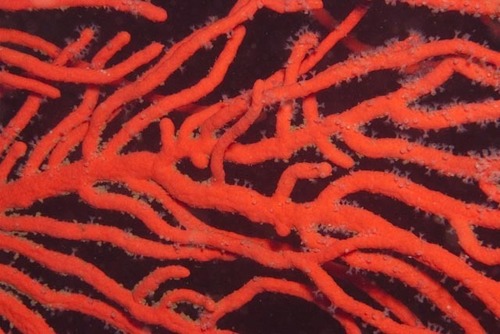
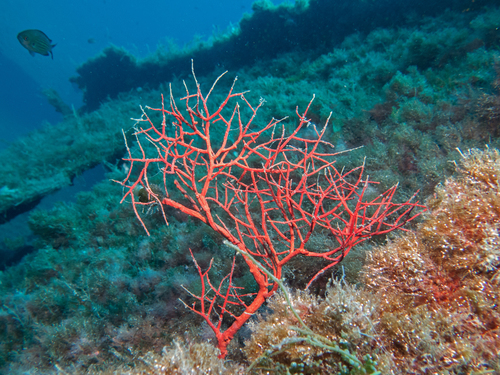
Leptogorgia sarmentosa (Esper, 1791) forms a branching, tree-like structure that can reach 60 cm (24 in) in height. While its branches sometimes grow in a single plane, more often they grow out from the main stem in a variety of directions. The terminal branchlets are very slender, and are either straight or slightly drooping. The sclerites, structures that add rigidity to the coral's soft tissues, are dark red, translucent, and needle-shaped. The coenenchyme, the thin fleshy outer covering of the coral, is usually orange, but may also be yellow, white, red, or purple. The polyps are very small, match the color of the rest of the coral, and are arranged randomly around the branches. This species can be mistaken for Eunicella verrucosa, which differs by having shorter, more robust twigs and a rough, warty coenenchyme. Leptogorgia sarmentosa occurs along the Atlantic coast of Europe and Africa between the Bay of Biscay and the Gulf of Guinea, and also in the western Mediterranean Sea and the Adriatic Sea. Its known range in the Mediterranean has expanded after the discovery of a colony at Naxos in the Aegean Sea. It most commonly grows at depths between 10 and 300 m (33 to 984 ft), colonizing boulders on sandy seabeds or bedrock partially covered by soft sediment. It can tolerate a range of water current velocities, and especially prefers locations with strong water movement.