About Leptoglossus zonatus (Dallas, 1852)
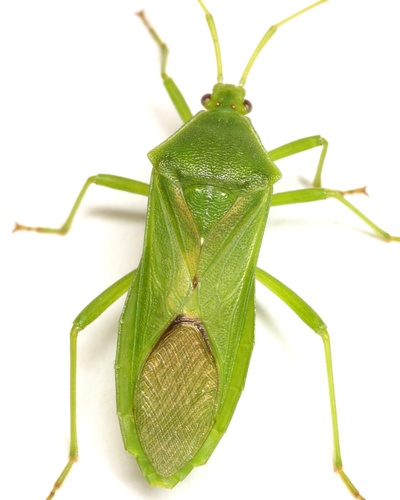
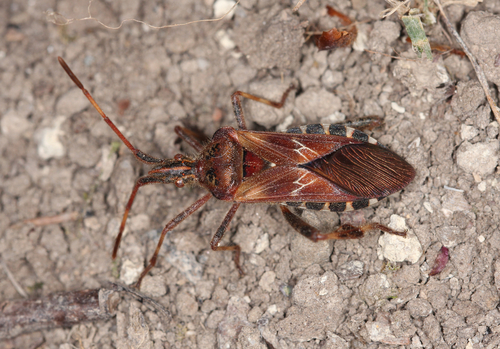
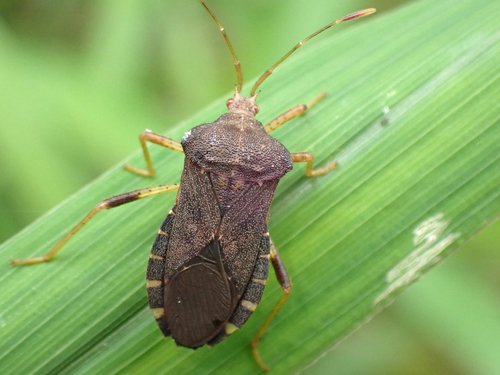
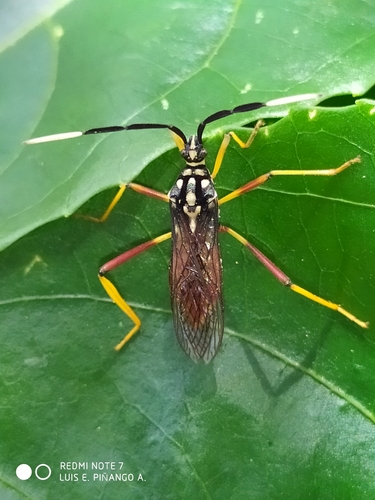
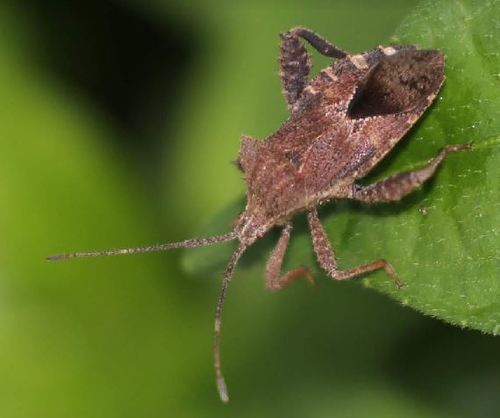
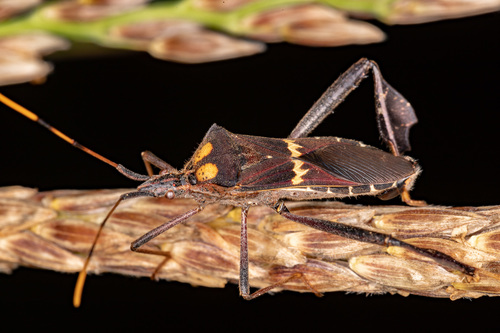
Leptoglossus zonatus is a species of leaf-footed bug, which is a type of true bug. It can be found across most of South America, Central America, Mexico, and the southwestern United States. Adult individuals of this bug reach two centimeters in length, are gray in color, have a zigzagging whitish band across their back, and have two distinctive yellowish spots on the anterior pronotum — these spots are the key identifying characteristic of the species. This leaf-footed bug is one of the two major pests that affect physic nut plants in Nicaragua. In Honduras, where it is commonly called chinche patona, meaning large-legged bug, it is a minor garden pest. It is a pest of many different crops in Brazil, and it may transmit the plant pathogen Herpetomonas macgheei, a trypanosomatid protozoan. It breeds in pomegranate and desert willow trees, where its gregarious bright orange nymphs aggregate. It is a serious pest of satsuma oranges in Louisiana, where it causes damage both through feeding activity and by transmitting the pathogenic yeast Nematospora coryli. The entomopathogenic fungus Beauveria bassiana is a biological pest control agent that has been found effective against this insect.