About Leptoglossus lineosus (Stål, 1862)
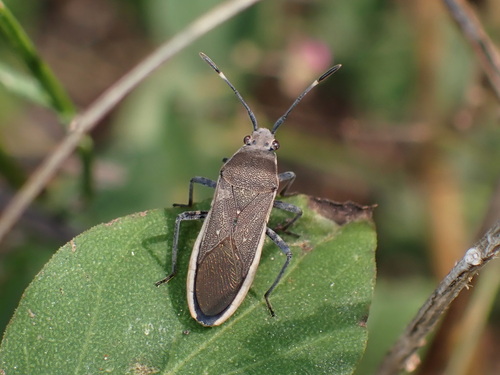
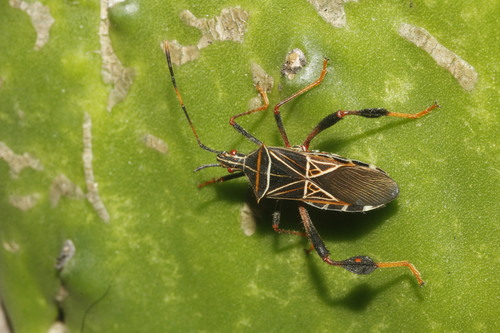
Leptoglossus lineosus (Stål, 1862) adult individuals can be easily told apart from other species in the Leptoglossus genus by a specific set of traits. Slender white lines form a distinct X shape across their mostly black back. This X is defined geometrically by the hypotenuses of four right-angled triangles. On the broad, mostly black pronotum (the section of the prothorax that sits directly behind the head), a narrow ochre or reddish line runs side to side, and this line is roughly as slender as the insect's antennae. The first antenna segment, which is closest to the head, is entirely black. The other antenna segments are two-colored, with sharply contrasting pale and dark areas. On the wing-like tibial dilations of the front legs, the inner margin of each dilation has three low points that are difficult to see, while the outer margins of these dilations are completely smooth. According to observation records on the iNaturalist map, Leptoglossus lineosus is endemic only to Mexico, where it occurs mainly in the country's central uplands. There is also a separate disjunct population in Mexico's northern Yucatan Peninsula. Nearly all in situ photographs of Leptoglossus lineosus hosted on iNaturalist show individual insects on cactus species. Most records find the species on pricklypear cacti of the genus Opuntia, though the site also includes images of adults and nymphs on Selenicereus undatus, a cactus grown as an ornamental in a residential area.