About Leptodactylus pentadactylus (Laurenti, 1768)
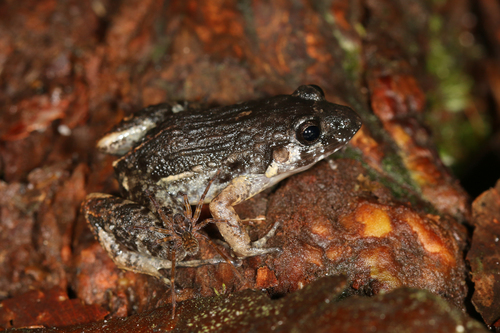
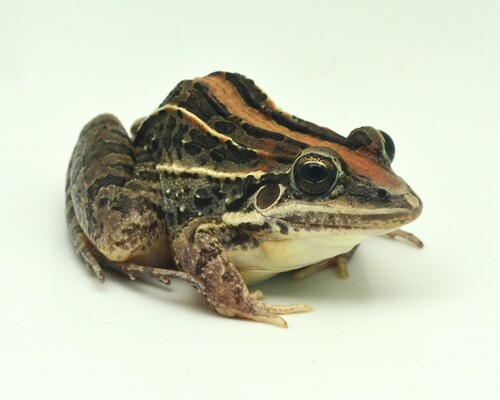
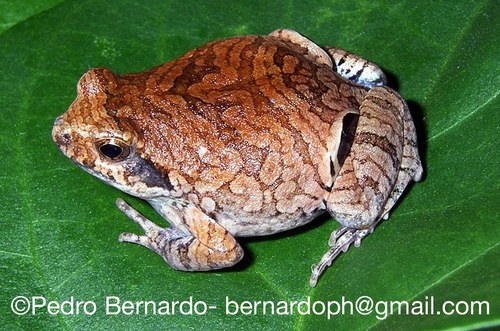
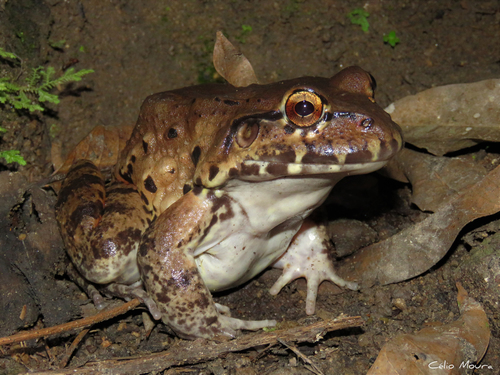
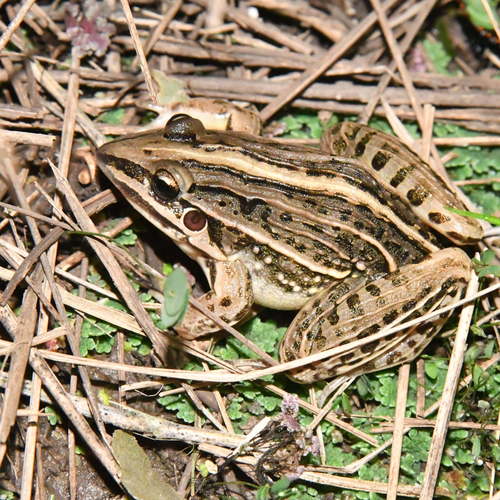
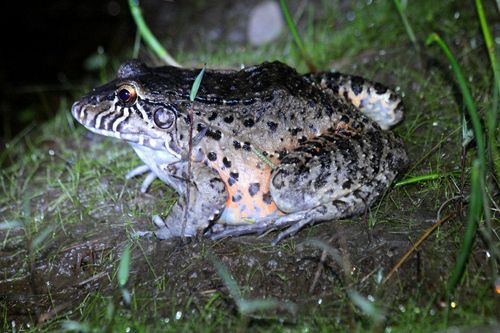
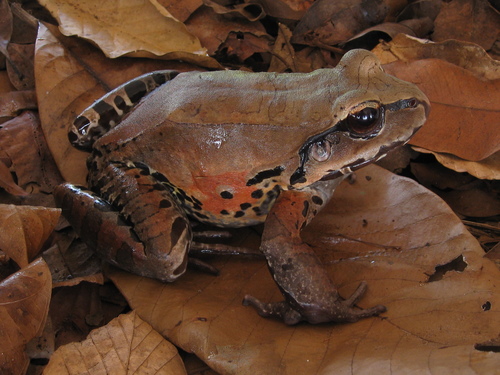
Leptodactylus pentadactylus, commonly known as the smoky jungle frog, is a large and robust species of frog. Males of this species are slightly larger than females: the maximum recorded snout-vent length for males is 18.0 cm (7.1 in), while for females it is 17.6 cm (6.9 in). It has a robust body and a large head with an acutely rounded snout and prominent tympanum. The skin on both the dorsum (back) and venter (underside) is smooth, and a prominent dorsolateral dermal fold runs from the eye orbit to the groin. Its fingers and toes are long with slender tips and have no webbing. Breeding males have greatly swollen forelimbs: they have one large, pointed black spine on the inner surface of the thumb, and two black spines on each side of the chest. The dorsum ranges in color from tan to reddish brown, with broad reddish brown markings on the body between the yellowish tan dorsolateral folds. The dorsal surfaces of the limbs are also tan to reddish brown, marked with narrow transverse brown bars. The upper lip is tan with a brown margin and dark brown triangular spots. The venter is cream, with bold dark brown to black mottling that is most prominent on the belly and hind limbs. The iris is bronze. This frog is found in lowlands below 1,200 m (3,900 ft), ranging from Costa Rica south to the Pacific lowlands of Ecuador, and also throughout the Guianas and the northern two-thirds of the Amazon Basin in South America. This species primarily lives in tropical rainforest, but it also occurs in dry forest and lower montane forests. For feeding, juveniles eat small arthropods, while large adults consume large arthropods, other frogs, lizards, snakes, and small birds and mammals such as bats. Tadpoles are omnivorous: they feed on vegetation, other tadpoles, and eggs, including eggs of their own species. The skin of Leptodactylus pentadactylus contains leptoxin, a lethal protein toxin. As of 2008, the biological role of this toxin remains unknown.