About Leptodactylus mystacinus (Burmeister, 1861)
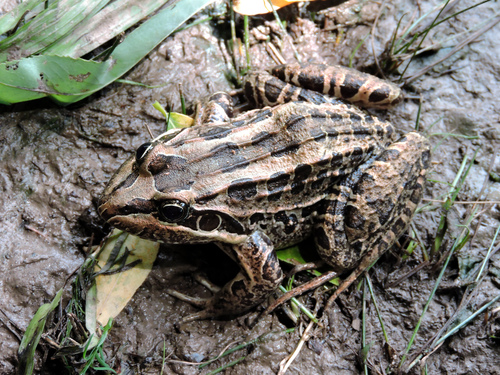
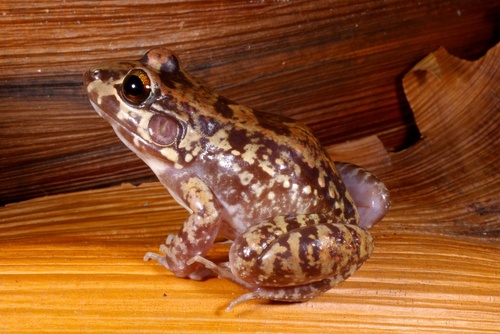
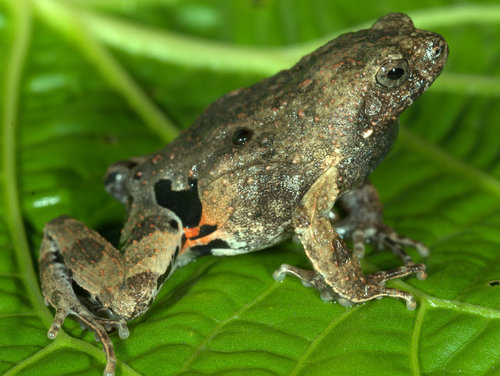
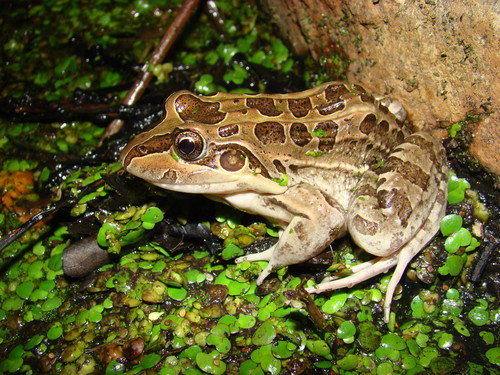
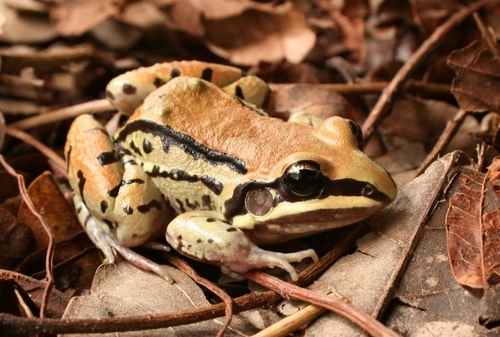
Leptodactylus mystacinus, first formally described by Burmeister in 1861, displays sexual size dimorphism in snout–vent length: adult males measure 44–65 mm (1.7–2.6 in), while adult females measure 54–67 mm (2.1–2.6 in). The snout of males is more spatulate in shape than that of females. Two pairs of dorsolateral folds are present on this species: one pair extends from behind the eye to the upper groin, while a second pair starts at the forearm insertion and runs along the flanks, and this second pair is either incomplete or interrupted. The toes lack both fringes and fleshy ridges, and the toe tips are narrow. The dorsal surface can be uniform in color, patterned with stripes, or marked with small dark spots. The upper pair of dorsolateral folds has a distinct dark brown stripe or band below the fold, and usually a thin light pinstripe above the fold; this upper light pinstripe often becomes broader and more distinct toward the posterior end of the fold. The lower dorsolateral folds running along the flanks may have dark highlights, cream highlights, or both. A distinct light stripe is typically present on the upper lip. The ventral surface ranges from completely immaculate to mottled. This is a terrestrial frog species. Its typical habitat is grasslands located near standing bodies of water, which serve as its breeding habitat. Reproduction occurs in underground foam nests, and tadpoles complete their development in water. Some populations of Leptodactylus mystacinus are also found in forests and areas that were formerly forested. This species occurs at elevations below 1,800 m (5,900 ft). It is a common species that adapts well to anthropogenic disturbance. It can be found in multiple protected areas, and the International Union for Conservation of Nature (IUCN) does not consider it a threatened species.