About Leptodactylus macrosternum Miranda-Ribeiro, 1926
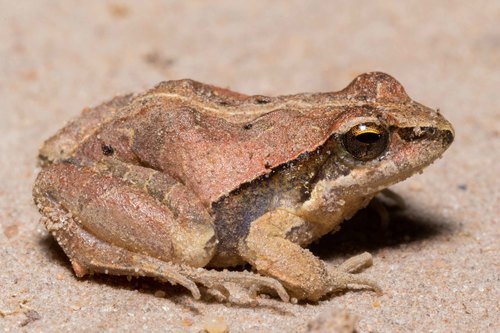
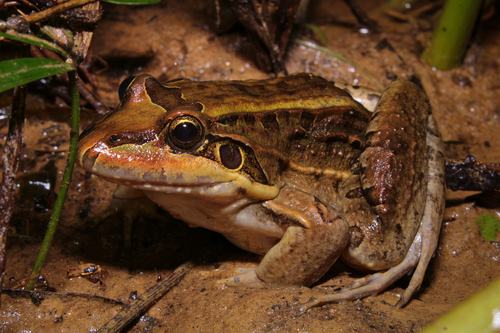
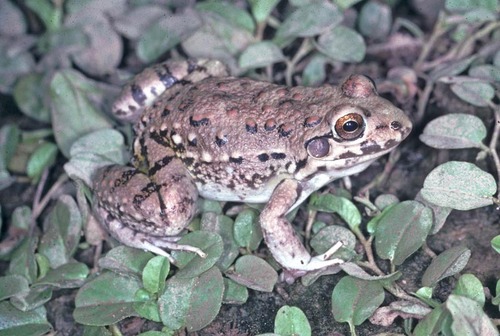
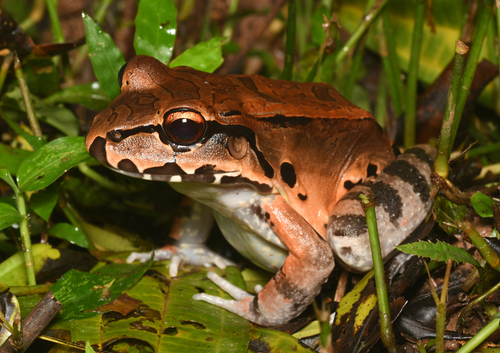
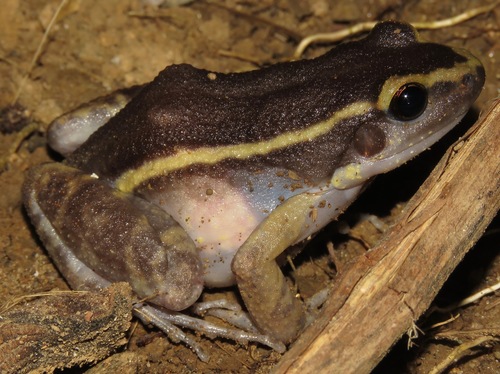
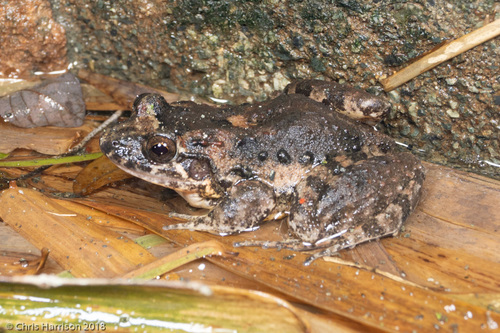
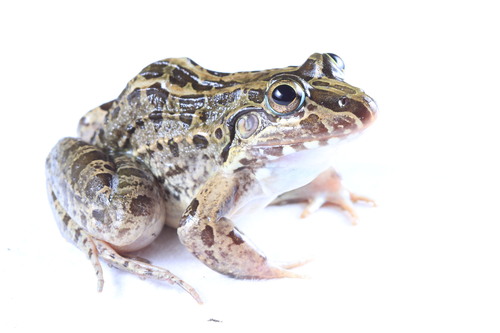
Leptodactylus macrosternum Miranda-Ribeiro, 1926 has the following physical characteristics: Adult males measure 65–94 mm (2.6–3.7 in) and adult females measure 69–98 mm (2.7–3.9 in) in snout–vent length. It has no light stripe on the upper lip. Several pairs of well-developed skin folds are present on the dorsum and flanks, and the toes have lateral fringes. Sexually active males have a pair of keratinized thumb spines. This species produces three distinct advertisement calls: growls, grunts, and trills; growls are the most frequent call type. Tadpoles at Gosner stage 36 have a total length of 42 mm (1.7 in).
This is a ground-dwelling frog species found near ponds and flooded areas at elevations below 1,000 m (3,300 ft). Eggs are laid in large foam nests over puddles and flooded areas in shallow water less than 15 cm deep. Males call from the water's edge or from within the water. The species is common and adapts well to anthropogenic disturbance. It was once hunted for sport, and is still consumed as food in Argentina, a practice that can lead to local population declines. It occurs in many protected areas, including Chaco National Park, Mburucuyá National Park, Río Pilcomayo National Park, Parque Nacional Calilegua, Limoy Biological Reserve, Iberá Reserva Natural Provincial, Noel Kempff Mercado National Park, Kaa-iya del Gran Chaco, Otuquis National Park, Parque Nacional Da Serra Da Bodoquena, Parque Nacional da Serra do Divisor, Estação Ecológica Dos Caetetus, and Parque Estadual Do Morro Do Diabo.