About Leptodactylus latrans (Steffen, 1815)
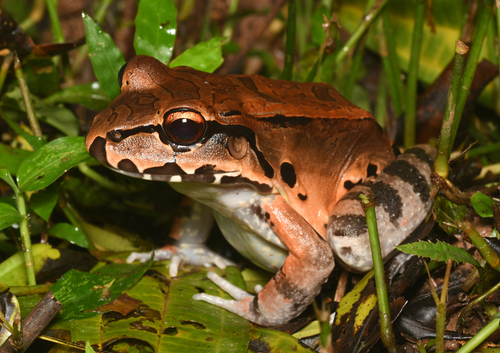
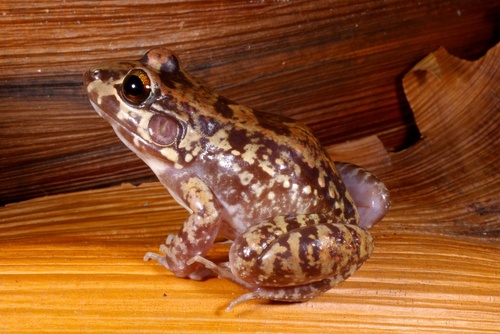
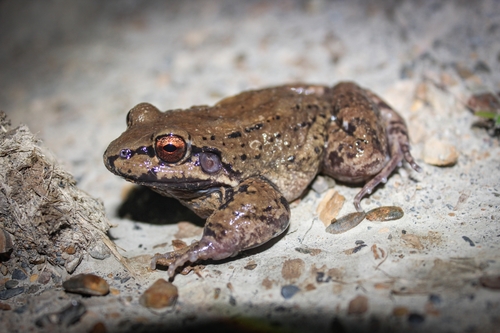
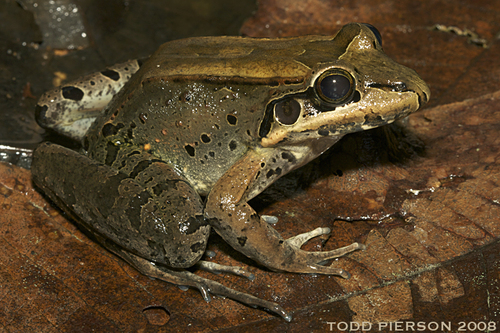
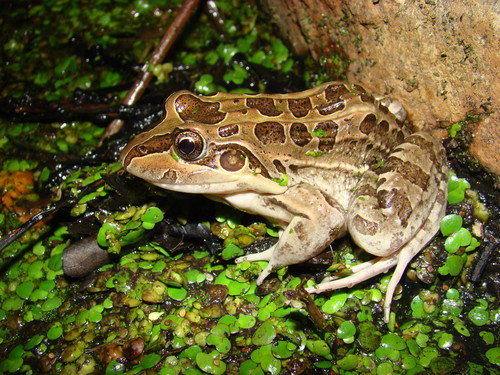
Adult male Leptodactylus latrans measure 90–120 mm in snout-vent length, while adult females measure 80–110 mm. The skin of the dorsum is dark gray or red-brown with folded texture. It has dark ocelli spots with white edges, which resemble eyes. Males have robust front legs. This species only has fringed skin on its feet, rather than full webbing; this allows it to swim well, while also jumping and moving effectively on land. Adult frogs can alter the length of their gut: males have longer guts during the warm season when food is most abundant, and females have longer guts during the cold season when they develop eggs. This is a common species across most of its range. It can be found in a wide variety of habitat types, including swamps, savannahs, grasslands, and tropical forest ecosystems. It tolerates disturbed habitats, and can also be found in gardens and urban areas. It occurs between 0 and 900 meters above sea level, and lives in many protected areas throughout its range. For reproduction, males hide among aquatic plants and call to attract females. Breeding takes place in temporary water bodies such as ponds and floodplains, where the frogs create foam nests for their eggs. Females usually lay eggs in temporary ponds. Eggs are placed in a foam nest that the male constructs while the pair is in amplexus; both the foam nest and the eggs inside it float on the water’s surface. Each nest is 12–25 cm long, contains thousands of eggs, and has a central hole 4–8 cm long. A female will sometimes sit in this central hole to scare away animals that predate on eggs, such as birds. Occasionally, adult frogs lay eggs on dry land before rain arrives; later, rain floods the land to form a pond. Once the pond forms, the tadpoles leave the nest and swim in the new water. Because these tadpoles hatch before the pond forms, they are larger and stronger than tadpoles of frog species that lay eggs after rain occurs. After hatching, tadpoles exhibit schooling behavior. In some cases, one parent, most often a female, guards the tadpoles and attacks potential predators.