About Leptodactylus labyrinthicus (Spix, 1824)
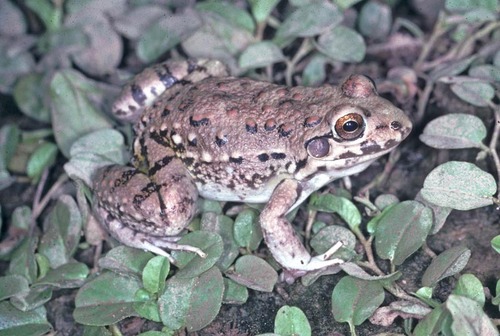
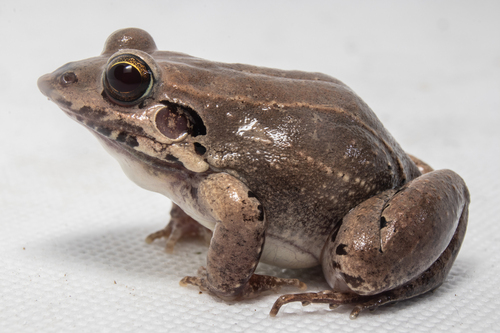
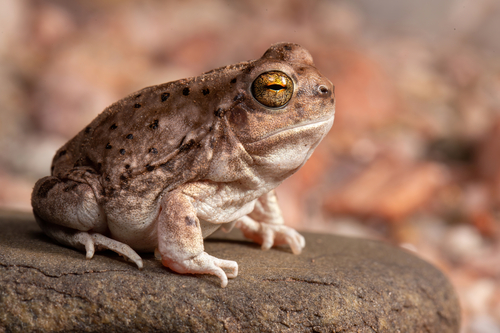
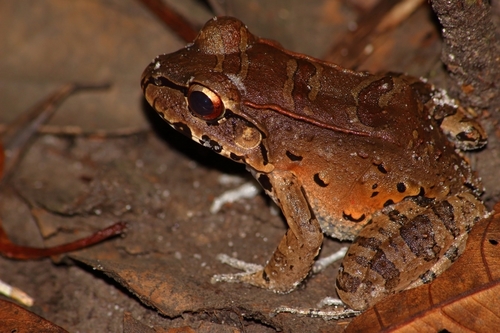
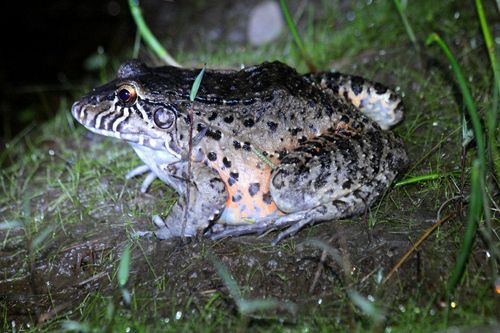
Leptodactylus labyrinthicus is a large frog species. Males have a snout-vent length of 117–188 mm (4.6–7.4 in), while females have a snout-vent length of 124–166 mm (4.9–6.5 in). The labyrinth reference in its common and scientific names comes from labyrinthine patterns on its light-colored belly, which is typically marked with dark vermiculations. Tadpoles of this species have cryptic coloration, with dark gray backs and tails. This frog occurs in a wide range of habitat types, including grasslands, primary forest, secondary forest, streams, ponds, riversides, and pastures, across the Amazônia, Caatinga, Cerrado, Pampa, and Pantanal biomes, at elevations up to 1,000 m (3,300 ft) above sea level. Most of its natural range falls in open habitats; the Amazon rainforest and Amazon River act as a natural barrier to its range, though small introduced populations have become established in Amazonia. The species shows very high tolerance to pollution. Because it is able to survive across such a broad set of habitats, the IUCN Red List does not consider L. labyrinthicus a threatened species as of 2023. It can be found in many protected areas, including Cerro Corá National Park, Natural Reserve del Bosque Mbaracayú, Parque Nacional Da Serra Da Bodoquena, Estação Ecológica De Itirapina, Parque Estadual Do Jurupará, Estação Ecológica Dos Caetetus, Parque Estadual Do Morro Do Diabo, Área de Proteção Ambiental Morro Da Pedreira, and Parque Estadual Das Furnas Do Bom Jesus. L. labyrinthicus is a generalist, opportunistic predator that preys on invertebrates, amphibians, lizards, snakes, rodents, and bats. This species lays its eggs in foam nests, most often located in burrows on dry land or in swampy soil near water. It is hypothesized that males find or dig these burrows in suitable locations, and use the burrows as shelter during the reproductive season. Males produce advertisement calls mostly at night, though calling has also been observed during the day. After mating, females lay both fertilized eggs and non-viable trophic eggs in a single clutch, then do not return to the nest. When tadpoles hatch, they feed on the trophic eggs and can stay in the nest for up to 25 days to grow. At the start of the rainy season, tadpoles move to still lentic water to complete their metamorphosis, where they feed on anuran eggs, other tadpoles, and carrion. Most other frog species only lay eggs after the first heavy rains of the season, so the early development of L. labyrinthicus tadpoles lets them exploit the eggs and newly hatched tadpoles of these other species. L. labyrinthicus tadpoles are active mostly at night, and hide from visual predators (such as the creamy-bellied thrush, a bird) during the day by burrowing in gravel and leaf litter. Humans use L. labyrinthicus: it is harvested for food in Venezuela, and commercial frog farming attempts for this species in Brazil failed due to managerial issues. The antimicrobial peptide pentadactylin has been isolated from the skin secretions of this frog, and has been studied as a potential candidate for chemotherapy use.