About Leptochilus pteropus (Blume) Fraser-Jenk.
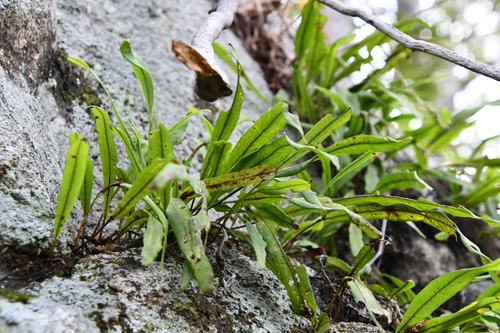
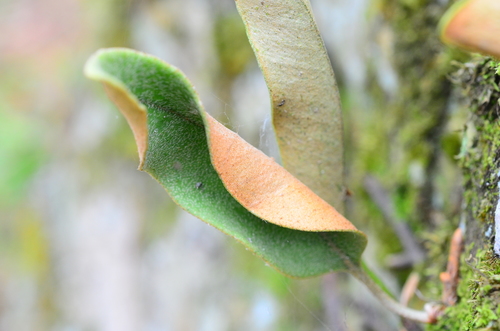
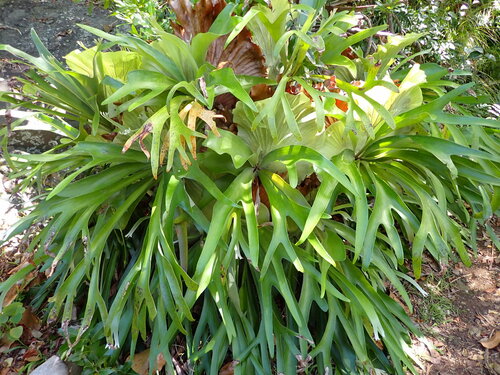
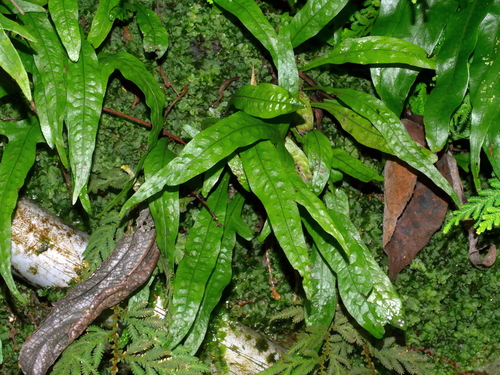
Leptochilus pteropus (Blume) Fraser-Jenk., synonymized as Microsorum pteropus, is a species of aquatic or semi-aquatic fern most commonly known as Java fern, named for the Indonesian island of Java. It is primarily found in Malaysia, Thailand, northeastern India, and parts of southern China. This is a highly variable plant, with multiple distinct geographic varieties and physical forms that differ in leaf size, texture, and shape; examples include the crested-leaved 'Windelov' and 'Trident' varieties. In its natural habitat, it grows attached to riparian roots and rocks, and can grow fully or partially submerged as long as its roots and rhizome stay wet. The plant easily reproduces asexually: it produces small adventitious plantlets from the leaf tips and margins of mature, established foliage. These small sprouts quickly grow their own roots, and if water currents help them, they can attach to surrounding objects before the original mother leaf dies. If the mother leaf wilts or detaches before the plantlet becomes established, the small new fern will float on its own to a new location to begin growing. Java fern is one of the most popular plants in the aquarium hobby, valued for its aesthetic appeal and easy care. Multiple cultivars of Java fern exist, including narrow leaf, needle leaf, Windelov, trident, and lance leaf variants. For aquarium cultivation, the roots growing from the rhizome are usually tied or glued to rock or driftwood, rather than planting the rhizome directly into aquarium substrate. It can be grown in tap water, in both dim and bright light, and grows with or without gravel. It is more resistant to snails than other aquarium plants, and grows better in aquariums with higher fish loads.