About Leptecophylla juniperina (J.R.Forst. & G.Forst.) C.M.Weiller
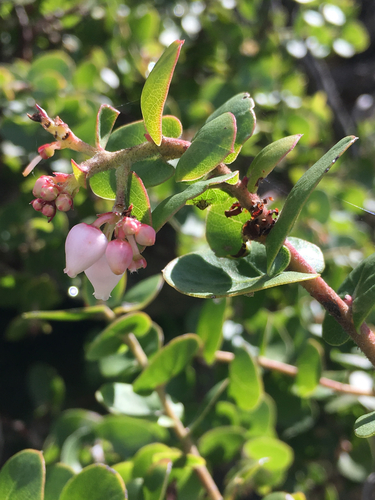
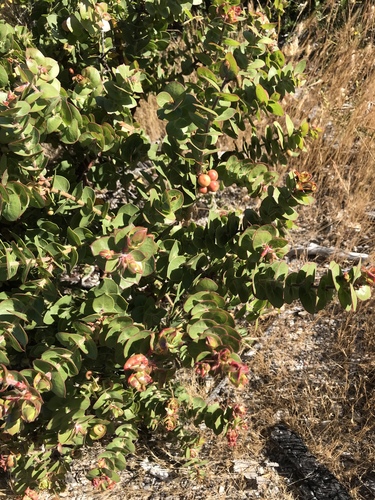
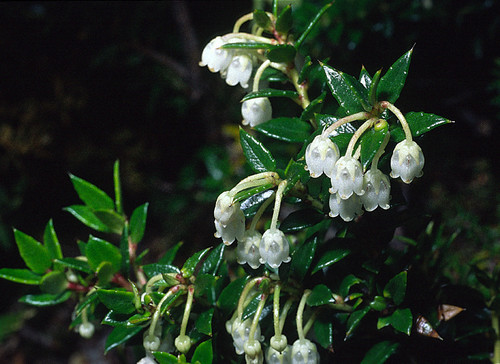
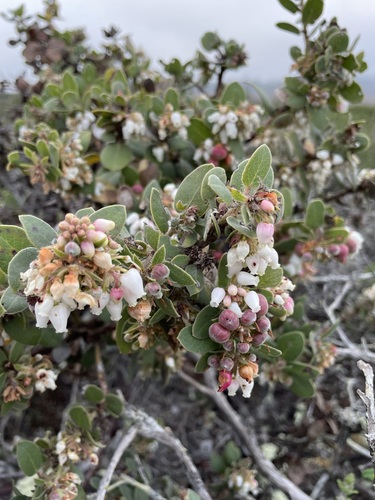
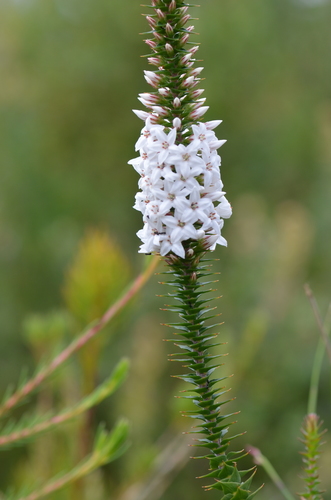
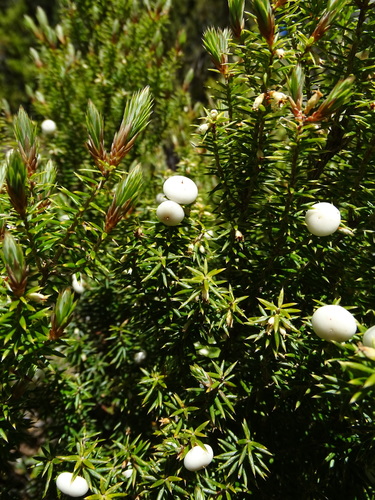
Leptecophylla juniperina is usually a compact or tall shrub growing 0.4 to 2 meters (1 foot 4 inches to 6 feet 7 inches) tall, and rarely grows as a tree reaching up to 6 meters (20 feet) tall. It has rounded brown branchlets. Its leaves are narrowly egg-shaped, measuring 4.2–18 mm long and 1.1–2.5 mm wide. Each leaf has a sharply pointed tip 0.4–1.6 mm long, and a petiole 0.6–1.7 mm long. Flowers are borne singly, either in leaf axils or at the ends of branchlets. Male flowers grow on a pedicel 2–5 mm long, while female flowers grow on a shorter pedicel 1.3–3 mm long. The pedicels carry egg-shaped bracts 0.5–0.9 mm long, plus 8 to 24 overlapping, egg-shaped bracteoles 1.2–2.4 mm long. The sepals of the flowers are 1.7–3.1 mm long. The petal tube is bell-shaped and longer than the sepals: male petal tubes are 2.1–4.4 mm long, and female petal tubes are 1.6–2.8 mm long. Flowering timing varies by subspecies. The fruit is a drupe that can be white, or pale to dark pink, and measures 4–7 mm high by 5–9 mm wide. This species is native to New Zealand, the Australian state of Victoria, and Tasmania. The nominotypical subspecies L. juniperina subsp. juniperina is widespread in forests and shrublands across New Zealand, and in lowland areas of eastern, north-western, and western Tasmania. Subspecies oxycedrus grows only in exposed, rocky coastal regions of southern and western Tasmania, the Bass Strait Islands, and southern Victoria. Subspecies parvifolia is common at altitudes above 600 m (2,000 ft) in central and eastern Tasmania.