About Lepomis gulosus (Cuvier, 1829)
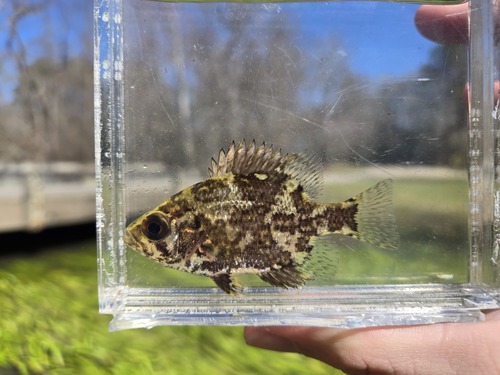
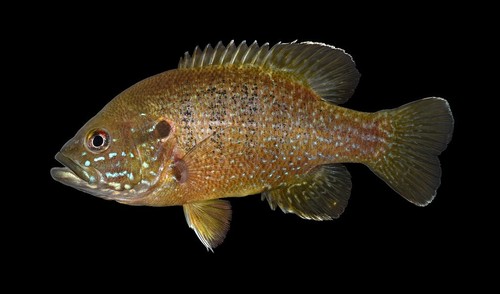
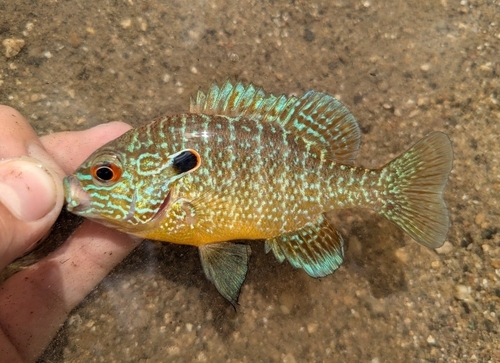
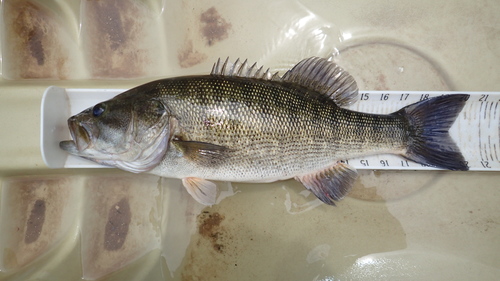
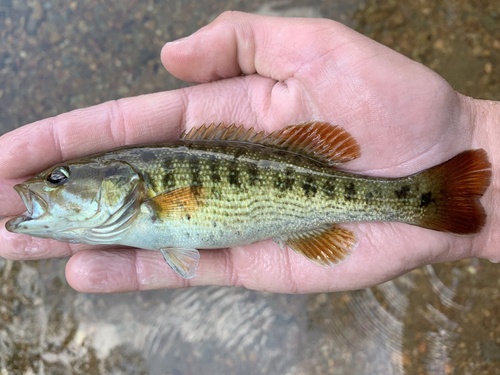
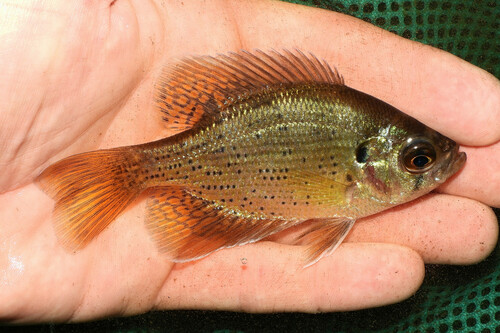
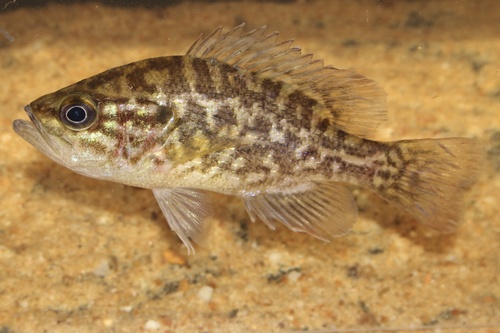
Adult warmouth (Lepomis gulosus) typically have a dusky, mottled brown base color with a slight purplish tint. Their ventral (belly) surfaces are yellow. Breeding males have a bright orange spot at the base of the dorsal fin, along with more pronounced reddish iris coloration. Three to five reddish-brown streaks extend out from the eyes; the warmouth’s black opercular flaps have a red dot and a yellow outline. Most warmouth have three anal fin spines and 6 to 13 dorsal fin spines, with small teeth present on the tongue and palatine bones. This species usually reaches 4 to 10 inches (10 to 25 centimeters) in length, though individuals can grow over 1 foot (30 centimeters) long and weigh up to 2.25 pounds (1.02 kilograms). Warmouth are occasionally confused with rock bass (Ambloplites rupestris) or green sunfish (Lepomis cyanellus), as all three have relatively large mouths and heavy body shapes. Green sunfish differ from warmouth by having a greenish-blue vermiculate (wavy) pattern on their cheeks, a black spot near the base of the dorsal and anal fins, yellowish-white fin borders, and no teeth on the tongue. Rock bass can be distinguished by having five or six anal fin spines, in contrast to the warmouth’s three. Warmouth are distributed across much of the southern United States within the Mississippi River drainage. Their range extends from the Gulf and Atlantic coasts north to Chesapeake Bay, west through Texas to the Rio Grande, and north into the Great Lakes Basin. Breeding populations are established in southern Canada, where the species likely persisted for many years before it was detected. Warmouth are aggressive, hardy fish that inhabit ponds, lakes, rivers, and backwater streams. They can often survive in low-oxygen streams where other sunfish species cannot survive. Warmouth are sight feeders. Their primary habitat is slow-moving water with plenty of vegetation for cover, often around stumps, brush piles, and other dense entanglements; these structures let them ambush prey and escape larger predators. In Florida’s lakes, aquatic macrophyte availability is the largest factor affecting warmouth density and biomass, as these plants provide ambush sites and spawning areas. Young warmouth primarily eat microcrustaceans and aquatic insect larvae. Larger warmouth mainly consume crayfish, freshwater shrimp, isopods, insects, and other small fish. Predators of warmouth include larger fish, snakes, turtles, alligators, and birds. Warmouth can also survive in polluted, low-oxygen waters that other sunfish like rock bass cannot tolerate.