About Lepomis auritus (Linnaeus, 1758)
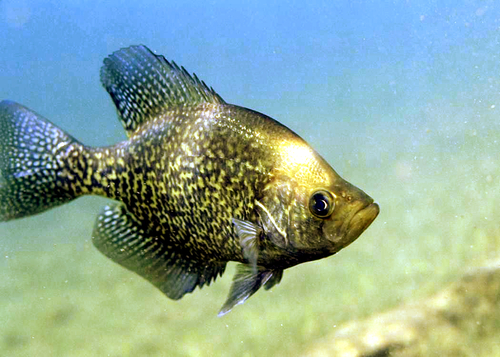
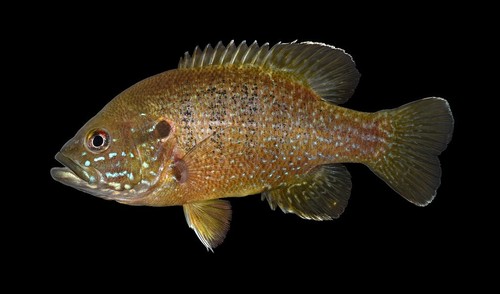
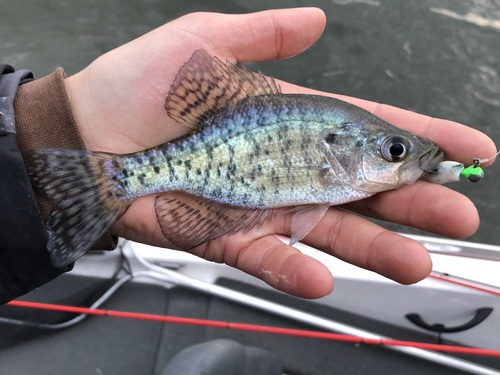
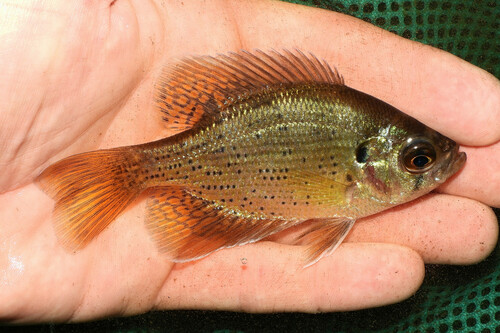
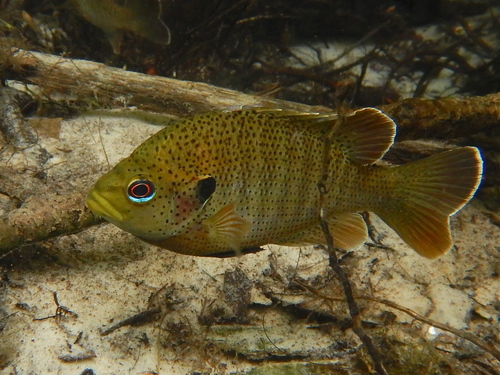
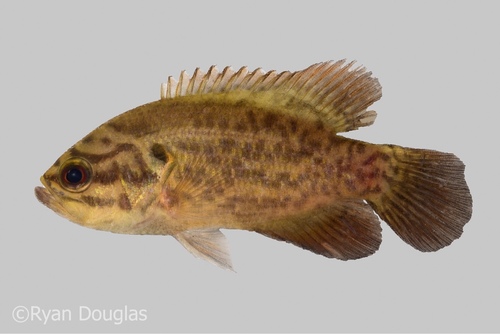
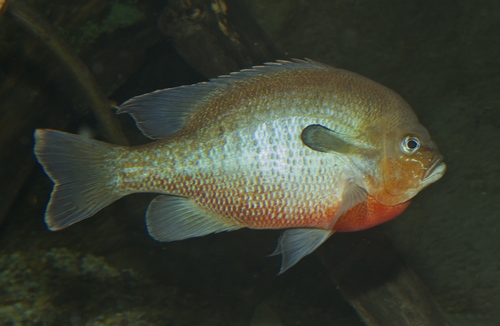
Redbreast sunfish (Lepomis auritus) have an average body length of around 11 centimeters (4 inches), with a maximum recorded length of 30.5 centimeters (12.0 inches) and a maximum recorded weight of 0.79 kilograms (1.7 pounds). This species can be identified by its long black opercular flap, which is longer than the flaps of most other sunfish found in its native range. The head has a small number of blue iridescent vermiculations, and small teeth are present, mostly on the roof of the mouth. Both sexes have olive-green bodies marked with faint vertical bars; these bars become more visible where the body color shifts to blue-green close to the lateral line. Males have darker ventral coloration than females, ranging from orange-yellow to orange-red. The caudal fin is shallowly forked, and may have orange to red pigment. Hybridization between redbreast sunfish and other sunfish species is common across both its native and introduced ranges. The native range of redbreast sunfish covers eastern United States and eastern Canada, specifically in rivers that drain into the Atlantic Ocean. It is primarily a cool-river species, but also lives in freshwater lakes and streams. It has been introduced as far west as Louisiana and West Texas in North America, and has been successfully transplanted and established in Germany, Italy, Mexico, and Puerto Rico. The impacts of introduced redbreast sunfish populations on native species have not been well studied. Redbreast sunfish feed mainly on immature aquatic insects. Stomach content analysis shows that mayflies, small fish, and dragonfly larvae make up the majority of their diet, and small crayfish may also be consumed. As opportunistic feeders, they compete with other sunfish and larger predatory fish that share the same food resources. Smaller redbreast sunfish are primarily preyed on by larger piscivorous fish. Micropterus species are a major threat to redbreast sunfish, because they share the same habitat and redbreast sunfish are readily available as prey. Redbreast sunfish prefer habitat around bank structures and overhanging branches, which provide them with food, shade, and protection. They survive best in flowing water with a pH between 7.0 and 7.5. A lack of current, or water that is overly acidic or overly alkaline, can sharply reduce their survival rate. Human activity can alter abiotic factors like sunlight exposure and biotic factors like predator population size, and these changes have a major impact on redbreast sunfish. Clearing bank debris increases the amount of sunlight reaching the water, which raises water temperature, and also reduces the number of hiding spots along the bank available to the sunfish. Harvesting larger predatory fish reduces their population numbers, which in turn increases the survival rate of redbreast sunfish.