About Lepisosteus platyrhincus DeKay, 1842
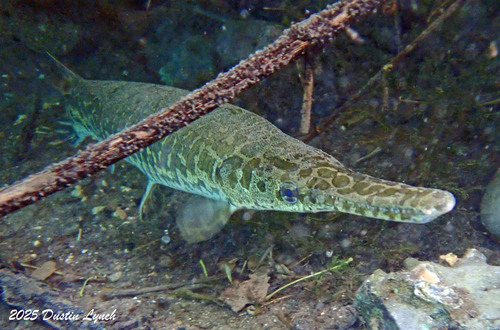
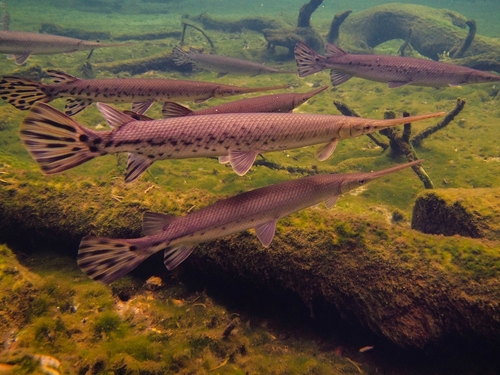
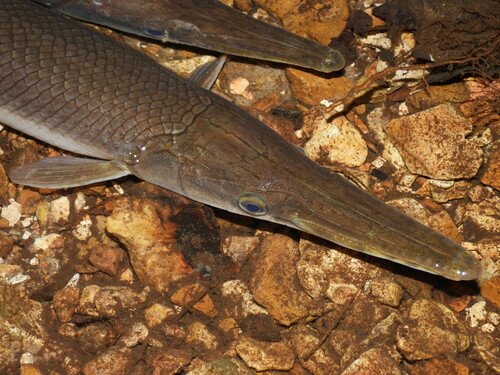
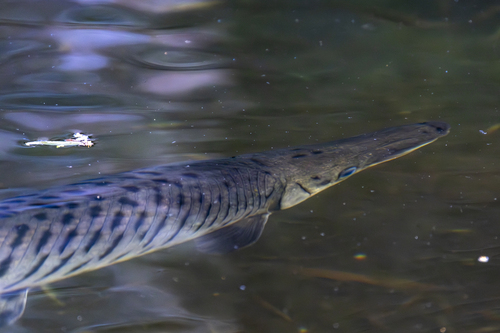
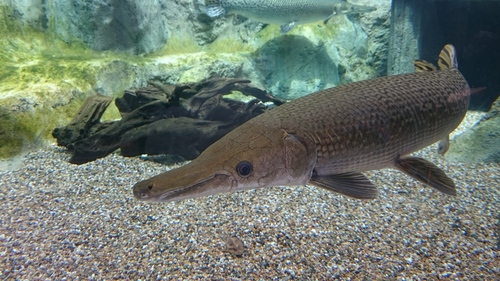
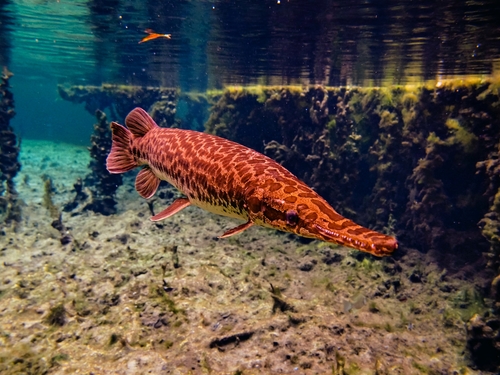
The Florida gar, scientifically named Lepisosteus platyrhincus, is a gar species found in the United States. Its range covers the Savannah River and Ochlockonee River watersheds of Georgia, and all of peninsular Florida. Adult Florida gar can grow to over 3 feet, or 91 centimeters, in length. Young Florida gar feed on zooplankton, insect larvae, and small fish. Adults primarily eat fish, shrimp, and crayfish. While Florida gar are edible, they are not a popular food fish. Their roe is highly toxic to many animals, including humans and birds.
Florida gar inhabit the Ochlockonee River, waters east of this river, and peninsular Florida. They live in medium to large lowland streams, canals, and lakes that have muddy or sandy bottoms, located near underwater vegetation. They most often occur in medium to shallow water. They use a modified air bladder to breathe atmospheric air, an adaptation that lets them survive in water with low oxygen levels. They sometimes hide in aquatic weeds in water 4 to 10 feet deep; in this habitat, they usually position their heads inside the weeds, with only a small portion of their body exposed. They may also rest along the edge of a weed bed, where they sit roughly 3 to 8 inches below the water surface, over a bottom that is typically 3 feet deep or more. Florida gar are also commonly found resting along marshy shorelines; individuals in these areas are usually 2 feet or more in length, over bottoms no deeper than 6 inches. Larger Florida gar specimens are rare, and most are found in the swampy sections of lakes, in areas that are never deeper than 6 to 8 feet.
Florida gar spawn in late winter and early spring, most typically between February and March. Groups of male and female Florida gar gather in shallow, weedy water, where females release adhesive eggs that stick to surrounding aquatic plants. A single female's eggs are usually fertilized by multiple males. Newly hatched young have an adhesive organ at the tip of their snout, and they stay attached to vegetation until they reach roughly 0.8 inches, or 2 centimeters, in length. After the spawning season ends in late winter or early spring, male Florida gar experience a decline in reproductive function through the summer, including decreases in reproductive hormone levels and slowed gonad maturation.