About Lepisma saccharinum Linnaeus, 1758
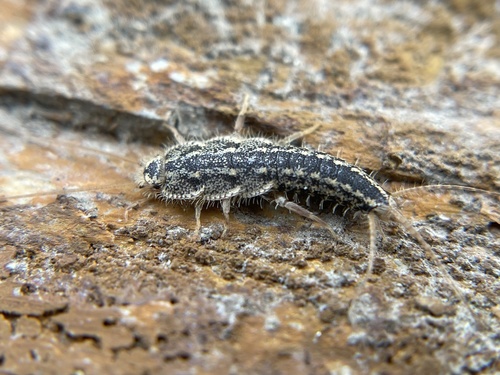
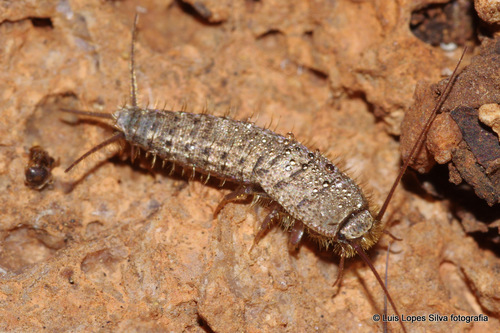
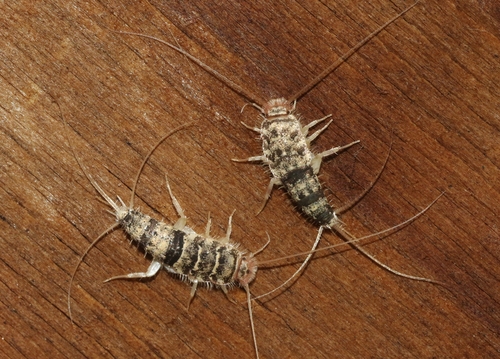
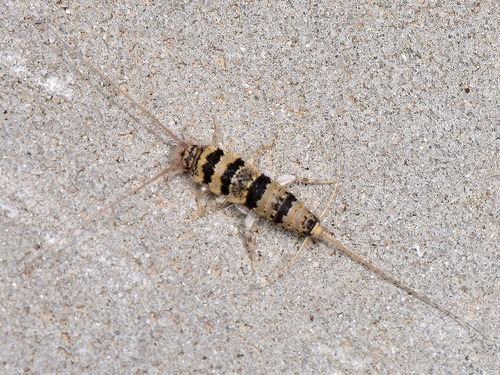
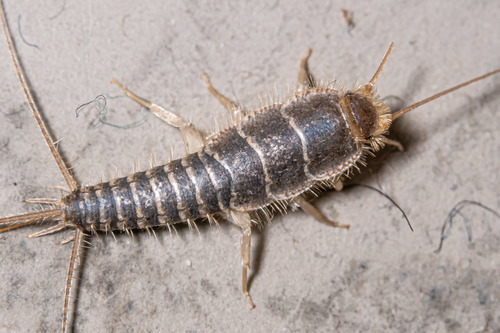
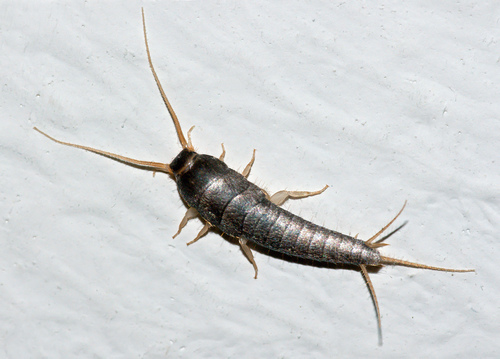
The species described here is Lepisma saccharinum Linnaeus, 1758, commonly known as the silverfish. Silverfish are nocturnal, wingless insects that typically measure 7–10 mm (0.3–0.4 in) in length. Their abdomens taper at the end, creating a fish-like overall shape. Newly hatched silverfish are whitish, and develop a greyish hue and metallic sheen as they age. At the tip of the abdomen, they have two long cerci, plus one terminal filament that sits between the two cerci. They have two small compound eyes; unlike silverfish, other members of the order Zygentoma (such as those in the family Nicoletiidae) are eyeless. Like all species in the group Apterygota, silverfish have no wings. They have long antennae, and move with a wiggling motion that resembles how a fish swims. This movement, combined with their general appearance and silvery scales, gives the insect its common name. Silverfish can regenerate lost terminal filaments and antennae within four weeks. They are agile runners that avoid light, and typically live up to three years. Silverfish are a cosmopolitan species, found across Africa, the Americas, Australia, Eurasia, and parts of the Pacific. They only inhabit moist areas, and require an environmental relative humidity between 75% and 95%. In urban regions, silverfish are commonly found in attics, basements, bathtubs, showers, kitchens, sinks, libraries, and classrooms, and can live inside old books. Before silverfish reproduce, they perform a three-phase mating ritual that can last longer than half an hour. In the first phase, the male and female stand face to face, touch their vibrating antennae together, then repeatedly back away and return to this starting position. In the second phase, the male runs away and the female chases after him. In the third phase, the male and female stand side by side in a head-to-tail position, and the male vibrates his tail against the female’s body. Finally, the male deposits a spermatophore: a sperm capsule covered in gossamer, which the female takes into her body through her ovipositor to fertilize her eggs. Females lay groups of fewer than 60 eggs at a time, depositing the clutches in small crevices. The eggs are oval-shaped, whitish, around 0.8 mm (0.031 in) long, and take between two weeks and two months to hatch. A female silverfish usually lays fewer than 100 eggs over her entire lifetime. When nymphs hatch, they are whitish in color and look like smaller versions of adult silverfish. As they moult, young silverfish develop a greyish appearance and metallic sheen, and reach adulthood after between three months and three years. Over their lifetimes, silverfish may go through 17 to 66 moults, and can sometimes have as many as 30 moults in a single year, which is far more than most insects. Silverfish are among the few insect types that continue to moult after reaching adulthood, with some sources estimating their maximum lifespan at between 2 to 8 years. Silverfish can digest cellulose (a structural component of paper) on their own, using cellulase produced by their midgut. They feed on materials that contain polysaccharides, including starches and dextrin found in adhesives. Common food sources include book bindings, carpet, clothing, coffee, dandruff, glue, hair, some paints, paper, photos, plaster, and sugar. They will damage wallpaper to access and eat the paste behind it, and can also cause damage to tapestries. Other items silverfish may eat include cotton, dead insects, linen, silk, leftover crumbs, and even their own exuviae (moulted exoskeletons). During periods of famine, silverfish may even feed on leather and synthetic fabrics. If water is available, silverfish can survive for a year or longer without eating. Silverfish are considered household pests because they consume and damage human property. While they do contaminate food and cause other types of damage, they do not transmit any disease. Known predators of silverfish include house centipedes and spiders, specifically the spitting spider Scytodes thoracica. The essential oil of Japanese cedar (Cryptomeria japonica) has been studied as a repellent and insecticide against Lepisma saccharinum, and the research returned promising results. Filter paper impregnated with the oil repelled 80% of silverfish at a gas concentration of 0.01 mg/cm3, and 10 hours of exposure at a concentration of 0.16 mg/cm3 caused 100% mortality.