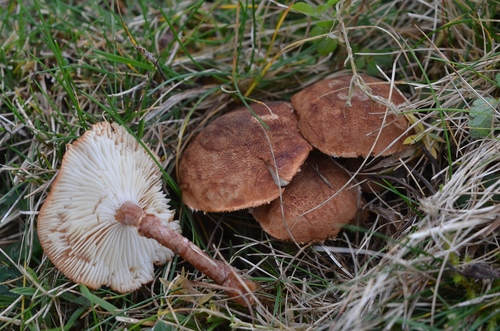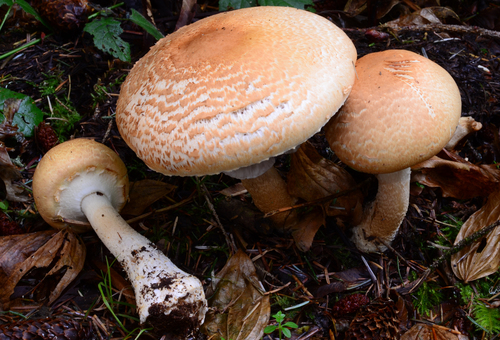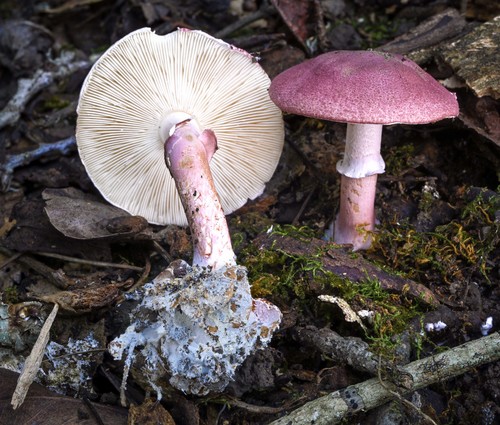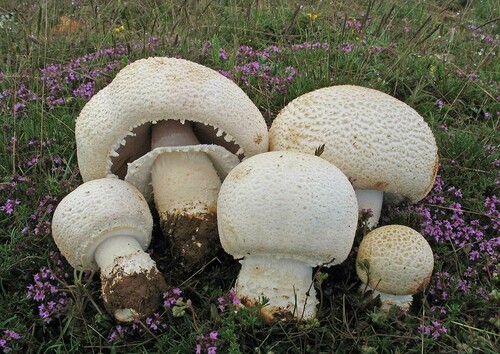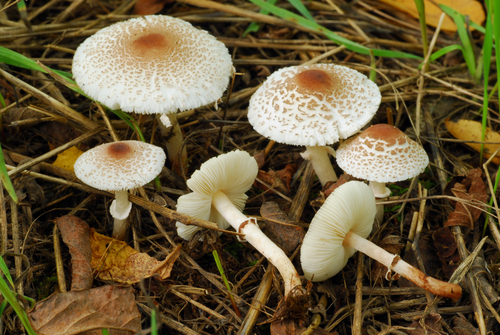
Lepiota lilacea Bres. is a fungus in the Agaricaceae family, order Agaricales, kingdom Fungi. Not known to be toxic.

Photo of Lepiota lilacea Bres. (Lepiota lilacea Bres.)
🍄 Fungi

Lepiota lilacea Bres.

Lepiota lilacea Bres.

Lepiota lilacea is a poisonous, small-capped agaric fungus native to Europe and America, first described in 1893.

Family
Genus
Lepiota
Order
Agaricales
Class
Agaricomycetes

About Lepiota lilacea Bres.

Lepiota lilacea Bres. (Lepiota lilacea) is a species of fungus in the Agaricaceae family. It was first formally described in 1893 in Italy by Giacomo Bresadora, in his publication Fungi Tridentini. This species can be identified by its small cap, which grows up to 36 mm across and has a dark purple center, plus its clearly visible annulus. The spores of Lepiota lilacea are non-dextrinoid, meaning they do not turn reddish-brown when tested with Melzer's reagent. This fungus is poisonous to humans, and it is native to Europe and America.
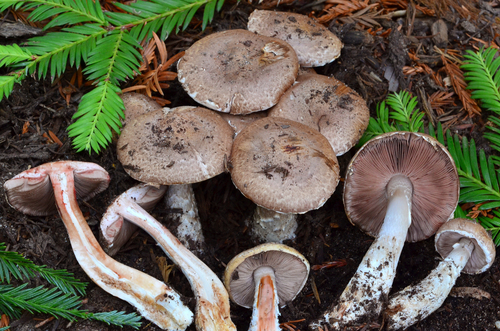
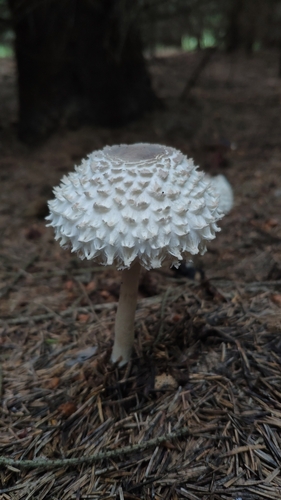
Photo: (c) Fabio Mauri, some rights reserved (CC BY-NC), uploaded by Fabio Mauri · cc-by-nc

Taxonomy

Fungi Basidiomycota Agaricomycetes Agaricales Agaricaceae Lepiota

More from Agaricaceae

Sources: GBIF, iNaturalist, Wikipedia, NCBI Taxonomy · Disclaimer

Identify Lepiota lilacea Bres. instantly — even offline

iNature uses on-device AI to identify plants, animals, fungi and more. No internet needed.

Download iNature — Free

Start Exploring Nature Today

Download iNature for free. 10 identifications on us. No account needed. No credit card required.

Download Free on App Store