About Lepilemur leucopus (Forsyth Major, 1894)
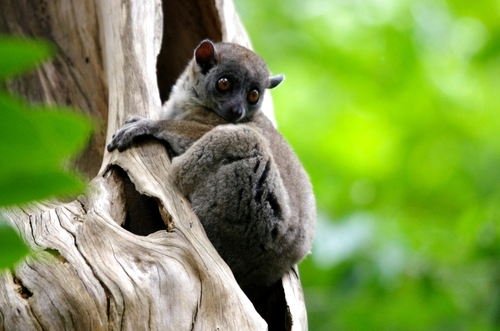
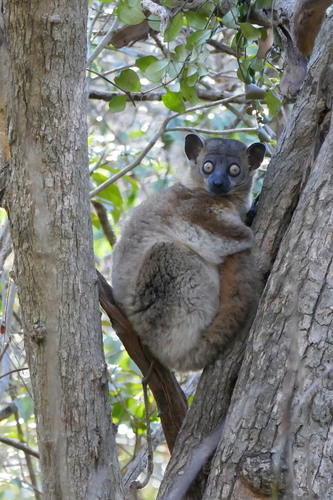
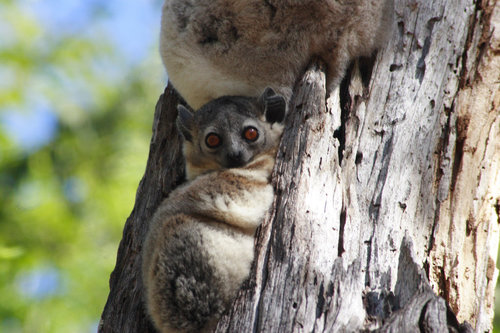
The white-footed sportive lemur, also called the white-footed weasel lemur or dry-bush weasel lemur, has the scientific name Lepilemur leucopus. It is a species of lemur belonging to the family Lepilemuridae, the group of sportive lemurs. Its appearance is similar to other lemurs in this family: it has a grey back, a pale grey to white underside, and a light brown tail. This is a nocturnal animal that moves through forest habitats using a vertical clinging and leaping technique. It is endemic to Madagascar, where it lives in southern subtropical or tropical dry shrubland. The species is currently threatened by habitat loss caused by agricultural practices and charcoal production. This lemur species occurs in the southern Madagascar spiny thickets (habitats dominated by spiny plants in the family Didiereaceae) as well as gallery forests. Its range was originally thought to be restricted to the area between the Menarandra and Mandrare Rivers, but recent taxonomic changes within the genus Lepilemur have left its exact range and distribution unclear. At the Berenty Private Reserve in southern Madagascar, population density of this species has been estimated at several hundred individuals per square kilometer. Because of the uncertainty surrounding this lemur's habitat range, the International Union for Conservation of Nature (IUCN) lists its conservation status as Data Deficient. If the species is indeed limited to the region between the two rivers, it may be reclassified as a threatened species.