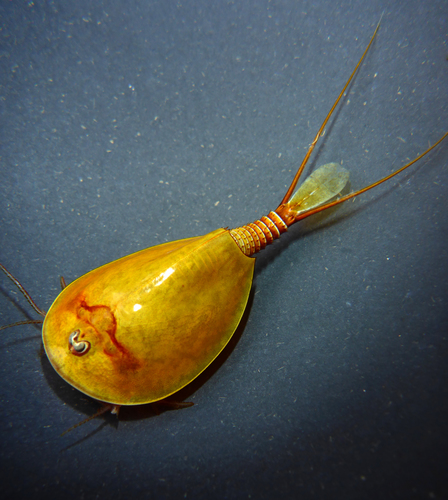
About Lepidurus packardi Simon, 1886
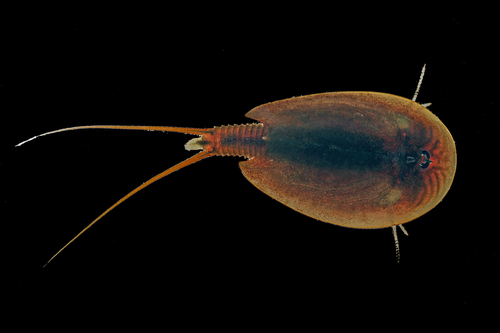
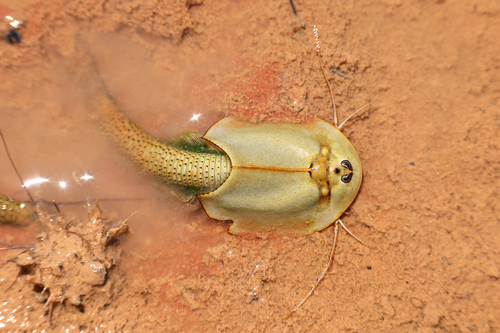
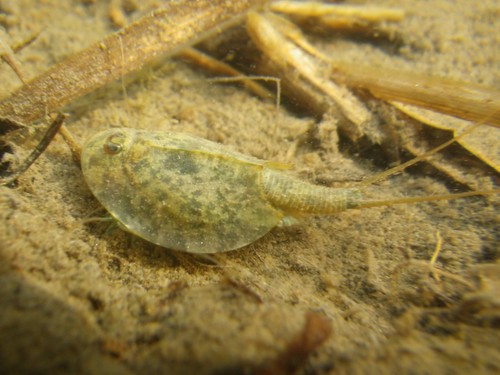
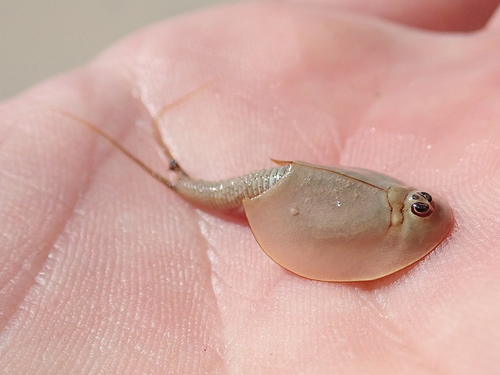
Lepidurus packardi reaches approximately 5 centimeters (2.0 inches) in total length. It has a shield-like carapace that grows up to 3.5 cm (1.4 in) long. It has compound eyes, up to 48 pairs of phyllopods (swimming appendages), and two cercopods, which are pincer-like appendages located at the end of its telson, or tail segment. It is similar to the related species Lepidurus couesii, but is a distinct species. Sexes can be distinguished by the presence of egg sacs attached to the eleventh phyllopods of the female. Adult L. packardi are omnivorous; they collect food items with their phyllopods while swimming, climbing on vegetation, or digging in sediment. This species acts as an ecosystem engineer through bioturbation: digging through sediment creates large amounts of turbidity, which may alter the ecology of its pool habitat by reducing plant cover. Reproduction takes place when temporary pools refill with water. Larger females have higher fecundity, with clutch sizes ranging from eight to 61 eggs. The eggs can survive desiccation when the pool dries out, and will hatch within three weeks, often much faster, after the pool refills. Desiccation is not required for hatching to occur. Larvae hatch as metanauplii, and undergo ecdysis (molting) several times, growing more phyllopods with each molt. L. packardi matures in around 38 days, begins reproducing around the 54th day of life, and has a total lifespan of about 144 days. It reaches sexual maturity when its carapace is 10–12 mm (0.4–0.5 in) long. Fecundity is heavily reduced in individuals infested with a parasitic echinostome fluke. This freshwater crustacean is mostly endemic to California, where it inhabits the endangered vernal pool habitat type, plus other freshwater aquatic habitats including ponds, reservoirs, ditches, road ruts, and other natural and artificial temporary water bodies. It occurs across several regions of California: the Central Coast, Sacramento Valley, San Joaquin Valley, and the southern foothills of the Sierra Nevada. The southeastern Sacramento Valley holds around 15% of the state's remaining vernal pool grassland habitat, and hosts around 35% of all known L. packardi occurrences. 28% of all known occurrences of the species are located in Sacramento County, California. Other sites with confirmed occurrences include Don Edwards San Francisco Bay National Wildlife Refuge, multiple preserves in Tehama County, and areas near the cities of Chico, Redding, and Red Bluff. It has also been recorded at Sacramento National Wildlife Refuge, Travis Air Force Base, and Jepson Prairie Preserve. In the San Joaquin Valley, it has been recorded at Merced National Wildlife Refuge and San Luis National Wildlife Refuge. Occurrences are found in the Sierra foothills region in Tulare, Fresno, Merced, and Stanislaus Counties. A population also exists outside of California in the Agate Desert of Oregon.