About Lepidothrix coronata velutina (Berlepsch, 1883)
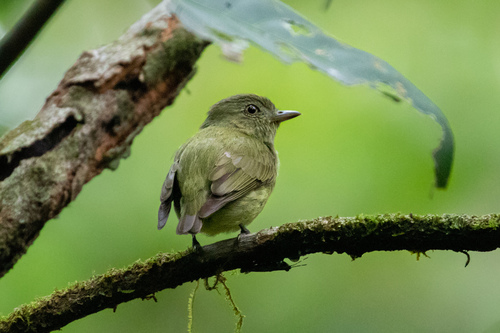
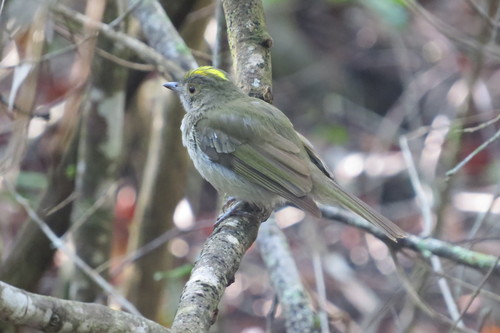
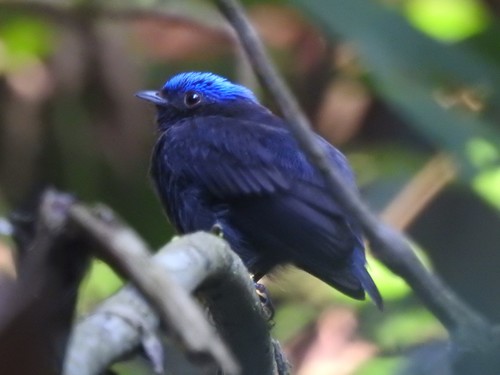
Blue-capped manakins (Lepidothrix coronata velutina) exhibit sexual dimorphism in both weight and wing chord length. On average, females are heavier than males: females average 9.8 g, with a weight range of 8.5 g to 11.5 g, while males average 8.5 g, with a weight range of 7.5 g to 9.5 g. For wing chord length, males average 60.45 mm, ranging from 58 mm to 63 mm, and females average 58.76 mm, ranging from 55 mm to 62 mm. In terms of plumage, males are sooty black with a bright blue crown, while females are solid green. Juvenile plumage matches female plumage, but is duller in overall color. Molt proceeds in three distinct prebasic stages. The first prebasic molt is partial, and occurs within two months after a juvenile leaves the nest. The second prebasic molt is complete, eliminates all prior molt limits, and happens at the end of the first breeding season or one year after the first prebasic molt; at this stage, males begin to develop visible signs of male plumage. The third prebasic molt occurs at the end of the third year, after which males gain their full mature male plumage. Blue-capped manakins inhabit the understory of South American terra firme forests. They are primarily frugivores, and their diet includes fruit from plant families Melastomataceae, Moraceae, Bromeliaceae, and Araceae. When joining mixed-species foraging flocks, blue-capped manakins most commonly associate with cinereus antshrikes, dusty-throated antshrikes, and white-flanked, Yasuni, long-winged, gray, and rufous-tailed stipplethroats. Mixed flocks typically contain only one or two blue-capped manakins; when two are present, they forage independently of one another. Blue-capped manakins show no aggressive behavior toward other bird species in these mixed flocks. Both males and females will forage in mixed flocks, but on average, females spend more time in the flock than males. Foraging occurs in the forest understory at heights between 2 and 7 meters above ground. While in mixed flocks, blue-capped manakins prefer to feed on arthropods, including ants, flies, and other small insects. They hunt these arthropods most often using a sally-strike or sally-glean technique off of live foliage. Since the species normally has a frugivorous diet, researchers speculate that blue-capped manakins join mixed flocks to take advantage of the flock's effect of disturbing and scattering insects, making them easier to catch.