About Lepidoblennius haplodactylus Steindachner, 1867
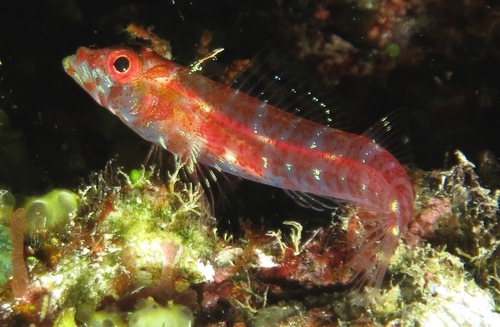
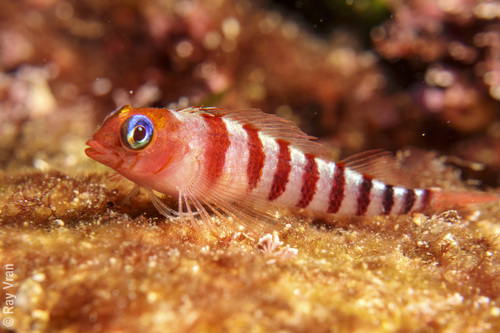
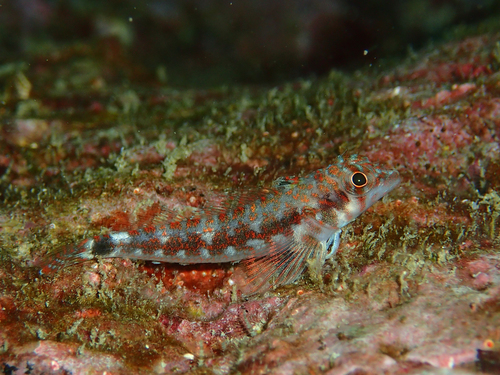
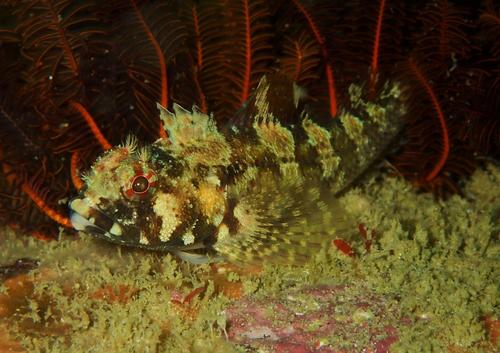
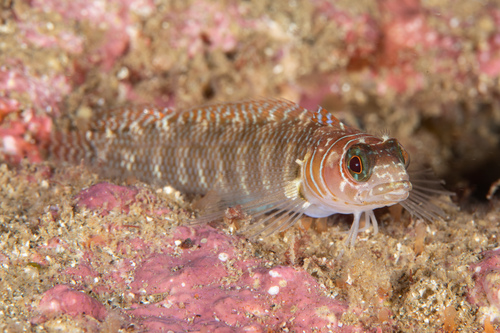
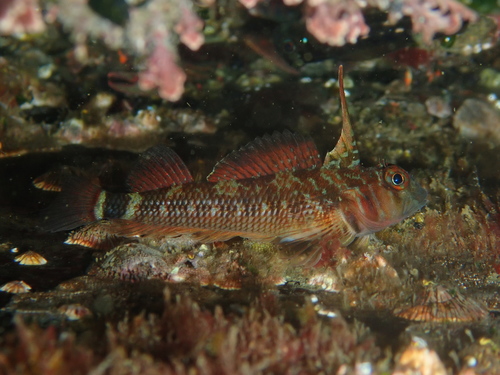
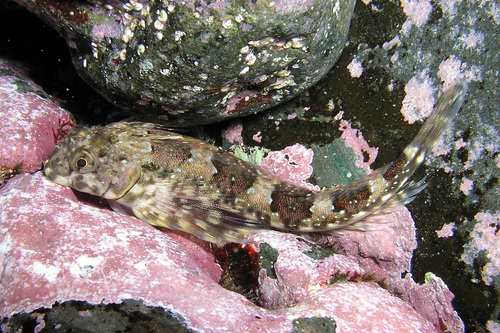
The eastern jumping blenny, Lepidoblennius haplodactylus, has a slightly compressed body and a scaleless head with a steep upper jaw. Its upperparts range from greyish to greenish yellow, becoming paler toward the belly. It typically has five dark saddle-shaped markings along its back. Its flanks are marked with small, irregular pearly spots alongside dark blotches or vertical streaks. A brown band runs from its eye to the upper jaw. The maximum recorded standard length of this species is 10.7 centimetres, or 4.2 inches. It can be distinguished from the allopatric western jumping blenny by the broad membrane that separates the third and fourth spines in its dorsal fin. The eastern jumping blenny is endemic to the eastern coast of Australia, where it occurs from Rockhampton, Queensland south to Western Port, Victoria. This species inhabits shallow reefs with exposed rocks covered in algae, and is common in the intertidal zone. It is frequently spotted at low tide along the water's edge, where it can be seen hopping over damp, rocky surfaces. It occurs at depths between 0 and 3 metres, or 0.0 and 9.8 feet.