About Lepas anserifera Linnaeus, 1767
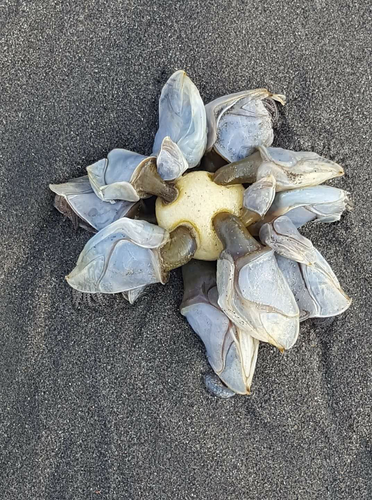
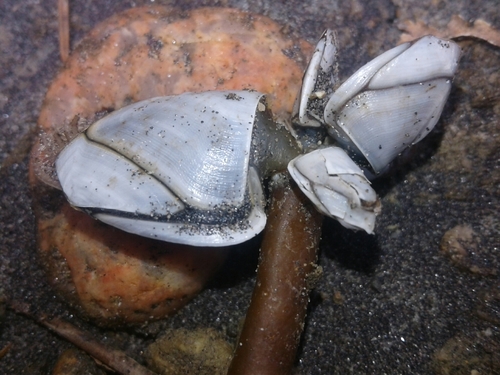
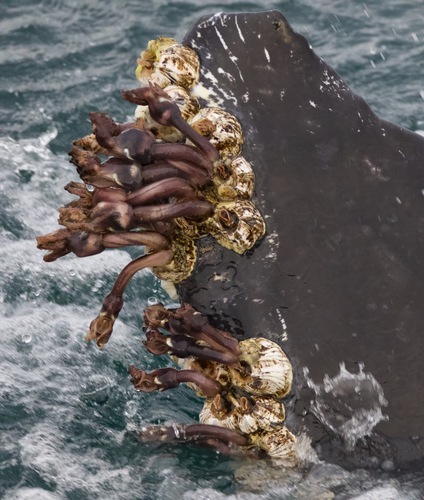
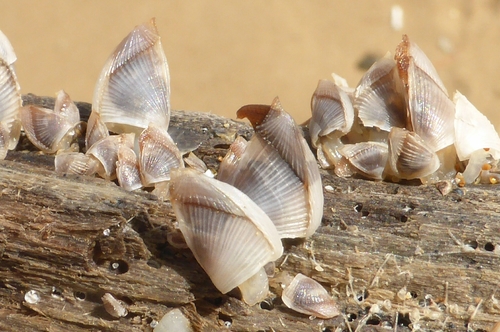
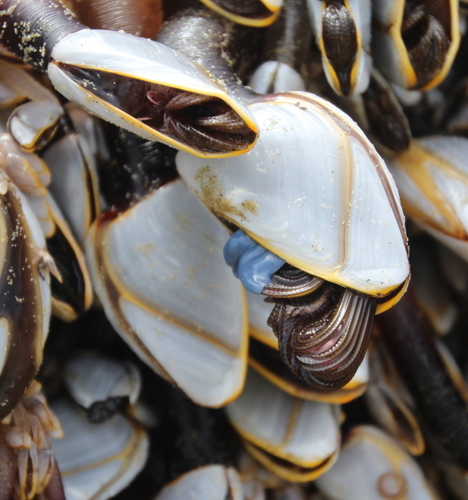
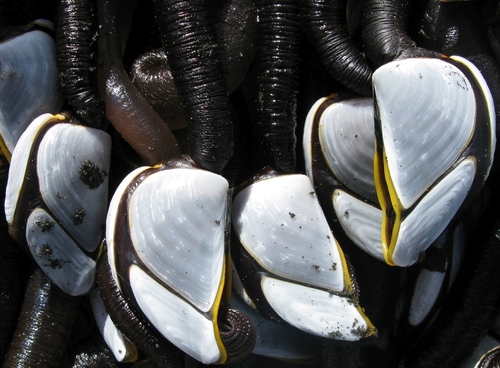
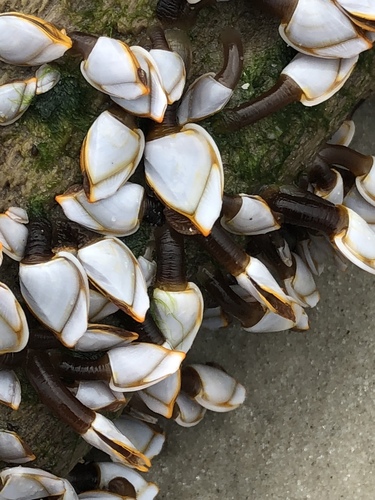
Lepas anserifera Linnaeus, 1767 has a capitulum (shell) enclosed within six white plates, supported by a tough, flexible, orange stalk called a peduncle. The capitulum measures around 4 centimetres (1.6 inches) long, and the stalk is a similar length. These calcareous plates are thick, sculptured, and held in close contact with each other. The largest plates are the pair of scuta located at the stalk end; these are quadrangular, feature longitudinal furrows, and have a smooth umbonal area. The pair of terga at the free end of the capitulum are trapezoid, and marked with more furrows than the scuta. The carina that sits between these is wide and forked. The tergal flaps are yellow, which creates a colored rim around the plates in living individuals. The body hidden beneath these plates includes a head, thorax, and a vestigial abdomen. The head holds the mouthparts: a labrum with fine teeth along its inner margin, a blunt palpus, mandibles, and maxillae. The thorax carries three pairs of maxillipeds, and cirri made up of five or six pairs of long feeding appendages. Its caudal appendages are curved and pointed, a feature that distinguishes Lepas anserifera from other related species. Lepas anserifera has a cosmopolitan distribution, and occurs mainly in temperate and tropical seas. It typically grows in clusters, anchoring to driftwood and other floating objects including whales via its peduncle. It is sometimes found washed up on beaches still attached to this flotsam.