About Lepadogaster candolii Risso, 1810
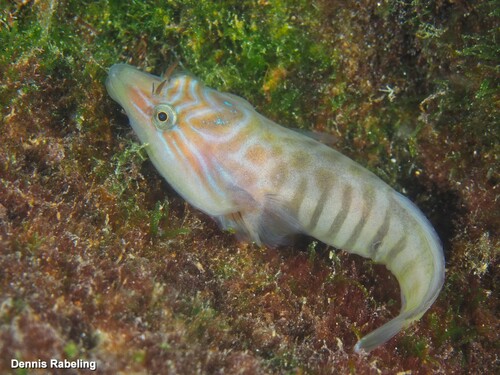
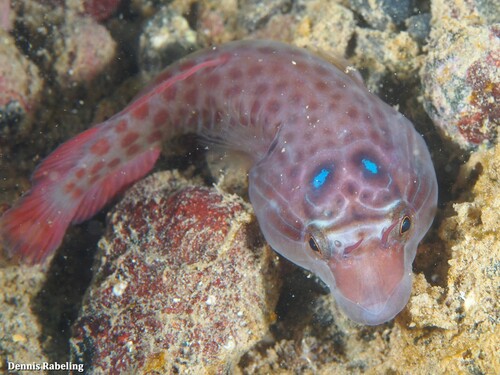
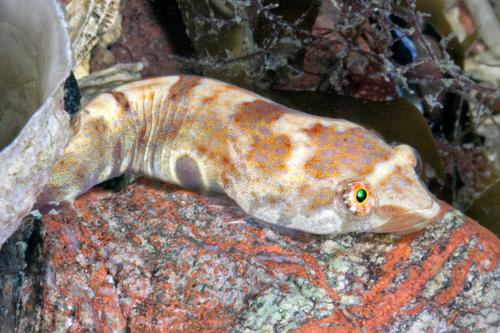
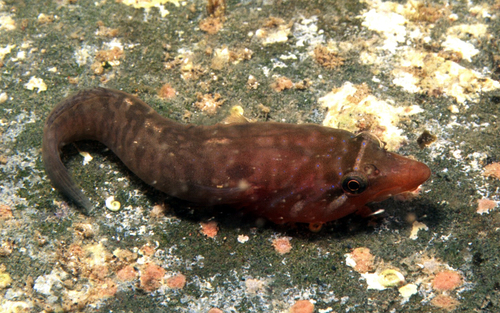
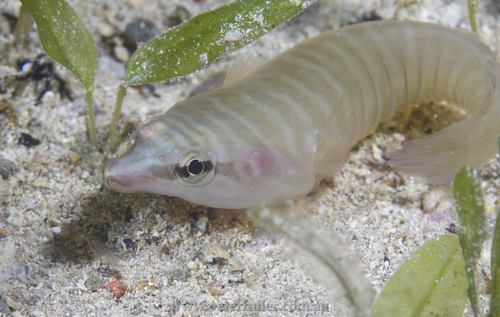
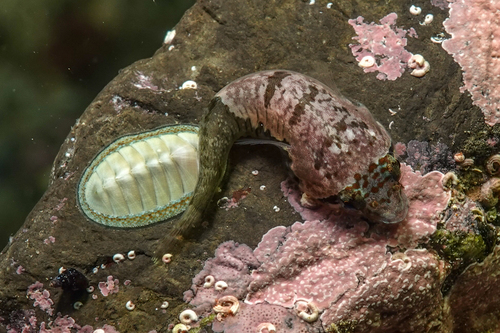
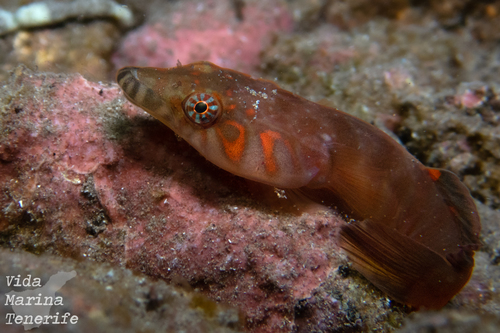
Lepadogaster candolii Risso, 1810, commonly called the Connemarra clingfish, is a fish species belonging to the genus Lepadogaster. It is found in the Eastern Atlantic, ranging south from the British Isles (off the coasts of western Scotland, south-west England, and Ireland) to Madeira and the Canary Islands, and also occurs in the western Mediterranean and the Black Sea. Its specific epithet candolii was named to honor Swiss botanist Augustin Pyramus de Candolle (1778–1841). This specific name has been spelled several different ways: candolii, candolei, candollei, and decandollii, but only the spelling candolii is considered correct. Some researchers have found that L. candolii is not closely related to the other two species currently placed in the genus Lepadogaster. These researchers have proposed moving this species into the resurrected monotypic genus Mirbelia Canestrini, 1864, until more definitive taxonomic research is completed. L. candolii is classified as a euryecious species, meaning it tolerates and prefers a wide range of different living conditions and habitat types. It most frequently inhabits small cavities in underwater rock faces, boulder fields, and seagrass meadows. This species can grow to a maximum total length of 7.5 cm (3.0 in), and shares many physical similarities with Lepadogaster lepadogaster. Like other species in the genus Lepadogaster, L. candolii has a flattened body and bilateral symmetry. In contrast to L. lepadogaster, which has a triangular head, L. candolii has a more rounded head and rounded fins. Individuals of L. candolii have been photographed cleaning dusky groupers (Epinephelus marginatus), and have even been observed entering the mouth of the grouper to do so.