About Leontopithecus chrysopygus (Mikan, 1823)
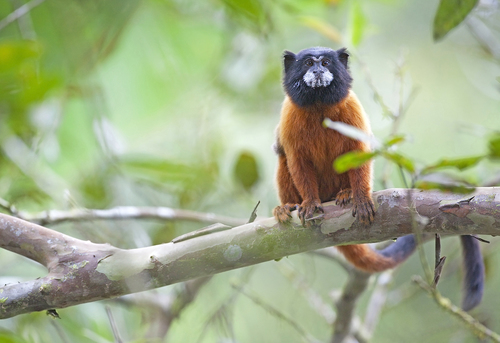
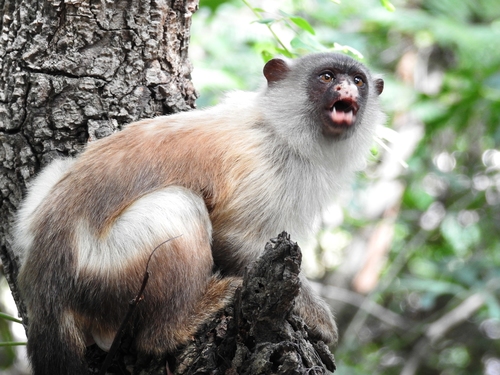
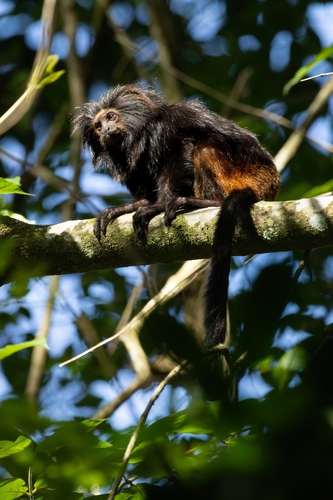
The black lion tamarin (Leontopithecus chrysopygus), also called the golden-rumped lion tamarin, is a lion tamarin endemic to the Brazilian state of São Paulo. It is found almost exclusively in Morro do Diabo State Park. Due to its extremely restricted geographical range, it is the rarest of New World monkeys, and little is currently known about the species. It was considered extinct for 65 years before it was rediscovered in 1970. In 2016, an adult couple was found east of its known range at Caetetus Ecological Station, marking the first sighting of the species there in six years. A 2020 assessment from the International Union for Conservation of Nature (IUCN) estimated that 1,600 black lion tamarins live in the wild, with 1,200 of these individuals located in Morro do Diabo State Park. Black lion tamarins typically live in groups of 4 to 9 individuals, occupying primary and secondary forests around the edge of their shared home range. On average, adult black lion tamarins weigh between 300 and 700 grams (11 to 25 oz).
Black lion tamarins mate and produce offspring during the spring, summer, and fall months, which fall between August and March in Brazil. Most females produce one litter per year, but 20% of females produce two litters in a single year. The average litter size for the species is two infants. While most mammal species produce an equal 50:50 ratio of male to female offspring, the black lion tamarin almost always has a 60:40 ratio of males to females at birth. Most infant deaths happen within the first two weeks of life, and newborns of first-time mothers have the lowest survival rates. Survival to adulthood is 10% higher for wild-born black lion tamarins than for those born in captivity.
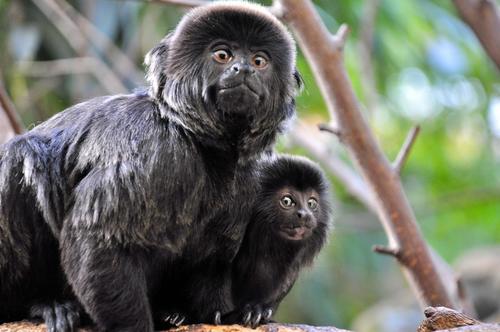
For the first few months after birth, infant black lion tamarins cannot collect their own food. Infants ride on a parent’s back during this time and receive food from their parents. Infants nurse only for the first 4 to 5 weeks after birth. After this period, parents and other group members share food with the infant. Food sharing happens when group members offer food, or when the infant begs for food. Until approximately 15 weeks of age, infants get most of their food, especially insects, from other group members. Food offers from group members peak at 7 weeks of age. After 15 weeks, food sharing slowly decreases, and stops completely by 26 weeks of age.