About Lentinula raphanica (Murrill) Mata & R.H.Petersen
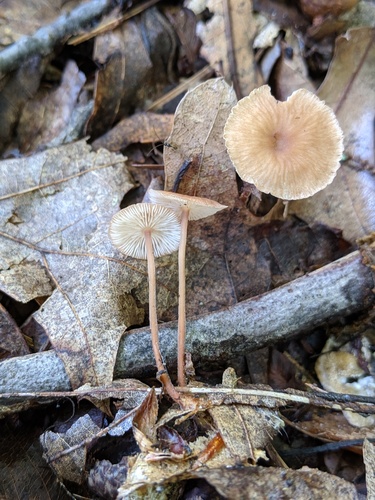
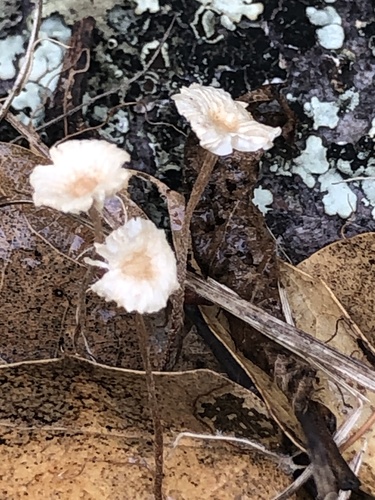
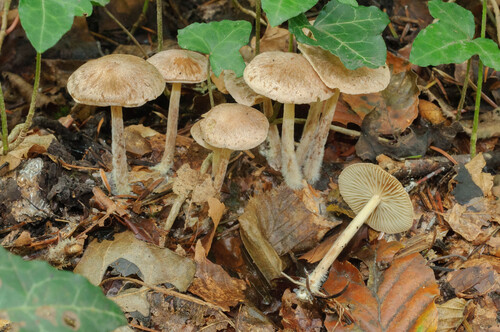
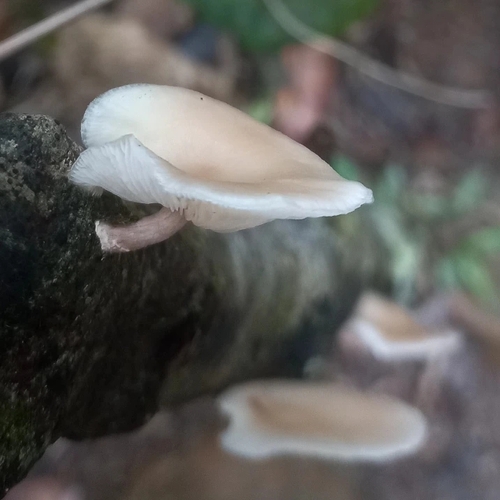
Lentinula raphanica is an edible agaric fungus species that belongs to the family Omphalotaceae. In 1943, William Alphonso Murrill originally described this group as two separate species: Armillaria raphanica and Gymnopus alliaceus. In 2001, Ron Petersen and J. L. Mata reclassified these two taxa into a single species within the genus Lentinula. This fungus produces convex caps that reach up to 7.5 centimeters (3 inches) wide, which are pale in color with yellowish blotches. Its stem grows up to 8 centimeters (3 and 1/4 inches) long, and it produces a white spore print. The fruitbodies of Lentinula raphanica look similar to other species in the genus Lentinula, including the well-known shiitake mushroom Lentinula edodes. It can be distinguished from these related species by its gills and odor, which are reminiscent of radish or alliums, particularly when the mushroom is drying. This species is found in the American subtropics, including the Gulf Coast of the United States and Brazil. It grows on hardwood logs. It is eaten by the Witoto and Andoque people of Colombia, and by the Yanomami people of Brazil. In the Sanumá language spoken by the Yanomami, the species is called Naönaö amo. The Yanomami traditionally serve this mushroom boiled, alongside broth and beiju cakes.