About Lentinula edodes (Berk.) Pegler
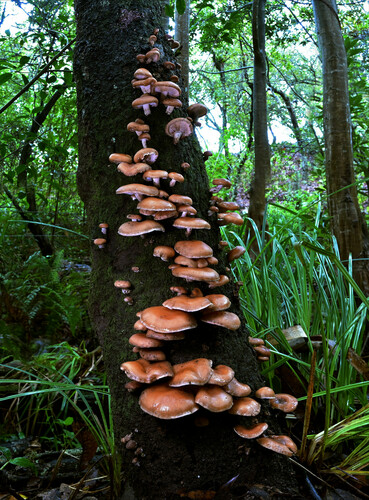
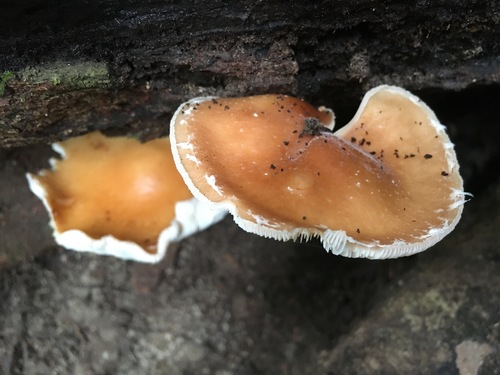
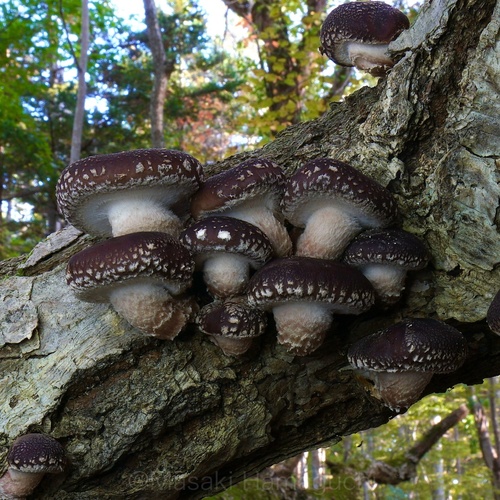
Lentinula edodes (Berk.) Pegler, commonly known as shiitake or black mushroom, is an edible macrofungus native to East Asia and mainland Southeast Asia, now cultivated and consumed worldwide. In the wild, shiitake grows in groups on decaying wood from a range of deciduous trees, most notably shii and other chinquapins, along with chestnut, oak, maple, beech, sweetgum, poplar, hornbeam, ironwood, and mulberry. Its natural distribution is limited to warm, moist climates across Southeast Asia. Rarely, eating raw or undercooked shiitake can trigger an allergic reaction known as shiitake dermatitis. This reaction causes a red, streaky, itchy rash of small papules that develops across the whole body, including the face and scalp, around 24 hours after consumption. Sun exposure may worsen the rash, which clears on its own within 3 to 21 days. This reaction is believed to be caused by lentinan, a polysaccharide found in shiitake. It is more common in East Asia, but its occurrence is thought to be rising in Europe as consumption of the mushroom increases. Thorough cooking removes the compound that causes this allergic reaction. The earliest written record of shiitake cultivation dates back to 1209, during China's Song dynasty, in the Records of Longquan County compiled by He Zhan. The 185-word description of cultivation from this text was cross-referenced many times, and was eventually adapted into a 1796 book by Japanese horticulturist Satō Chūryō, the first Japanese book focused on shiitake cultivation. Japanese cultivators traditionally grew the mushroom by felling shii trees and placing the cut logs near trees that already hosted growing shiitake or held shiitake spores. Before 1982, the Japanese variety of shiitake could only be grown in its traditional locations using historical cultivation methods. A 1982 study on the budding and growth of the Japanese variety opened opportunities for commercial cultivation of this mushroom in the United States. Today, shiitake is widely cultivated across the globe, and makes up approximately 25% of total annual global mushroom production. Commercially, shiitake is typically grown in conditions that mimic its natural habitat, using either artificial growing substrate or hardwood logs, most commonly oak. Both fresh and dried shiitake are widely used in cuisines across East and Southeast Asia. In Chinese cuisine, it is added to a wide range of dishes, including soups, braised dishes, and stir-fried vegetable dishes such as Buddha's delight. In Japanese cuisine, shiitake is served in miso soup, used as a base for a type of vegetarian dashi, and included as an ingredient in many steamed and simmered dishes. Two particularly valued varieties are produced when growing temperatures are cool. The high-grade winter mushroom is called dōnggū in Chinese and donko in Japanese. The most highly prized variety is called huāgū, or flower mushroom, in Chinese, named for the flower-like pattern of cracks that forms on its cap.