About Lentigo lentiginosus (Linnaeus, 1758)
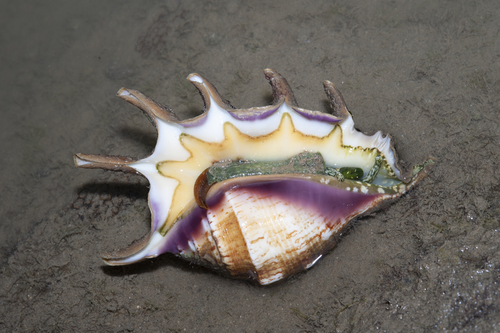
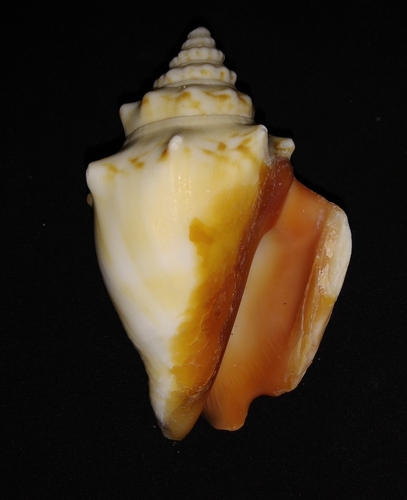
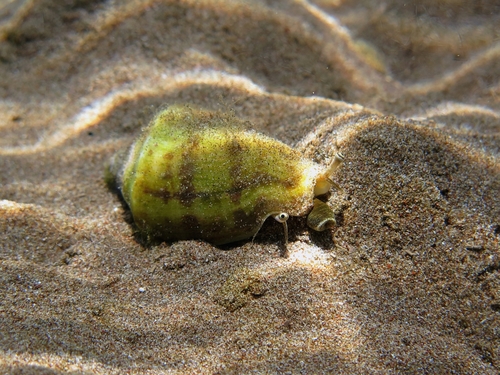
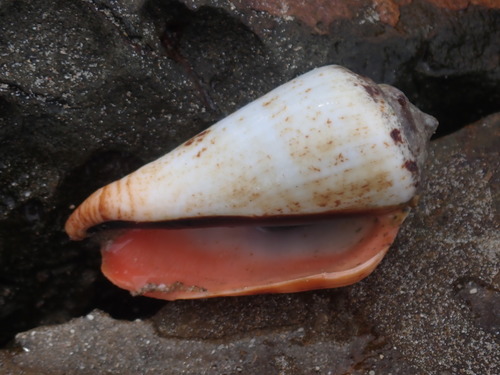
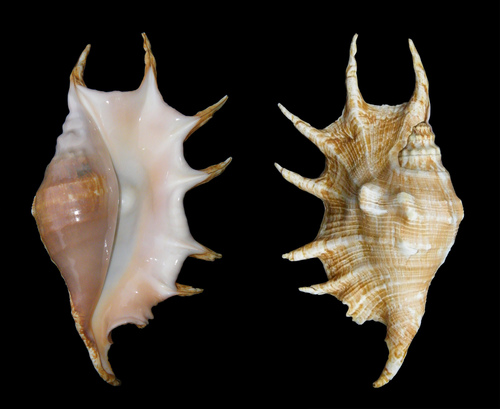
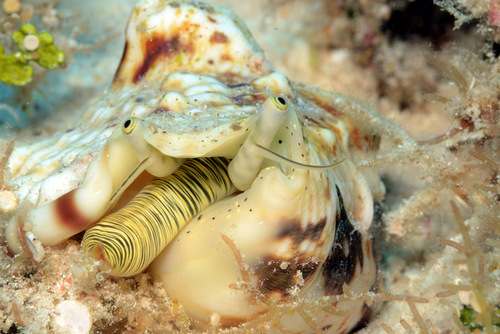
Lentigo lentiginosus (Linnaeus, 1758) reaches a maximum shell length of 100 mm, though most individuals only grow to 75 mm. Like many other strombids, adult shells of this species are very heavy and thick, with a characteristic deep stromboid notch, and a flared, very thick outer lip that is expanded toward the posterior end. The columella projects anteriorly, and the siphonal canal is convex. The body whorl has a notably irregular surface, ornamented by spiral cords and rows of blunt tubercles that form elevated knobs along the shoulder. The inner lip is smooth, with a large callus that often spreads across the spire and body whorl. The shell has a tall spire, and each spire whorl has a row of heavy knobs and grooves that nearly completely fold over one another. The shell is most often white, with large irregular brown blotches and dots spaced across its surface. The columellar callus has a characteristic faint silvery gloss. The lateral margin of the outer lip has a series of tan blotches. The interior of the aperture ranges from pink to orange, and becomes paler closer to the margins. This species is widespread across the Indo-Pacific, ranging from East Africa (including Aldabra, Madagascar, Mauritius, and Tanzania) east to eastern Polynesia, and also occurs in southern Japan and northern Australia. Common name silver conch, Lentigo lentiginosus inhabits coral and sandy bottoms in clear water. It is most often found on barrier reefs or lagoon reefs, in intertidal and shallow subtidal zones down to around 4 meters depth. Individuals are rarely found buried in sand. The flesh of Lentigo lentiginosus is edible, and the species is collected locally for food. Its shell is used in shellcraft, and is commonly sold in local markets around the central Philippines.