About Lemna aequinoctialis Welw.
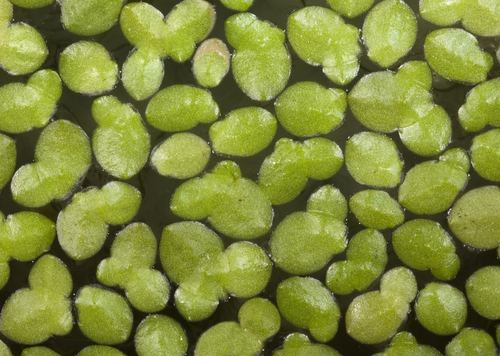
Lemna aequinoctialis Welw., commonly called the lesser duckweed, is a tiny floating aquatic plant belonging to the aroid family. This species grows in quiet, still waters. Within the United States, it is found from Virginia south through Florida, north to Nebraska and southern Wisconsin; it also occurs in the southern U.S., the American Southwest from Texas to the California coast, Mexico including desert regions, and some Caribbean Islands. It prefers lagoons and still ponds, reaching these habitats via seasonal flooding and occasional precipitation. Its green fronds generally have three nerves, and grow up to 6 millimeters long. Its flowers are single-ovulate, with a small utricular scale that is open on one side. Its seeds have between 8 and 26 ribs. Thanks to its fast growth and hardy nature as a floating plant, lesser duckweed is quite common in the aquarium hobby. Some aquarists dislike the plant, while others value it for absorbing excess nutrients from water and shading fish from overhead lighting. It can also serve as a food source for herbivorous and omnivorous fish such as goldfish. Because it reproduces rapidly and absorbs nutrients efficiently, Lemna aequinoctialis has become established, and even invasive, in many waterways outside its native distribution. Accidental release has led to large, established colonies of this plant in Eurasia, Africa, South America, and some islands of Oceania.