About Lemmus trimucronatus (Richardson, 1825)
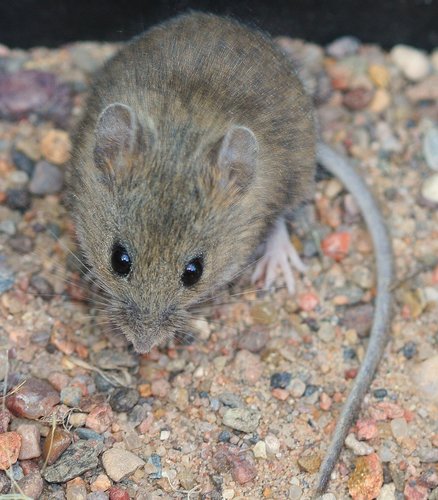
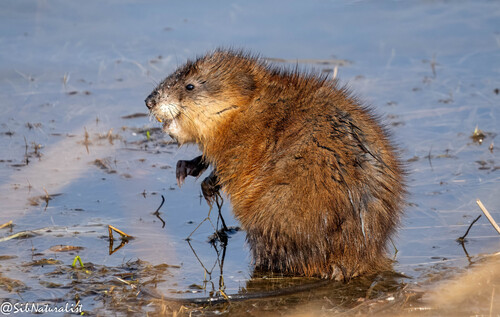
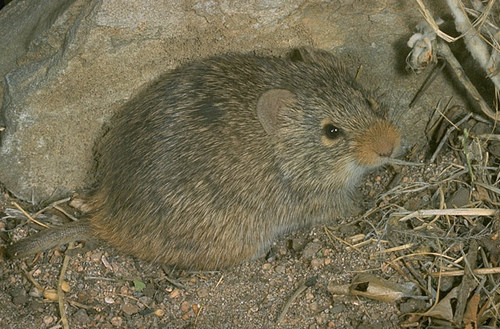
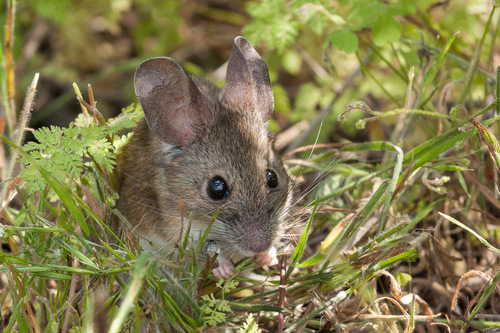
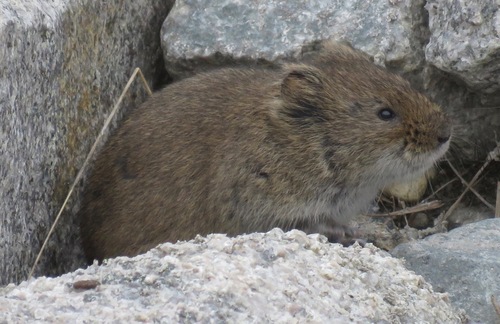
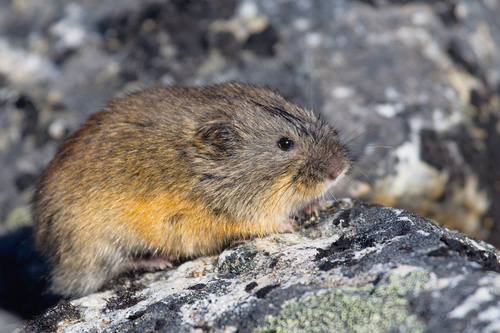
This species, Lemmus trimucronatus, commonly called the brown lemming, has characteristic brown colouration, with a reddish-brown back and rump, and grey head and shoulders. In winter, its coat grows longer and takes on a more grey tone. On average, females measure 12.5 cm (4.9 in) in length and weigh 58 g (2.0 oz), while males average 13 cm (5.1 in) in length and 68 g (2.4 oz) in weight. Like other lemming species, it has small ears, short legs, and a very short tail. The soles and toes of its feet are covered in bristles, an adaptation for burrowing. This lemming inhabits tundra areas in northern Canada, specifically Nunavut, the Northwest Territories, and Yukon, as well as southern Alaska south of the Alaska Range. It also occurs along the west coast of British Columbia, reaching almost as far south as Vancouver Island. While this species was previously believed to live in eastern Siberia and most of Alaska, the populations in those areas are now classified as the separate species L. nigripes. Lemmus trimucronatus feeds mainly on grass shoots, and also consumes tundra grass, sedge, moss, bark, berries, lichens, and roots. Its predators include most carnivores and certain birds, and there is some evidence that caribou may sometimes eat this lemming. In years when brown lemming populations are low, predators such as the Arctic fox may be unable to reproduce.