About Lemiox rimosus (Rafinesque, 1831)
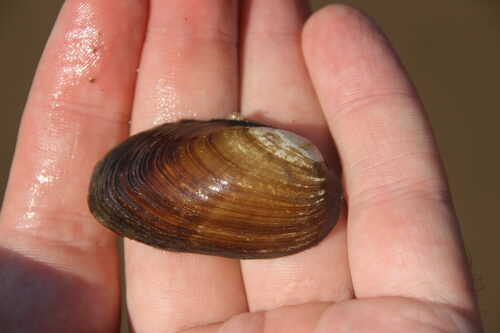
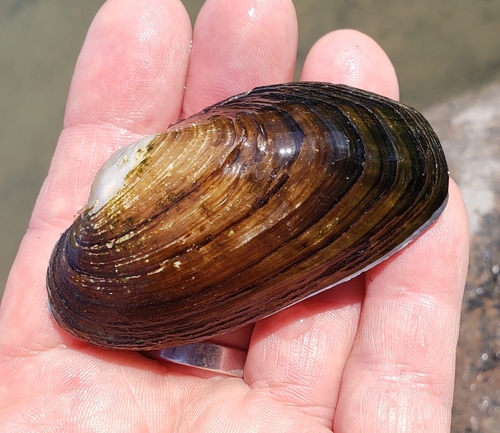
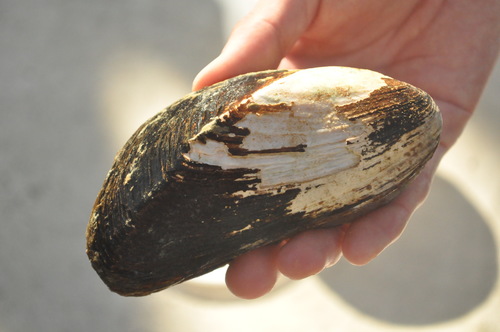
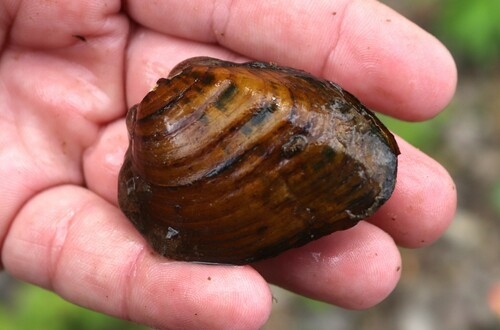
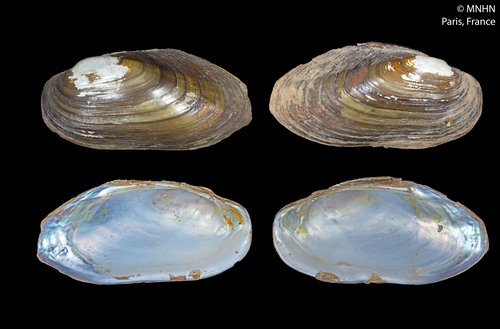
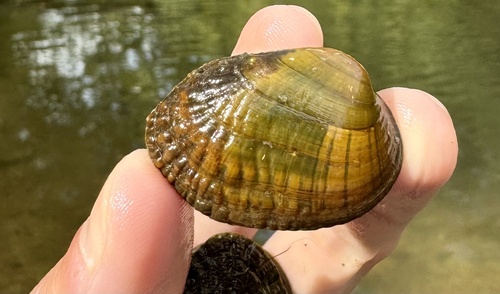
The birdwing pearlymussel, Lemiox rimosus, is a rare species of freshwater river mussel belonging to the Unionidae family. This aquatic bivalve is native to Tennessee and Virginia in the United States. Its overall range has declined by more than 90%. It is classified as a federally listed endangered species in the United States. This mussel currently survives only in three rivers across Tennessee and Virginia: the Duck River, the Clinch River, and the Powell River, after being extirpated from many other river systems where it once occurred. It is now considered extinct in the state of Alabama. In 1983, construction on the half-completed, long-contested Columbia Dam on the Duck River was halted, after unsuccessful attempts to transplant both the endangered birdwing pearlymussel and another endangered mussel, the Cumberland monkeyface pearly mussel (Theliderma intermedia), to local streams. The greenside darter, Etheostoma blennioides, is an important host species for the glochidia larvae of the birdwing pearlymussel. The mussel attracts the greenside darter using a lure that mimics the appearance of an aquatic snail. When the darter interacts with the lure, it triggers the mussel to release its glochidia directly toward attachment sites on the fish's gills. After a variable development period, often lasting as long as one and a half to two months, the glochidia metamorphose into juvenile mussels and drop off the fish to settle onto the river substrate. Glochidia survival through metamorphosis is optimal at relatively colder water temperatures compared to the temperatures preferred by most other unionid mussel species and their hosts.