About Leiothlypis ruficapilla (A.Wilson, 1811)
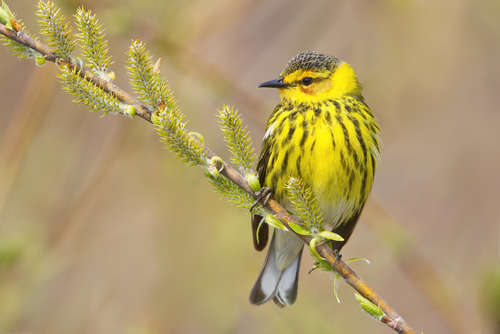
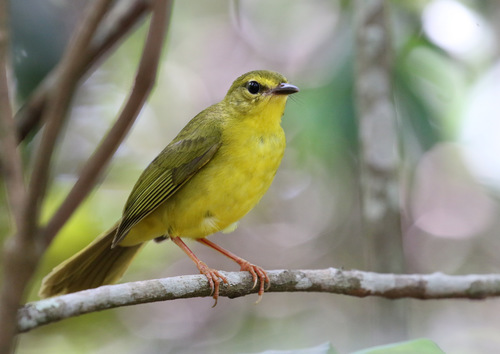
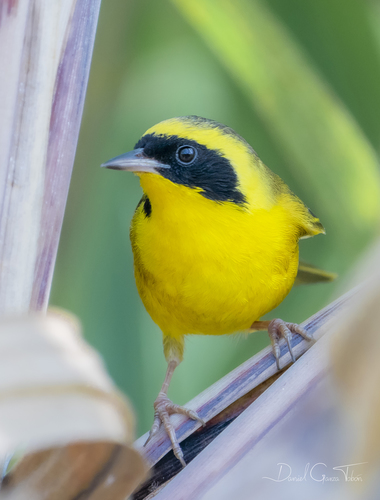
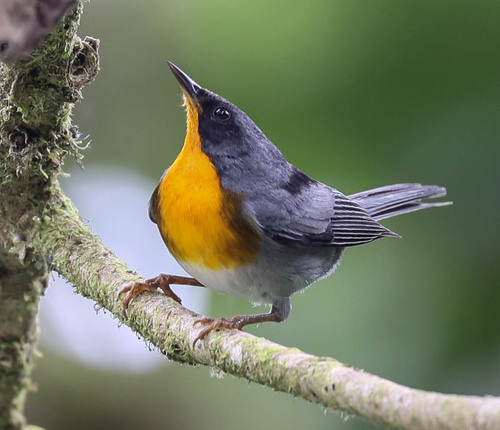
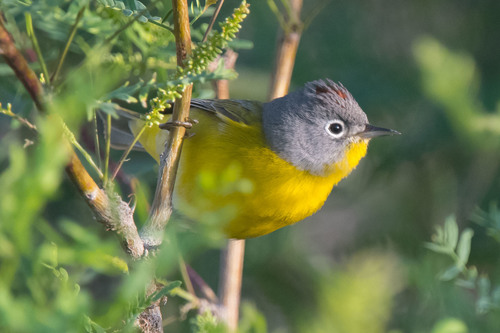
The Nashville warbler, with the scientific name Leiothlypis ruficapilla (A.Wilson, 1811), is a small species of warbler. Both adult males and females share a common plumage pattern: a gray head that fades into a greenish back and wings, a white belly, and a yellow throat and breast. All individuals have a complete white eye ring, no wing bars, and a thin, pointed black bill. Adult males have a rusty brown crown patch that is usually hard to see, as it is most often covered by gray feathers; males will raise this patch slightly when they are agitated. Females and immature Nashville warblers have a duller olive-grey head, and their throat yellow is less bold than that of adult males. This species is closely related to Virginia's warbler, Lucy's warbler, and the Colima warbler; all four species share generally similar plumage. Standard measurements for the species are as follows: length ranges from 4.3–5.1 in (11–13 cm), weight ranges from 0.2–0.5 oz (5.7–14.2 g), and wingspan ranges from 6.7–7.9 in (17–20 cm). Nashville warblers breed across two separate, distinct regions: one in Canada and the northeastern United States, and a second in the western United States. The northeastern portion of its breeding range stretches from Côte-Nord and Cape Breton Island in eastern Canada west to central Alberta. For the most part, the species only breeds between approximately 52 and 45.5 degrees north, but it also occurs less commonly in the Appalachian Mountains of Pennsylvania and West Virginia. Despite being named after Nashville, Tennessee, the Nashville warbler only passes through this area during migration. In winter, the species migrates to the southernmost parts of Texas and California, central Mexico, and the northernmost parts of Central America, which includes Guatemala and El Salvador. Within its breeding range, the Nashville warbler prefers open mixed woods and bog habitats.