About Leiothlypis peregrina (A.Wilson, 1811)
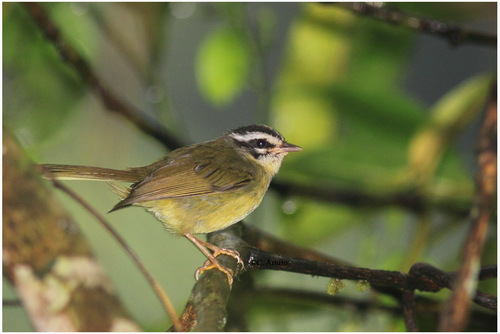
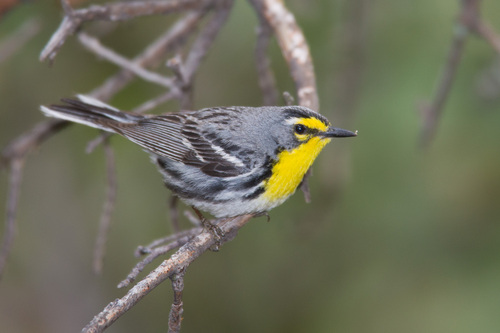
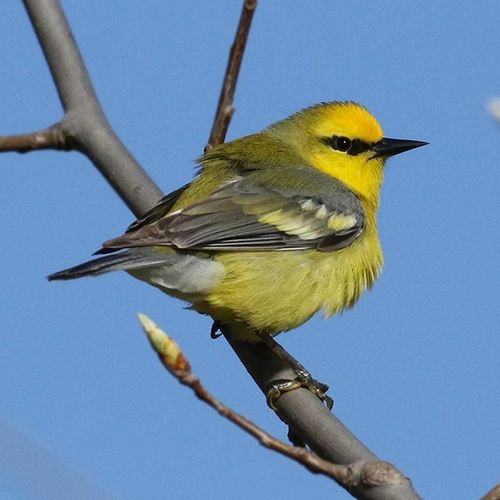
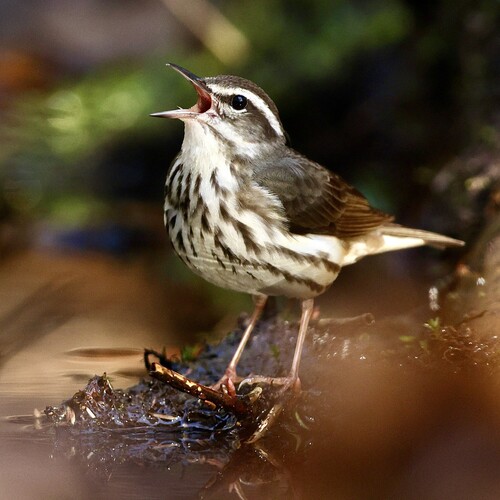
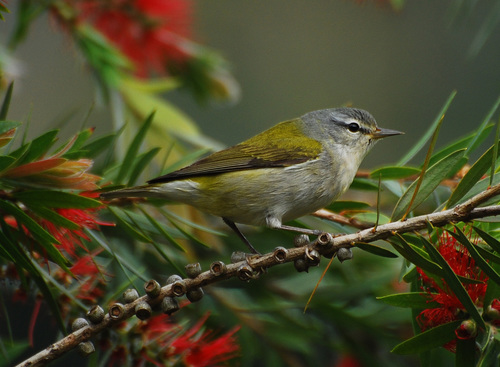
The Tennessee warbler, scientifically named Leiothlypis peregrina (A.Wilson, 1811), measures 11.5 cm (4.5 in) in length, has a 19.69 cm (7.75 in) wingspan, and weighs approximately 10 g (0.35 oz). It has long wings, a short tail, and a thin, pointed bill. Breeding males have olive coloration on the back, shoulders, rump, and vent, with brownish-black flight feathers. Their neck, crown, and eyeline are slate gray, and their underside is gray-white. Females are similar in pattern to males but much duller overall, with a yellow and olive tint especially noticeable on the underside. Juveniles and first-year Tennessee warblers are very similar in appearance to adult females. In winter and fall, adult males resemble juveniles and spring adult females, but have more yellow on the underside: their gray neck and crown become olive green, and their underside takes on a yellow hue, with a distinct yellow supraocular line on the face. Both sexes have white undertail coverts year-round. Tennessee warblers can be mistaken for several similar species. They resemble female black-throated blue warblers, but black-throated blue warblers have a darker cheek and two white wing spots. They can also be confused with the red-eyed vireo, which is larger, moves more deliberately, and sings almost constantly. Orange-crowned warblers also look similar, but they lack a white eyebrow, are grayer-brown on the upper body, and have yellow undertail coverts. This species is migratory. Its breeding range stretches from the Adirondack Mountains in New York through northern Vermont, New Hampshire, and Maine, then extends north and west across most of Canada. It also breeds in northeast Minnesota and the northern Upper Peninsula of Michigan. It winters in southern Central America, the Caribbean, northern Colombia, and Venezuela, with a small number of stragglers traveling as far south as Ecuador. It is an extremely rare vagrant to western Europe. The species got its name from a specimen collected in Tennessee, an area where it only appears during migration. For its ecology and behavior, the Tennessee warbler feeds mainly on insects, and strongly prefers spruce budworm. Its population fluctuates in line with spruce budworm abundance. It will also eat flower nectar, fruit, and some seeds. Like most warblers, it is nervous and quick when foraging, creeping along branches and can be found foraging at all forest levels. It is solitary during the nesting season, but forms mixed-species flocks after breeding is complete. Its preferred habitats are coniferous forests, mixed conifer-deciduous forests, early successional woodlands, and boreal bogs. The female builds a cup-shaped nest made from dried grasses and moss, lined with finer grasses, stems, and hair. Nests may be placed on the ground, above a bog in moss, or at the base of a shrub. The female lays 4 to 7 white eggs marked with brown splotches.