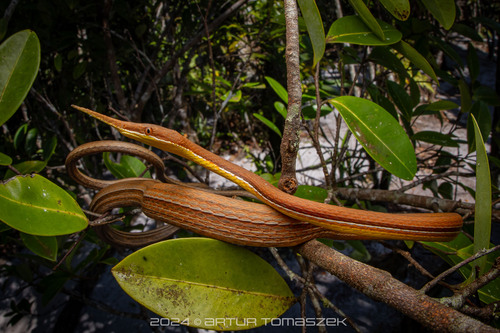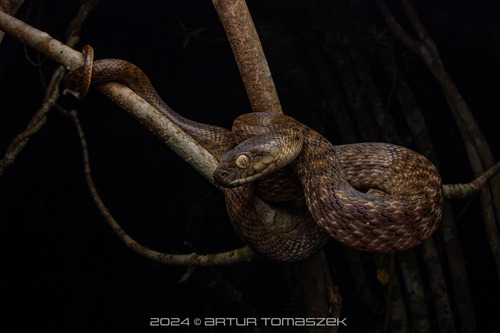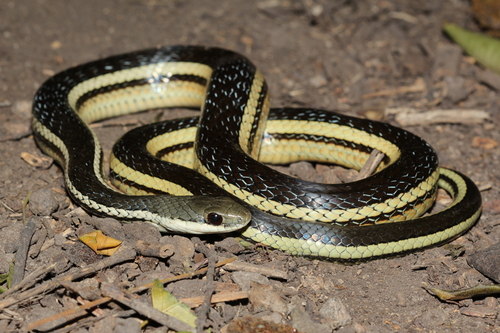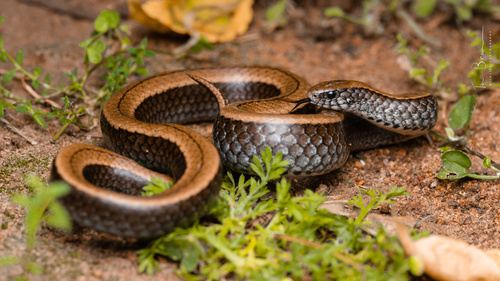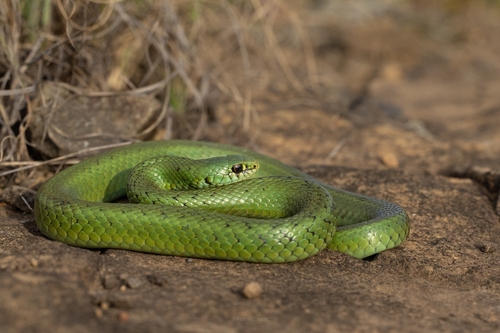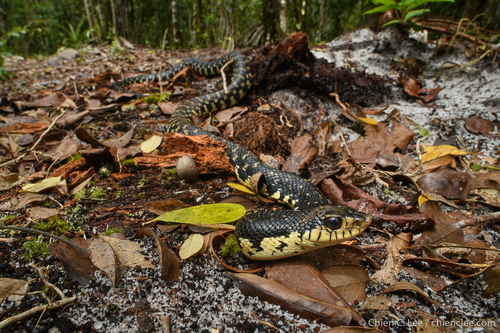
About Leioheterodon madagascariensis (Duméril, Bibron & Duméril, 1854)
Leioheterodon madagascariensis, commonly called the Malagasy giant hognose snake, Madagascar giant hognose snake, or Madagascan giant hognose snake, is a harmless pseudoxyrhophiid snake species endemic to the island nation of Madagascar. It also occurs on Madagascar’s smaller islands of Nosy Be, Nosy Mangabe, and Nosy Sakatia, as well as the Comoros archipelago in the Mozambique Channel. Some researchers think the species was introduced to Grande Comoro. Mature Malagasy giant hognose snakes reach 130 to 180 cm in total length (equal to 4 feet to nearly 6 feet, or between 1 and 2 meters), and are roughly as thick as an average adult human’s arm. Like New World hognose snakes of the Heterodon and Lystrophis genera, the Madagascar giant hognose will take a defensive posture when threatened: it raises its head, opens its mouth, and inflates the skin around its neck and chin, superficially mimicking a cobra, or even a bearded dragon, to appear larger and more intimidating. This snake is classified as opisthoglyphous, meaning it is rear-fanged or rear-fanged venomous, because it has a pair of pin-like, widely spaced teeth at the back of the mouth that are attached to the maxilla. Each tooth has a funnel-shaped structure that allows the snake to inject paralyzing saliva to subdue its prey. Research has found that the giant hognose does not use this envenomation to outright kill prey, and instead relies primarily on constriction. The placement of these teeth at the back of the mouth, combined with their ability to deliver paralyzing or toxic salivary fluid, helps the snake control squirmy prey; such prey may take longer to die from constriction than they would from a single deadly bite from a highly venomous snake species. For these reasons, it remains unclear whether this species has a Duvernoy's gland. While the toxic saliva is effective at controlling wriggling small prey, it only causes skin irritation in humans and is not deadly. In addition, most giant hognose snakes are not inclined to bite large mammals including humans; because their teeth are positioned far in the back of the mouth, the snake must exert more effort to deliver a bite than front-fanged snakes like elapids, vipers, and other colubrids. The typical diet of the Malagasy giant hognose includes a variety of small reptiles, frogs, toads, birds, bird nestlings, and bird eggs. It may occasionally eat other smaller snakes, as well as small mammals such as rodents, tenrecs, mouse lemurs, and mouse lemur offspring. The main predators of the Madagascar giant hognose snake are birds of prey and other bird species that prey on snakes. Some mongooses and even the fossa, Madagascar’s largest mammalian carnivore, may also eat this snake; though the fossa has a generally opportunistic diet, it specializes in hunting lemurs. Above all other threats, the biggest threat to the giant hognose snake is the people of Madagascar. Many Malagasy people are highly superstitious, wary of evil spirits, and nearly universally dislike the snake, killing it on sight by beheading or dismemberment, despite the species posing no threat to human life. The species is harmless to humans.