About Leidyula sloanii (Cuvier, 1816)
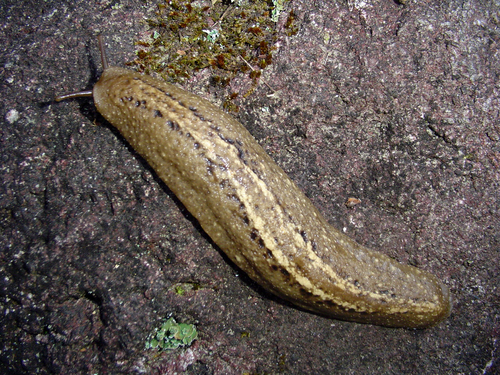
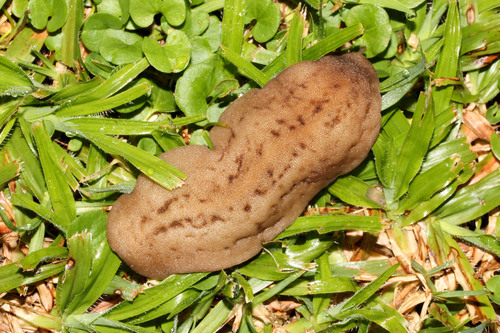
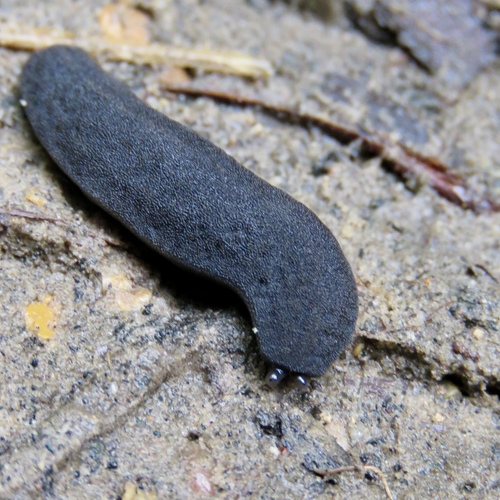
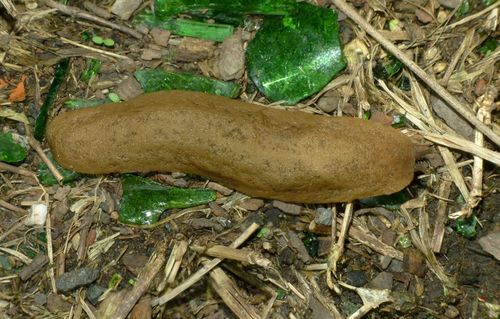
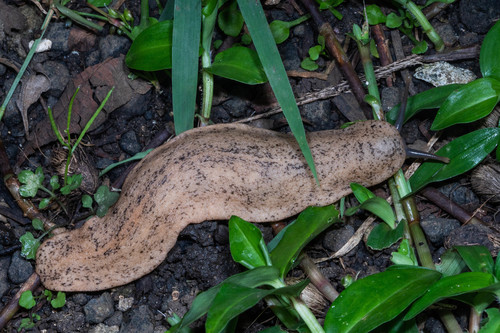
When extended, this slug can reach a length of 12 cm (5 in.). Its coloration is highly variable, and positive identification requires dissection and inspection of the genitalia. It is usually very pale, ranging from mottled pale yellow and cream to white. It may have irregular black spotting or speckling across the entire dorsal surface; this spotting can coalesce into two poorly defined bands running down either side of the body. In juvenile slugs, these two bands are clearer and better defined as grey bands, especially on the anterior part of the body. Occasionally, individual slugs may be mostly brownish. The only consistent color feature across populations from different Caribbean islands is the eye stalk, which is bluish grey with a light brown tip. The indigenous range of this species (originally documented as Veronicella sloanii) is Jamaica, and its type locality is in Jamaica. Non-indigenous populations have been recorded in Barbados, Bermuda, Dominica (first reported from Dominica in 2009), the Dominican Republic, Saint Lucia, Saint Vincent, and Cuba (Bahia Honda in Pinar del Río Province). This slug has been introduced to Florida, where it has become an agricultural pest. Cowie et al. (2009) controversially considered that the species has not yet become established in the United States, but it is still recognized as a potentially serious pest and invasive species that could negatively impact agriculture, natural ecosystems, human health, or commerce. For this reason, it has been suggested that this species be given top national quarantine significance in the USA. This slug lives in moist conditions and is nocturnal. The best time to find this slug is after rainfall. It rests under boards, logs, and other objects lying on the ground. The slug lays clutches of around 30 eggs, each approximately 5 mm in diameter. In captive conditions at 24 °C, eggs hatch after 15 days.