About Lecythis pisonis Cambess.
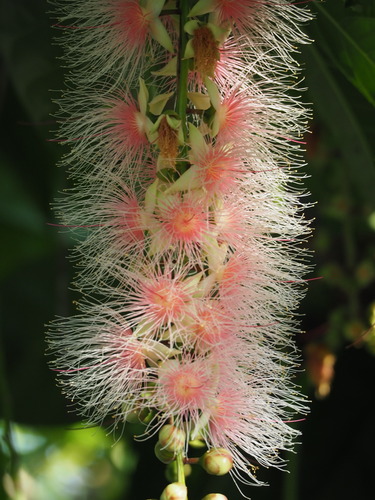
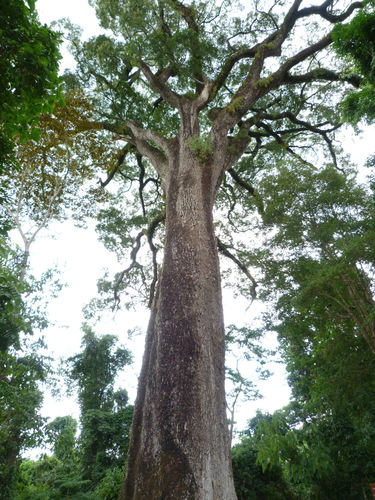
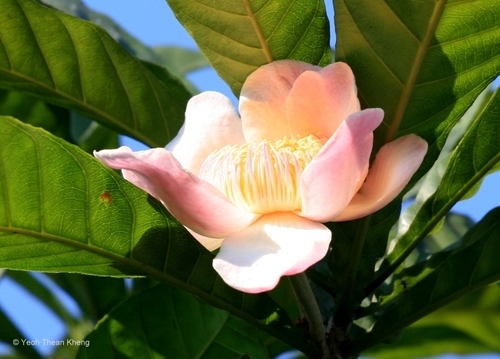
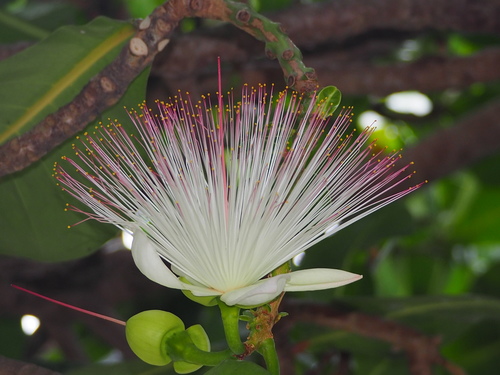
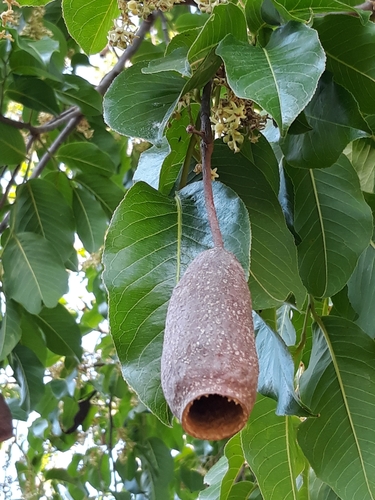
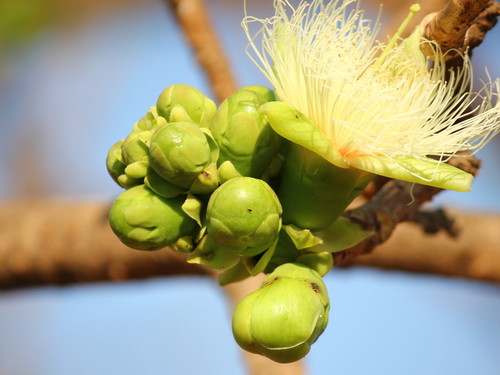
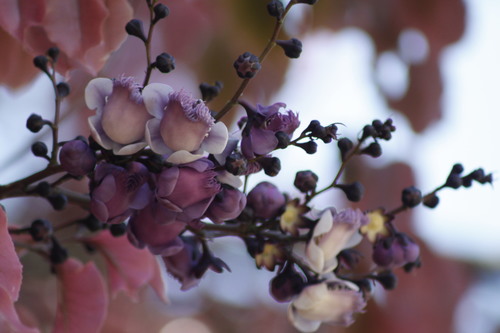
Lecythis pisonis Cambess. is a large, deciduous, dome-shaped tree with a dense leafy crown. It reaches an approximate height of 30 metres (98 ft). Its trunk bears ascending branches and has much fissured, greyish bark. When unfurling, new leaves are pink; as they mature, they turn mid-green with dark speckles. Mature leaves are leathery, oblong-elliptic, with prominent midribs and toothed margins. Flowers grow in racemes at the ends of twigs between September and October. They are purple, occasionally white, with six petals and a central cluster of golden stamens, and attract bees. The fruits are globose or oblong, cinnamon-coloured and woody. They measure 6 to 15 cm (2.4 to 5.9 in) long and 8.5 to 30 cm (3.3 to 11.8 in) wide. Fruits have a rough pericarp up to 3 cm (1.2 in) thick and a tight-fitting lid that bursts open when the fruit matures. The seeds are red or brown, elliptical, and up to 5 cm (2.0 in) long. The seeds take 11 to 12 months to ripen. Lecythis pisonis grows in rainforest across northern and eastern tropical America, particularly in Brazil. This species is cultivated as an ornamental tree, valued for its pink new growth and purple seasonal flowers. Its nuts are edible raw or cooked. Research indicates the lipid content of the nuts is similar to that of corn oil, but a high level of certain heavy metals may make the nuts toxic, which could limit their use as food. Nuts are also eaten by animals. The common name "monkey pot" comes from an old proverb: "a wise old monkey doesn't stick its hand into a pot". The proverb refers to the observation that a young monkey may plunge its hand into the open fruit and cannot pull out its fist when it grabs multiple nuts, while an experienced monkey removes nuts one at a time.