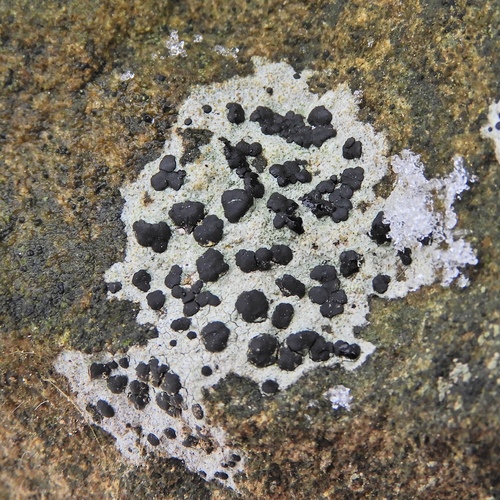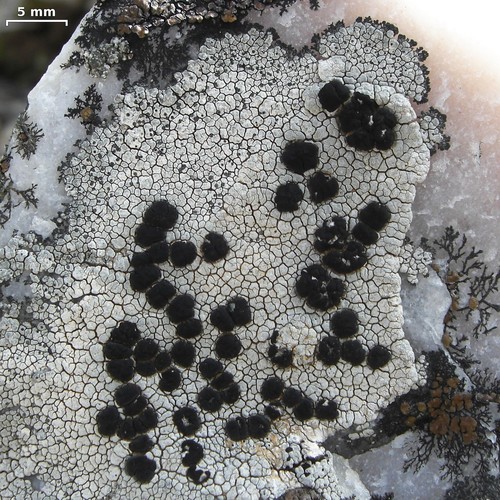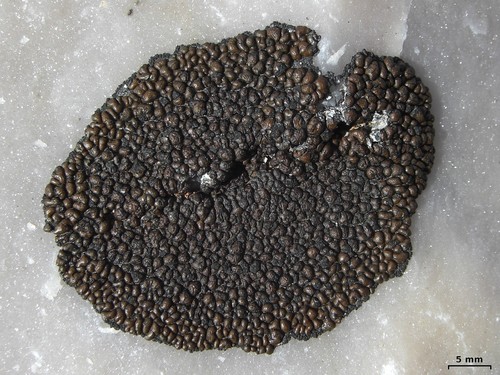
About Lecidea atrobrunnea (DC.) Schaer.
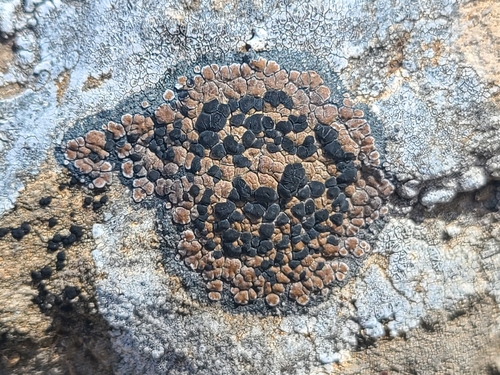
Lecidea atrobrunnea (DC.) Schaer. is a group of lichen-forming fungi belonging to the family Lecideaceae. Previously thought to be a single, widely distributed crustose lichen, recent research confirms that this name actually covers many unique lineages of morphologically and chemically variable lichen-forming fungi that have not yet been precisely characterized. Members of this group reach their highest diversity in the mountains of the continental western United States and Alaska. Along with other lichen communities, it forms dark vertical drip-like stripings along drainage tracks on rock faces. This formation led Native Americans to name Half Dome "Face of a Young Woman Stained with Tears". Seen from a distance, this combined lichen community appears black, but it looks brown when viewed up close. Its overall appearance varies greatly from colony to colony. Lecidea atrobrunnea subsp. atrobrunnea is very common in high montane and alpine zones. Lecidea atrobrunnea subsp. saxosa – the epithet "saxosa" means "rock" – occurs at high elevations in the San Francisco Peaks and San Bernardino Mountains. The prothallus and apothecia are black, while the thallus areoles are brown. The upper surface of areole centers is usually pale to dark reddish brown. In squamulous specimens, the lower surface is visible and is shiny and dark. The specific epithet atrobrunnea combines two Latin words: ater (from the root atro-, meaning black) and brunnea (from brunneus, meaning dark brown), so the full name means "blackish-brown". This lichen group is commonly found growing on rock faces in the Sierra Nevada, and its communities often completely cover exposed rock surfaces, or form intricate multicolored mosaics with other lichen communities. These lichen communities contribute to the aesthetic appeal for visitors of Yosemite National Park and Sequoia National Park. It also occurs in the Rocky Mountains, including in alpine zones, across the United States Sierra Nevada range. It adheres tightly to rock faces, giving it the appearance of having been painted onto the surface. Lecidea atrobrunnea is a known host for the lichenicolous fungus Muellerella pygmaea var. pygmaea.