About Lawsonia inermis L.
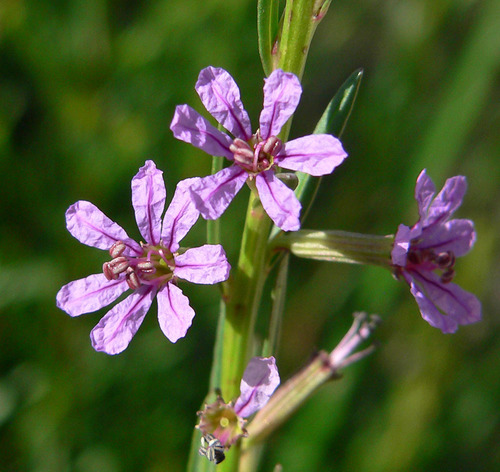
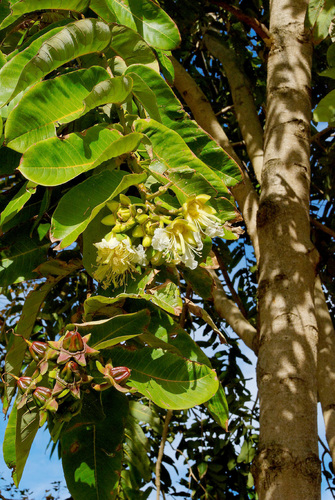
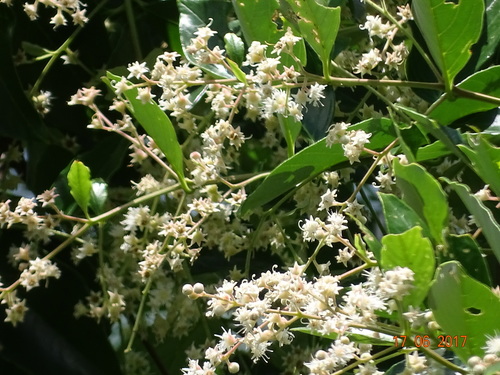
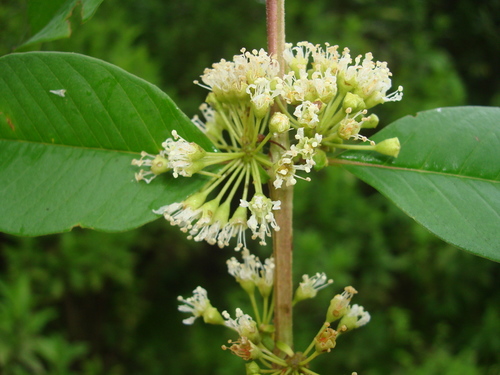
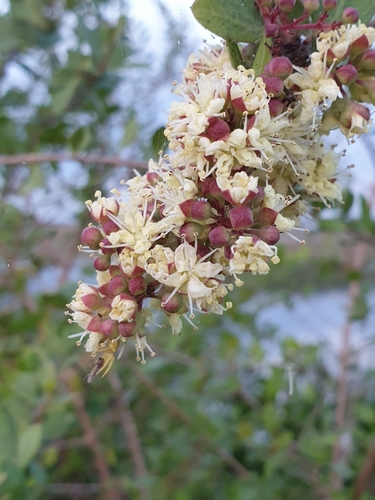
Lawsonia inermis L., commonly known as henna, is a tall shrub or small tree that reaches 1.8 to 7.6 meters (6 to 25 feet) in height. It is glabrous, meaning hairless, and multi-branched, with branchlets that end in spines. Leaves grow opposite one another on the stem; they are glabrous, sub-sessile, elliptical, and lanceolate (long and wider at the middle), with average dimensions of 1.5–5.0 cm by 0.5–2 cm (0.6–2 in by 0.2–0.8 in). Leaves are acuminate, tapering to a long point, and have depressed veins on their dorsal surface. Henna flowers have four sepals and a 2 mm (0.079 in) calyx tube with 3 mm (0.12 in) wide spread lobes. Its petals are ovate, and white or red stamens occur in pairs on the rim of the calyx tube. The four-celled ovary is 5 mm (0.20 in) long and grows upright. Henna produces small, brownish capsule fruits that measure 4–8 mm (0.16–0.31 in) in diameter. Each fruit holds 32–49 seeds, and opens irregularly into four splits when mature. Henna is native to northern and eastern Africa, Asia, and northern Australia, where it grows in semi-arid zones and tropical areas. When cultivated, henna produces the highest amount of dye when grown in temperatures between 35 and 45 °C (95 and 113 °F). The plant grows quickly and produces new shoots at the start of rainy periods, after which its growth slows. During prolonged dry or cool periods, its leaves gradually turn yellow and fall off. Henna does not grow well in locations where minimum temperatures drop below 11 °C (52 °F), and temperatures below 5 °C (41 °F) will kill the plant.