About Lavandula angustifolia Mill.
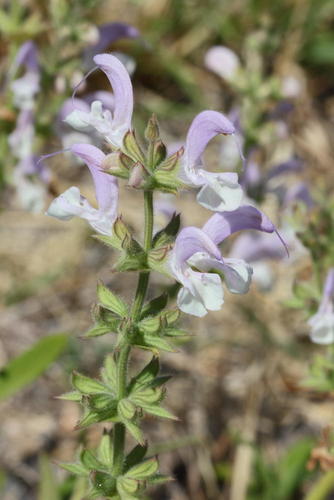
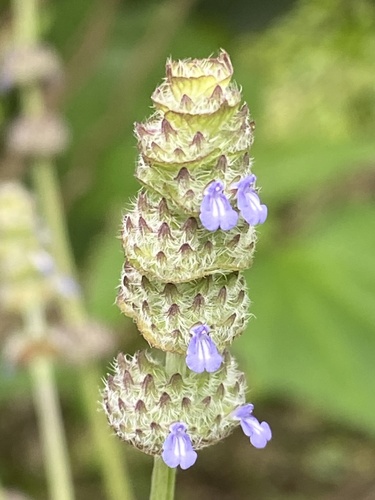
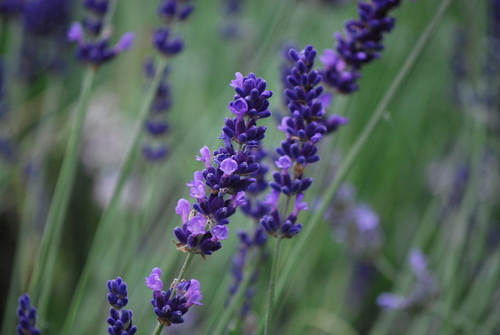
Lavandula angustifolia Mill., commonly called English lavender, is a strongly aromatic shrub that reaches 1 to 2 meters (3 1/2 to 6 1/2 feet) in height. It has evergreen leaves that measure 2 to 6 centimeters (1 to 2 1/2 inches) long, and 4 to 6 millimeters (3/16 to 1/4 inch) broad. Its flowers are typically lavender-colored purple, borne in 2 to 8 cm (1 to 3 in) long spikes at the top of slender, leafless stems that are 10 to 30 cm (4 to 12 in) long.
English lavender is commonly grown as an ornamental plant. It is prized for its colorful flowers, fragrance, and drought tolerance. It does not thrive in consistently damp soil, and growth improves when soil drainage is increased. It grows best in Mediterranean climates like its native habitat, which have wet winters and dry summers. It has good tolerance for cold temperatures, and is generally rated hardy to Royal Horticultural Society zone H6, or USDA zone 5. It can grow in acidic soils, but prefers neutral to alkaline soils, and may be a short-lived plant under some conditions.
The flowers and leaves of this species are used in herbal medicine. Commercially, the plant is processed to make lavender essential oil, which is added to balms, salves, perfumes, cosmetics, and topical products. When diluted with a carrier oil, lavender essential oil is commonly used for massage therapy and aromatherapy. The flowers are also used as a culinary herb, most often as an ingredient in the North American version of the French herb blend herbes de Provence. Lavandula angustifolia is listed as a low flammability plant by the Tasmanian Fire Service, meaning it is considered suitable for planting within a building protection zone.