About Laurelia sempervirens (Ruiz & Pav.) Tul.
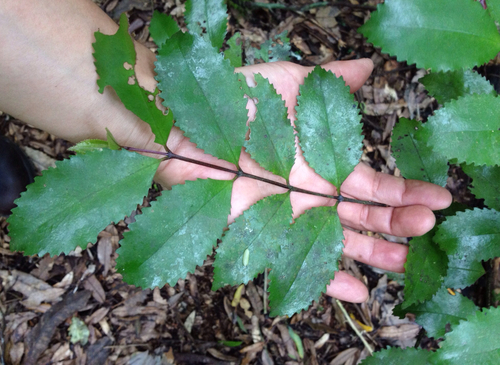
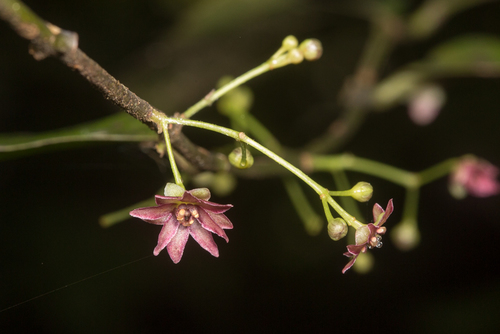
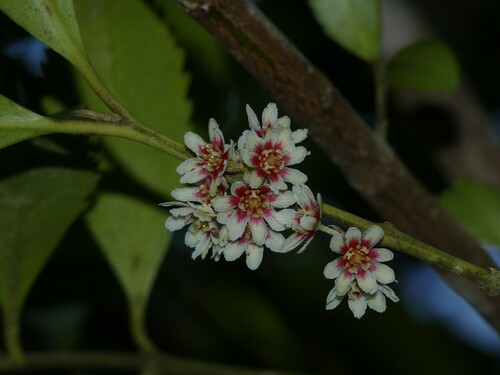
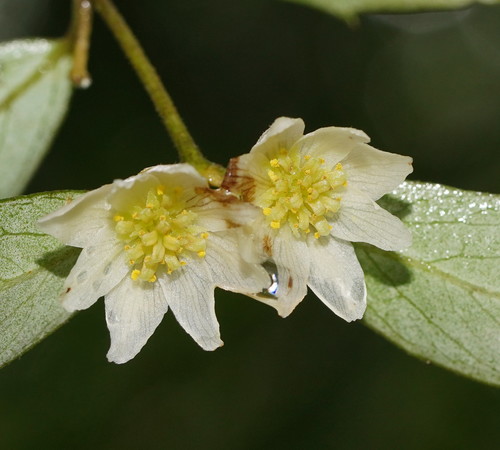
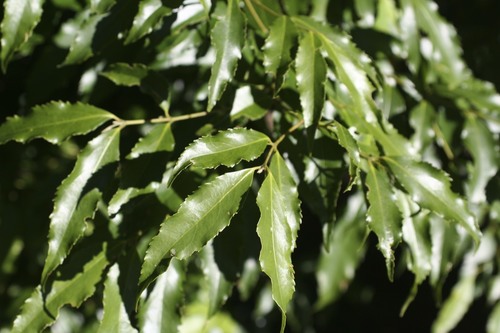
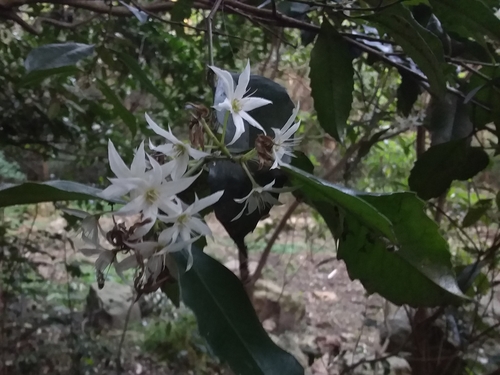
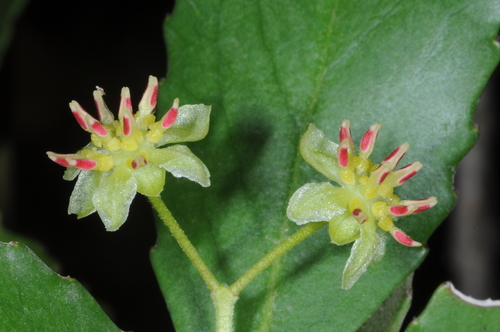
Laurelia sempervirens, commonly called tihue, is a large evergreen tree that reaches up to 30 m (98 ft) tall and 2 m (6.6 ft) in trunk diameter. It has smooth, pale yellow bark that cracks with age and sheds in roughly circular plates. Both its wood and leaves have a strong aromatic scent. Its bright green leaves are arranged in opposite pairs, and are oblong in shape, narrowed at the base. The leaves are leathery and shiny, measuring 5–10 cm (2.0–3.9 in) long and 2.5–5 cm (0.98–1.97 in) wide. Serrated leaf edges distinguish this species from the closely related Laureliopsis philippiana, which has more deeply toothed leaf margins. Tihue produces bundles of small yellow unisexual flowers, and is monoecious, meaning it bears both male and female flowers on every individual tree. Its fruit is a greenish achene, with seeds that have feathery filaments adapted for wind pollination (anemophily). Seeds are dispersed by wind, a process called anemochory. The wood of tihue is pale yellow, with a fine, homogeneous texture, and its growth rings are not conspicuous. This tree is threatened by habitat loss. It has been introduced into Spain and Cornwall, United Kingdom, and has been planted in Sussex, UK. Historically, Mapuche Amerindians used the leaves of Laurelia sempervirens to treat headaches and as a diuretic.