About Latrodectus tredecimguttatus (Rossi, 1790)
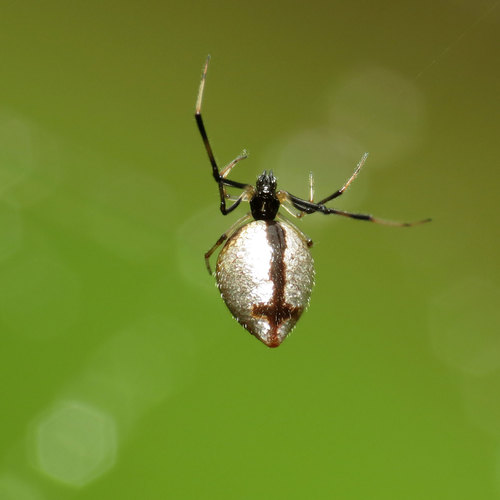
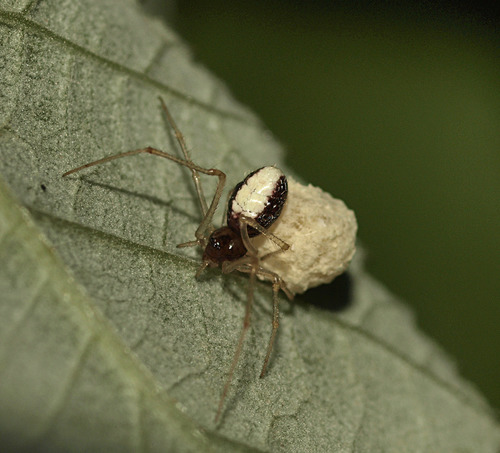
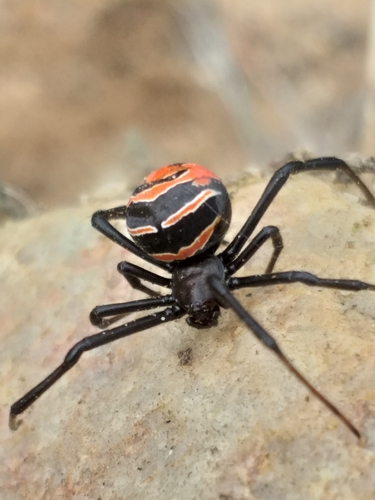
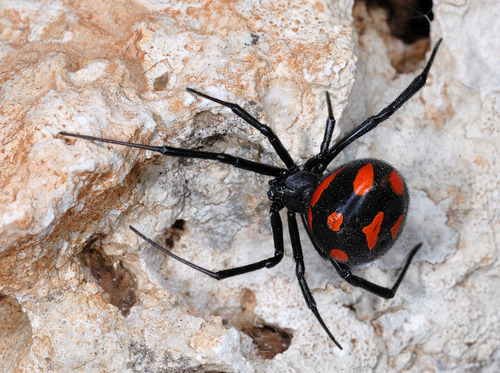
Like most other species in the Latrodectus (widow) genus, Latrodectus tredecimguttatus is black in color. It is identified by thirteen spots on the dorsal side of its abdomen, which matches its species name, the Latin phrase meaning "with thirteen spots". These spots are most often red, but can also be yellow or orange, and the species is otherwise similar to other members of the Latrodectus genus. This species, commonly called the Mediterranean widow, lives primarily in steppes and other grasslands, and it can be a major hazard in areas where grain is harvested by hand. Females of the species have a body length of roughly 7–15 mm (0.28–0.59 in), while males are smaller, reaching a maximum of 4–7 mm (0.16–0.28 in). Only bites from female spiders are dangerous to humans or cattle, as males cannot penetrate relatively thick human or animal epidermis. Like all Latrodectus species, the bite of L. tredecimguttatus is painful, and fatal in rare cases. The species generally does not live in close association with humans, though outbreaks of bites have been recorded. There are many documented reports of bites to Ukrainian farm workers while they work in fields. The median lethal dose (LD-50) of L. tredecimguttatus venom has been measured twice at 0.59 mg/kg; one measurement notes a confidence interval of 0.33–1.06. In Kazakhstan, the species is commonly called karakurt, which translates literally to "black bug", and there are local reports of this species biting and killing camels. Pioneering entomologist Jean Henri Fabre documented the spider's fearsome reputation in Corsica, where it is known as the malmignatte: "I have seen her settle in the furrows, lay out her web and rush boldly at insects larger than herself; I have admired her garb of black velvet speckled with carmine-red; above all, I have heard most disquieting stories told about her. Around Ajaccio and Bonifacio, her bite is reputed very dangerous, sometimes mortal. The countryman declares this for a fact and the doctor does not always dare deny it." Researchers have isolated one crustacean-specific neurotoxin, two insect-specific neurotoxins, and small peptides that inhibit angiotensin-1-converting enzyme from L. tredecimguttatus.