About Latrodectus renivulvatus Dahl, 1902
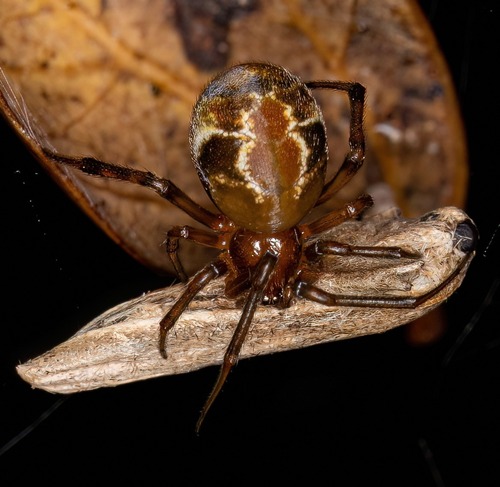
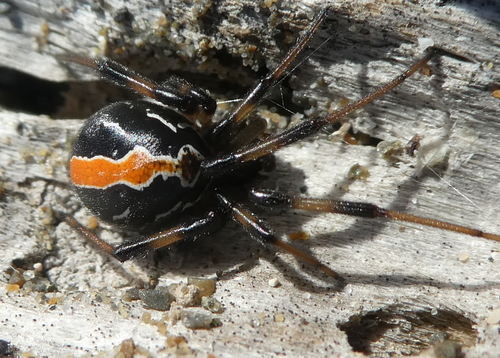
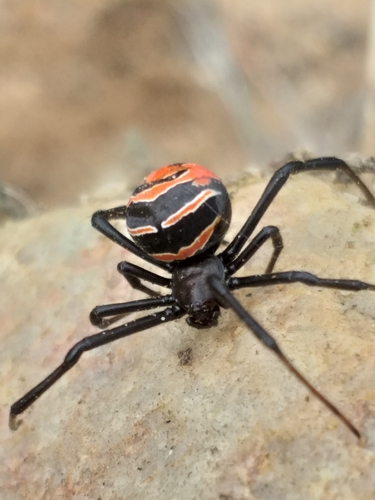
Latrodectus renivulvatus is a spider species belonging to the family Theridiidae. It is one of six Latrodectus species found in southern Africa, where four of these species, including L. renivulvatus, are called black button or black widow spiders. Like all species in the Latrodectus genus, L. renivulvatus produces neurotoxic venom that acts on nerve endings. When this species bites a human, the bite causes the very unpleasant symptoms of latrodectism. The distribution of Latrodectus renivulvatus includes Saint Helena, Saudi Arabia, Yemen, Iraq, and the entire continent of Africa, with confirmed records from Botswana, Ethiopia, Kenya, Lesotho, Namibia, Senegal, Rwanda, Tanzania, Zimbabwe, and South Africa. In South Africa, this species has been collected from all nine of the country’s provinces. Notable locations it has been found in within South Africa include Golden Gate Highlands National Park, Kruger National Park, and Karoo National Park. L. renivulvatus typically builds its web close to the ground, and webs are rarely located more than half a meter above ground. The spider takes refuge in grass tufts, low shrubs, empty animal burrows, or under loose stones. In the South African provinces of Gauteng and the Free State, this species is sometimes found inside human houses. It inhabits a broad geographic range across altitudes from 47 to 2020 meters above sea level. It has been collected in the Grassland, Nama Karoo, Savanna, and Succulent Karoo biomes, and is frequently found in crop areas including cotton, maize, strawberry, sugarcane, and vineyard plantations.