About Latrodectus hesperus Chamberlin & Ivie, 1935
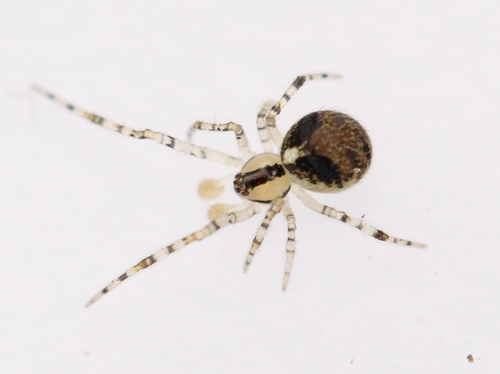
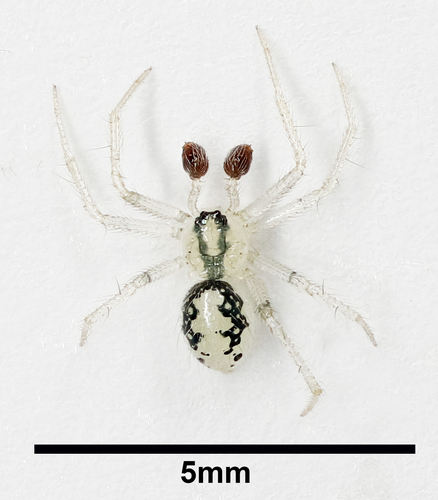
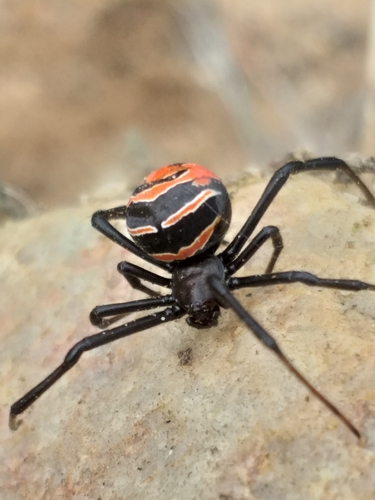
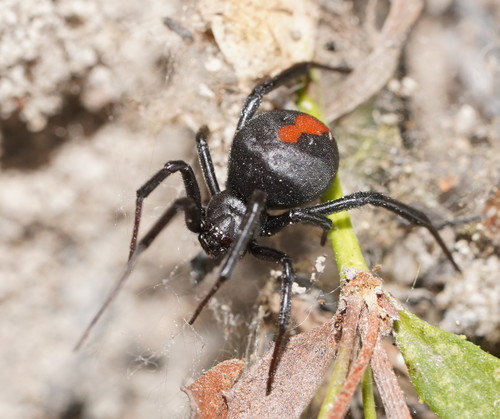
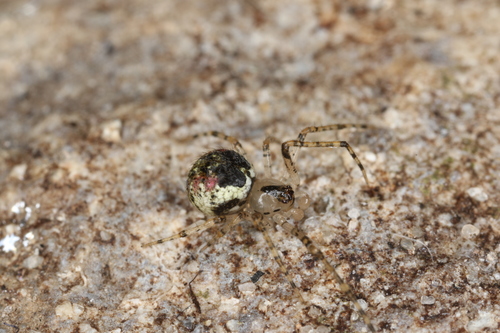
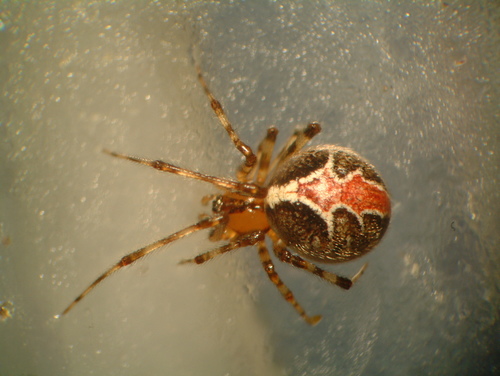
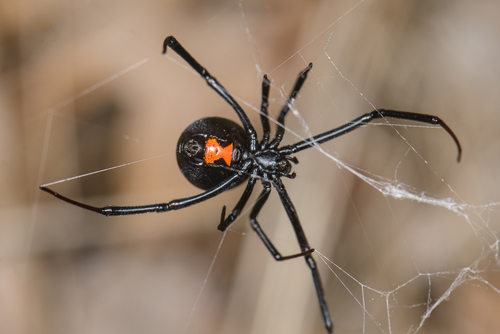
Latrodectus hesperus, commonly known as the western black widow spider or western widow, is a venomous spider species native to western regions of North America. Adult females have a body length of 14–16 mm (1/2 inch), are solid black in color, and most often bear an hourglass-shaped mark on the lower abdomen. This hourglass marking can be red, yellow, or very rarely white. Males are approximately half the size of females, typically beige in color, with lighter striping on the abdomen. This species was previously classified as a subspecies of Latrodectus mactans, and is closely related to the northern North American species Latrodectus variolus. Like other species in the Latrodectus genus, western black widows build irregular, unstructured messy webs. Unlike the organized spiral webs or tunnel-shaped webs built by many other spider groups, the silk strands of a Latrodectus web have no clear ordered arrangement. Female western black widows produce potent venom that contains α-latrotoxin, a neurotoxin active against a wide range of organisms. In humans, bites from this spider cause symptoms including pain, nausea, vomiting, goosebumps, and localized sweating. Historical literature reports that fatality rates from bites ranged between 0.5% and 12%, but multiple studies conducted over the past several decades have not confirmed any fatalities from any North American Latrodectus species native to the United States; for example, there were zero recorded fatalities among 23,409 documented Latrodectus bites in the U.S. between 2000 and 2008. Sexual cannibalism, in which females consume males after mating, the cannibalistic suicidal behavior observed in Latrodectus hasseltii, is rare in Latrodectus hesperus. Male western widows are able to breed multiple times during their relatively short lifespans. Males prefer to mate with well-fed females rather than starved ones, and detect this preference through chemical and physical cues from the females' webs. Latrodectus hesperus ranges across southwestern Canada, from British Columbia east to Manitoba; along the Pacific Coast and throughout Texas, Oklahoma, and Kansas in the United States; and in Mexico. It is common near the Canada-United States border, and occurs less frequently across the grasslands of the Canadian Prairies in Western Canada.