About Latrodectus bishopi Kaston, 1938
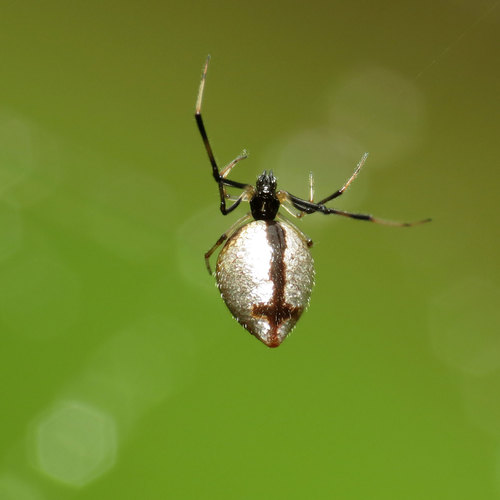
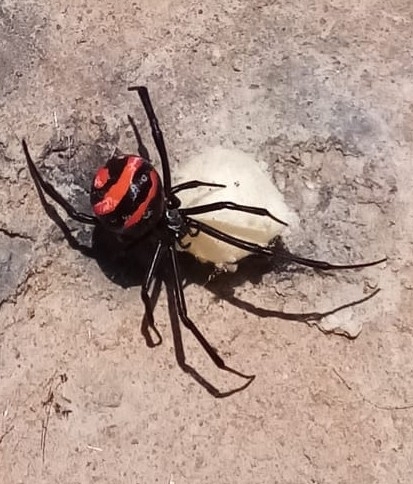
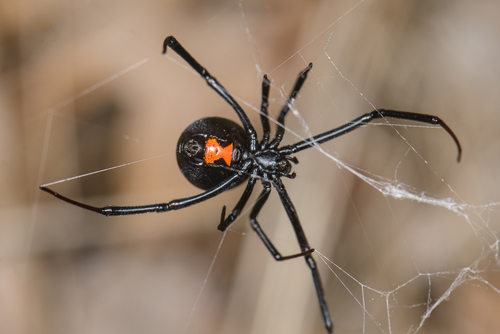
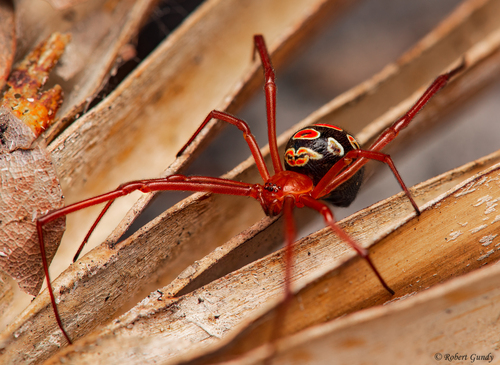
Latrodectus bishopi Kaston, 1938, commonly called the red widow, has a red-orange cephalothorax, a black abdomen with yellow rings outlining rows of red spots, and vermillion red legs. Its underside does not have the characteristic hourglass marking found in other Latrodectus species; instead, it usually has one or two small red marks. Females are almost twice the size of males. L. bishopi is endemic to central and southern Florida, where it is restricted to sand-pine scrub, which are inland dry sand dune areas dominated by the sand pine Pinus clausa. Within this habitat, the species builds most of its webs in palmetto bushes (Serenoa repens and Sabal etonia), at heights of 30 cm or more above the ground. The webs are tangled, with a funnel-shaped retreat located below the main web structure where the spider stays, and where it also stores its egg sacs. This species is a documented predator of Hemisphaerota cyanea. Known potential predators of L. bishopi include sphecid wasps and the Florida scrub jay. Like other members of the genus Latrodectus, L. bishopi is reported to be venomous. No bites from this spider are recorded in medical literature, but one bite was captured on video and documented by biologist Spencer Hoffman on the YouTube channel MyWildBackyard on April 15, 2023. This bite caused a mildly painful throbbing sensation that lasted several hours. Unlike cosmopolitan widow species such as black and brown widows, L. bishopi rarely comes into contact with humans. The median lethal dose (LD50) of this spider's venom, measured in mice, is 2.20 mg/kg with a confidence interval of 1.29-3.74 mg/kg, and each spider contains approximately 0.157 mg of venom.