About Lathamus discolor (Shaw, 1790)
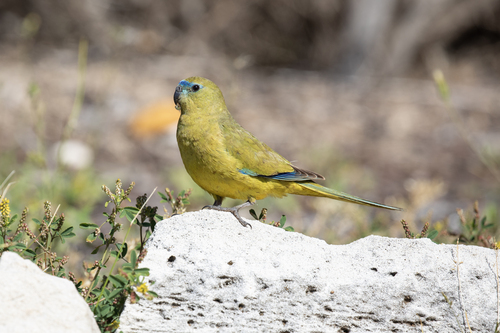
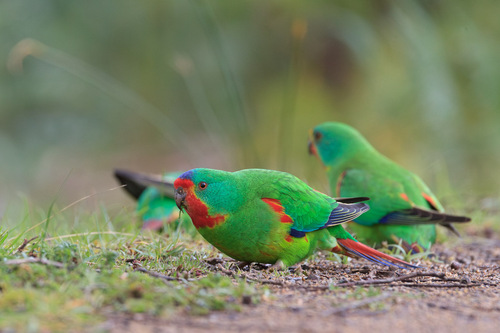
The swift parrot (Lathamus discolor) measures about 25 centimetres (10 inches) long, with long pointed wings and long tapering tail feathers. Its plumage is mainly green, with a bluish crown and red markings on the face above and below the beak. The area from the forehead to the throat is crimson, and there is an additional crimson patch on the top edge of the wing. Adult females are slightly duller in color than males, while juvenile swift parrots have a dark brown iris and a pale orange bill. These parrots are noisy, constantly active and showy, and fly very quickly in a direct path.
Genetic evidence confirms that the entire swift parrot species forms a single, genetically mixed nomadic population that moves across the landscape every year. As nomadic birds, they can range over a very large area, and they will only settle in a given location based on local food availability. In their Tasmanian breeding range, swift parrots require both food and suitable nesting sites to be in close proximity to nest at a site. This species migrates annually across Bass Strait between Tasmania and the Australian mainland. They arrive in Tasmania in September, and return to south-eastern Australia in March and April. Their range extends as far north as south-eastern Queensland and as far west as Adelaide in South Australia, though recent sightings have only been recorded from the south-eastern part of South Australia. As nomadic migrants, their presence at any single location is hard to predict. While they do return repeatedly to the same general locations, local occurrence is only intermittent, and depends on whether food (flowering trees) is available in that location in a given year.
Swift parrots typically inhabit forests, woodlands, agricultural land, plantations, and urban areas.