About Laterallus melanophaius (Vieillot, 1819)
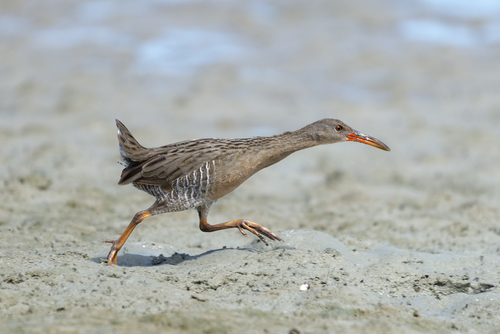
The rufous-sided crake, with the scientific name Laterallus melanophaius (Vieillot, 1819), measures 14 to 18 cm (5.5 to 7.1 in) long and weighs approximately 50 to 60 g (1.8 to 2.1 oz). Males and females have identical plumage and size. For both recognized subspecies, the bill has a gray maxilla with a pea green cutting edge, and a pale pea green mandible with a white tip. The species' legs and feet range in color from light gray brown to olive brown. The nominate subspecies has dark olive brown upperparts, with a gray tinge of color around the eye. Its face and the sides of the breast are rufous to cinnamon rufous. The throat and center of the breast are white, the flanks and belly are barred with white and blackish brown, and the undertail coverts are dark cinnamon rufous. Subspecies L. m. oenops is similar in appearance to the nominate subspecies, but has paler upperparts, and has rufous coloring on the forecrown and around the eye. Of the two subspecies, the nominate rufous-sided crake occupies the much larger geographic range. It occurs in two separate areas: one from coastal Venezuela east through the Guianas, and another that extends from central and eastern Brazil south through eastern Bolivia, Paraguay, and Uruguay into northern Argentina. Subspecies L. m. oenops occurs from southern Colombia south through eastern Ecuador into eastern Peru, and extends east into western Brazil. This species primarily lives in freshwater marshes and similar wetland landscapes, including flooded pastures, and the edges of ponds and oxbow lakes.