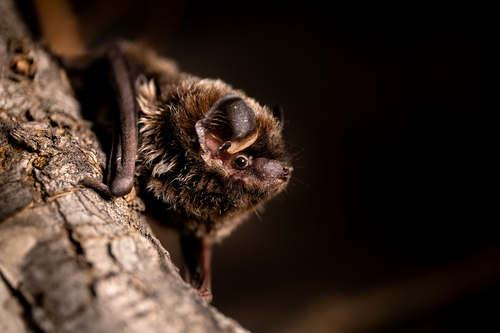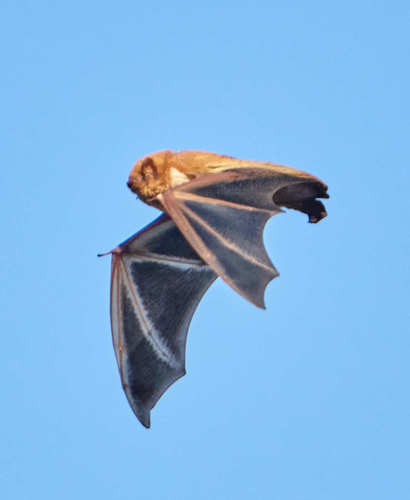
About Lasiurus frantzii (Peters, 1871)
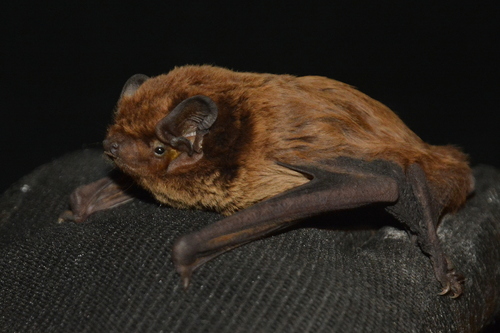
Lasiurus frantzii (Peters, 1871), commonly called the western red bat or desert red bat, is a species of microbat belonging to the family Vespertilionidae. It is distributed across western North America and Central America, with confirmed records in Belize, Canada, Costa Rica, El Salvador, Guatemala, Honduras, Mexico, Nicaragua, Panama, and the United States. Its range extends from southern Canada through the western United States down into Central America. Like most other members of the genus Lasiurus, this is a migratory species. It travels to southern parts of the Americas for the winter, and moves north again in the summer. Also consistent with most Lasiurus species, Lasiurus frantzii is most often found in tree foliage and lives a solitary lifestyle. Contrary to what the common name "desert red bat" suggests, this species does not live in the desert; it hibernates under leaves in forests. Its coat color especially helps it camouflage among dead leaves. Unlike most bat species, which only produce one pup per breeding season, the western red bat can give birth to as many as four pups in a single litter. To accommodate larger litters, desert red bats have four nipples instead of the two that most bats have. Mating occurs in August and September. Pups are born approximately 90 days after mating. Before the young bats develop the ability to fly, the mother carries up to four pups with her at a time. Young bats take up to six weeks to become capable of flight on their own, and take between one and three years to reach full maturity. In terms of ecology, male and female western red bats follow different migratory schedules. Females are typically located in warmer climates during the month of June.