About Lasiurus borealis (Müller, 1776)
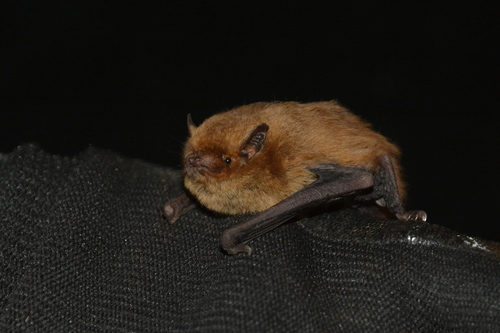
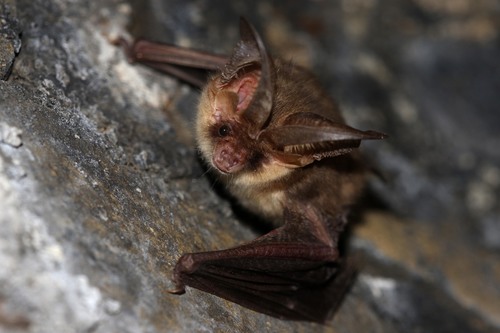
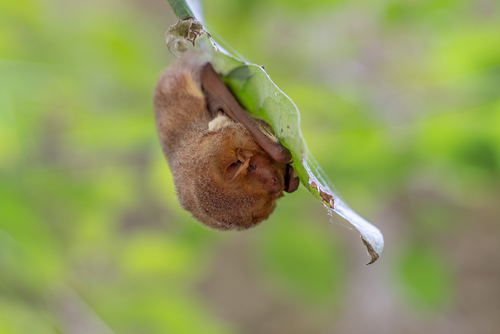
The eastern red bat, scientifically known as Lasiurus borealis (Müller, 1776), has distinctive fur coloration: males are brick or rusty red, while females have a slightly more frosted shade of red. Both sexes have noticeable white fur shoulder patches. Individual back hairs measure approximately 5.8 mm (0.23 in), and hairs on its uropatagium measure 2.6 mm (0.10 in) long. Ventral fur is usually a lighter color, and the entire body, including the uropatagium, is densely furred. It is a medium-sized member of its genus, weighing 7–13 g (0.25–0.46 oz) and measuring 109 mm (4.3 in) from head to tail. Its ears are short and rounded, with triangular tragi. It has long, pointed wings, a long tail that reaches 52.7 mm (2.07 in), and a forearm that is approximately 40.6 mm (1.60 in) long. Its dental formula is 1.1.2.3 / 3.1.2.3, giving it a total of 32 teeth. The eastern red bat has a wide distribution across eastern North America and Bermuda, and it is generally found east of the Continental Divide, including in southern Canada and northeastern Mexico. In winter, it lives in the southeastern United States and northeastern Mexico, with the largest populations concentrated in coastal areas. In spring and summer, it can be found in the Great Lakes and Great Plains regions. Unlike the closely related hoary bat, males and females of the eastern red bat share the same geographic range year-round. Past authors previously included the western United States, Central America, and northern South America in this species' range, but these populations have now been reclassified as the desert red bat, Lasiurus blossevillii. The aspect ratio and wing loading of the eastern red bat's wings show that it flies relatively quickly and is moderately maneuverable. It is an insectivorous species that preys heavily on moths, though it also consumes other types of insects. It eats many known insect pests, including gypsy moths, tent caterpillar moths, Cydia moths, Acrobasis moths, cutworm moths, and coneworm moths. The eastern red bat's breeding season begins in autumn, and a single litter can be sired by multiple males. Pups are born in summer, usually between May and July. Unlike most other bat species that typically produce one pup, eastern red bats average three pups per litter, and individuals have been recorded giving birth to as many as five pups. Females have four nipples, which allow them to nourish multiple young at the same time. Pups learn to fly around one month after birth, and are weaned at this point. Even after they can fly, pups stay with their mother for some time before beginning to roost independently. Eastern red bats are frequently attacked and killed by hawks and owls, as well as aggressive bird species like blue jays and crows; hawks in particular are major predators of eastern red bats hiding in leaf piles. They are also killed when they collide with cars, tall human-made structures, or wind turbines. Allen Kurta estimates that the average lifespan of the eastern red bat is about two years, though individuals likely can live longer than this.