About Lasionycteris noctivagans (Le Conte, 1831)
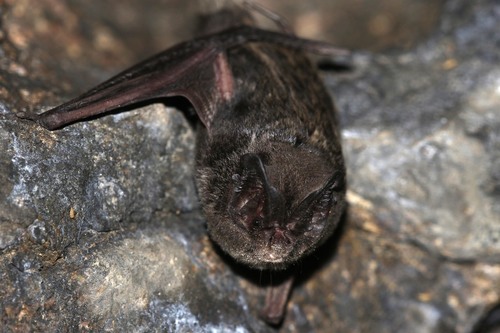
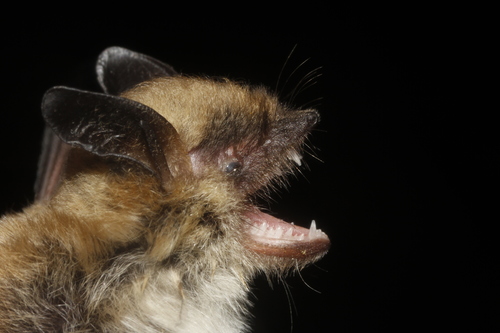
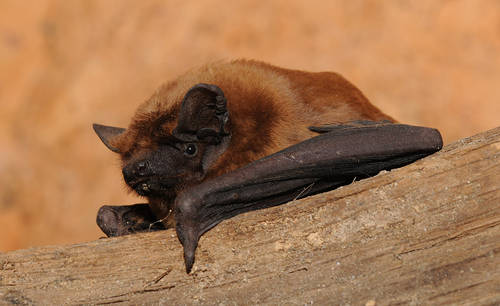
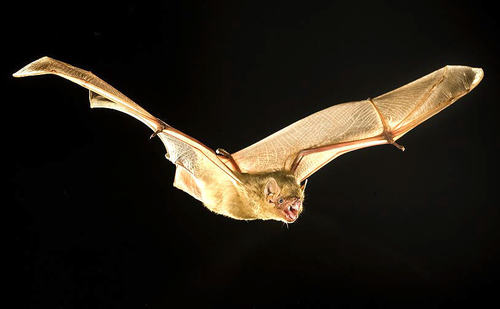
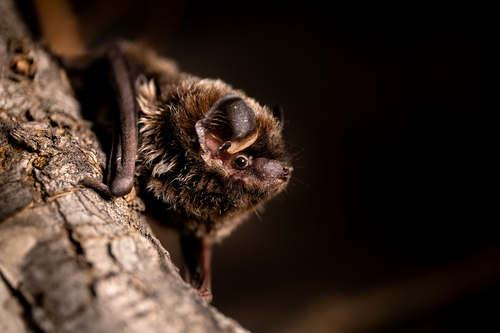
Lasionycteris noctivagans is a medium-sized bat that is predominantly black across its wings, ears, interfemoral membrane, and fur, with white-tipped hairs. The basal upper half of its tail membrane is densely furred, which creates the frosted appearance that gives the species its common name. It has a flattened skull and a broad rostrum. Adults typically weigh 8 to 12 grams, have a total length of around 100 millimeters, a tail length of 40 millimeters, and a forearm length of 37 to 44 millimeters.
This species is distributed across Bermuda, Canada, Mexico, and the United States. It is a forest-dwelling bat that ranges from southeastern Alaska in summer to northeastern Mexico in winter, and occurs in low-elevation arid habitats during seasonal migration. In Missouri, reproduction takes place in the northern dissected plains region, and reproductive females are thought to be absent from the southern Ozark highlands during summer.
Silver-haired bats most often roost in tree cavities or bark crevices on tree trunks, particularly during migration. Their distinctive coloration helps them blend into their roosting environment. Some individuals do overwinter inside buildings, which may let them survive the winter in locations that would otherwise be too cold for the species.