About Lasioglossum zephyrum (Smith, 1853)
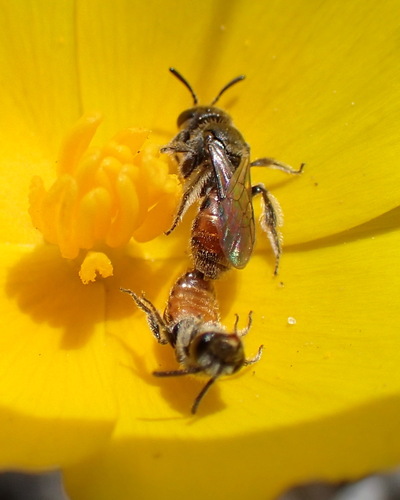
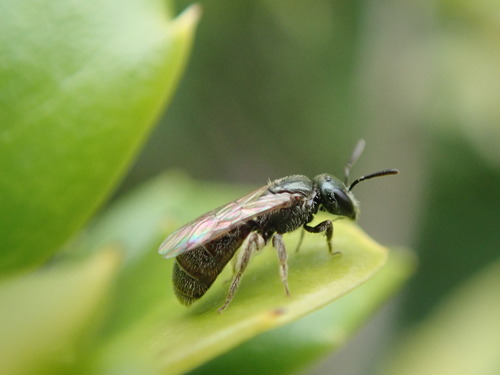
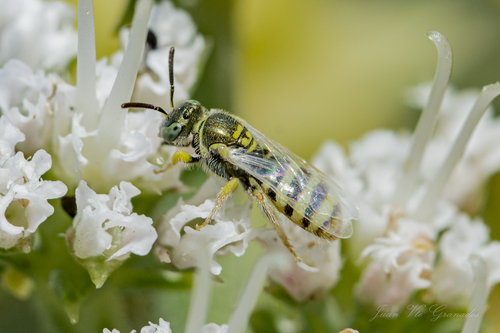
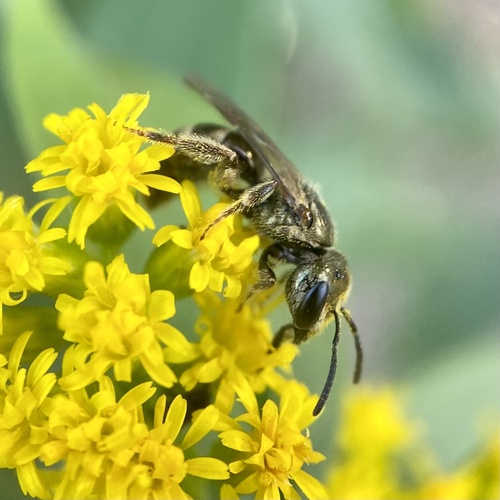
Description and identification: Lasioglossum zephyrum is characterized by its dark green metallic color, reddish abdomen, and a hairier face than most other species. Males are 6 to 7 millimeters long, slightly larger than females. Males can be told apart from females by their brighter green color and redder abdomens. Since caste variation in this species occurs along a spectrum, there is no clear way to distinguish workers from queens based on appearance alone. Queens can instead be identified by their behavior: they push subordinates down in the nest and nudge them to inhibit the subordinates' reproduction. Distribution and habitat: L. zephyrum has been found throughout the United States, from March through October each year. Nests are usually constructed in April along the south-facing edges of streams, and grow in clustered aggregations that can hold up to 1,000 individual nests. This species nests in burrows, which are typically constructed by young females. Older females may also help burrow if their original nests have been destroyed. These females excavate burrow soil primarily at night, though excavation activity has also been observed throughout the day. Worker bees use their mandibles to loosen soil, then carry it a short distance to be picked up by another bee. This excavated soil is ultimately smoothed over burrow walls, or used to fill empty abandoned old burrows. Females excavate brood cells and line them with a liquid produced in their enlarged Dufour's glands, which is secreted from the apex of the abdomen.