About Lasioglossum vierecki (Crawford, 1904)
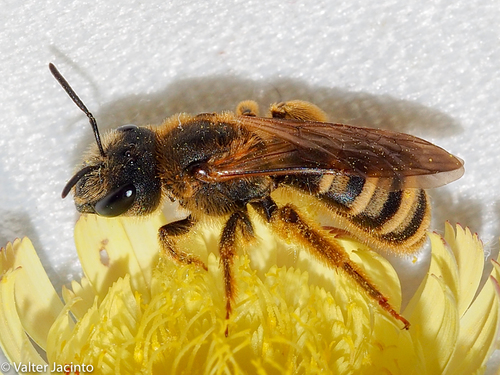
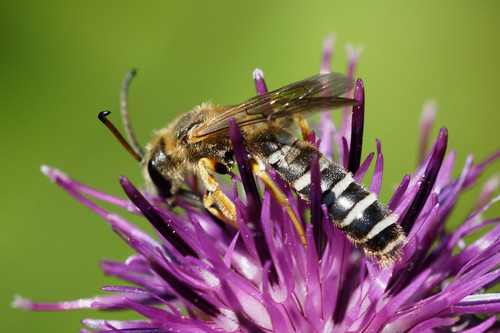
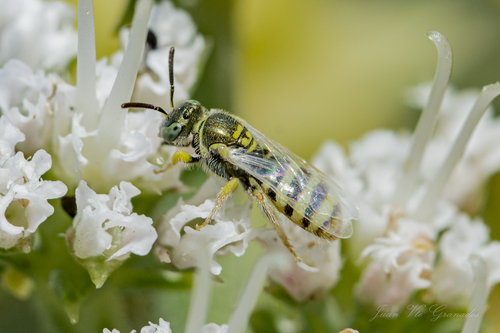
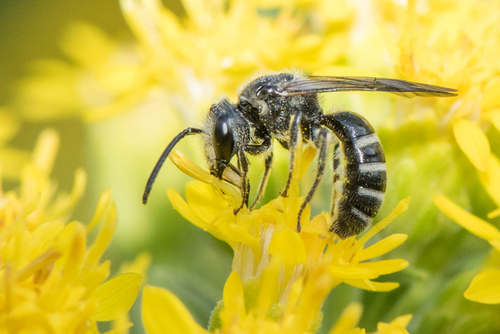
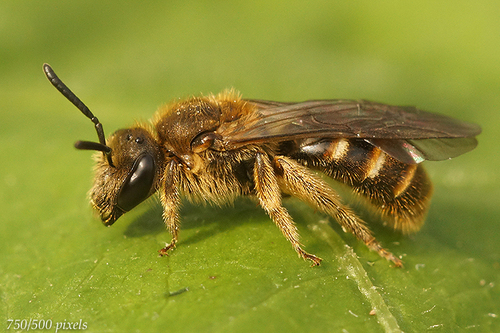
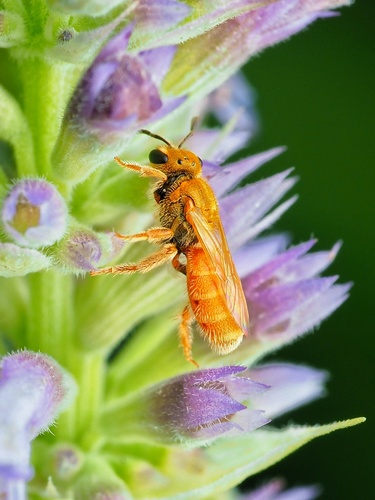
Lasioglossum vierecki can be identified by key distinguishing features. It has an extremely hairy, orange-yellow abdomen, clear golden yellow hairs on its scutellum, and pits that touch the scutellum. It differs from other bees with similarly colored abdomens in several other traits. The lower half of its antennae is darker, and rugae extend to the top of the metathorax, which has narrowly spaced punctures. While the abdomen also has punctures, it does not have a bronze-colored reflection and is not smooth and shiny. The mesonotum, which shares the same color as the abdomen, is not smooth and polished in its center and has small punctures. The first abdominal segment differs from other abdominal segments in its bluer color and its punctures. Its legs are lighter in color but not polished. Lasioglossum vierecki is distributed across eastern North America. Its range extends from Minnesota to the New England states, south to Louisiana and Georgia, and north into Canada in the provinces of Manitoba and Ontario. This species is a sand specialist bee, meaning it only nests in sand or only visits plants restricted to sand habitats. Lasioglossum vierecki is a solitary bee: a single female raises her entire brood by herself and lives alone in her own nest. This solitary behavior is thought to have evolved from eusociality. The species is active between April and September.