About Larus crassirostris Vieillot, 1818
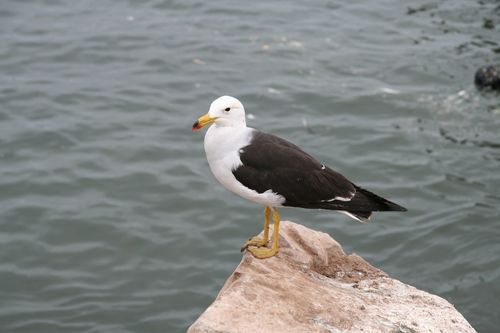
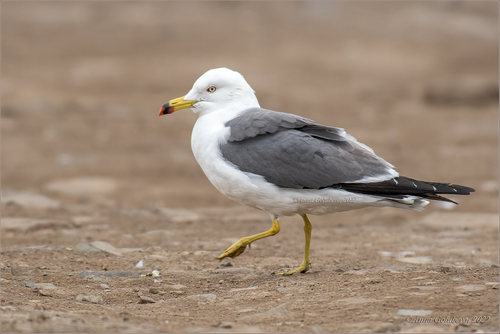
The black-tailed gull, scientifically named Larus crassirostris Vieillot, 1818, is a medium-sized gull. It measures 46 cm (19 inches) in length, with a wingspan of 126–128 cm (49.6–50.3 inches). It has yellow legs, a red and black spot at the end of its bill, and, as its common name suggests, a black tail. Males and females have identical plumage and features, though males are larger than females. It takes four years for black-tailed gulls to develop full adult plumage. This gull produces a cat-like call, which inspired its Japanese name umineko (meaning "sea cat") and its Korean name gwaeng-yi gull (meaning "cat" gull). In Hachinohe, the calls of this species are counted among the 100 Soundscapes of Japan. This species is resident along the coastlines of the East China Sea, Japan, Manchuria, and the Kuril Islands. It occurs as a vagrant in Alaska and North America, and individuals have also been recorded in the Philippines. Black-tailed gulls feed mainly on small fish, molluscs, crustaceans, scraps, and carrion. A study of identifiable remains in gull excreta from Korea found 19.1% of remains were fish, 3.3% were crustaceans, and 3.3% were land insects. The species often follows ships and commercial fishing fleets, and it will also steal food from other seabirds. It nests in colonies, which form in mid-April. Females lay 2–3 eggs by early June, and incubation lasts approximately 24 days. Black-tailed gulls use a wide range of vocal signals, with over 10 distinct sounds used for communication. Chicks can recognize their parents through voice and visual cues between 10 and 15 days after hatching, and can also tell the difference between siblings and unrelated gulls. Different call types serve different purposes: alarm calls are warning signals for predators or other danger; aggressive calls accompany attacks on predators; contact calls are for communication between members of the species. The most commonly heard cat-like "mew call" is a type of contact call, used frequently in situations including returning to the nest with food, switching mating and nesting roles, caring for young, and collective flight. Contact calls also include the begging call of young gulls and the call a female makes during mating.